How to Care for Your Alluaudia procera (Madagascar Ocotillo)
Care Guide
Alluaudia
Procera
The Madagascar Ocotillo. Tall, columnar, spine-lined stems rising from one of earth's most otherworldly ecosystems — a plant whose vertical drama is unlike anything else in cultivation.
The Plant
Otherworldly origin.
Pure vertical drama.
Endemic to the spiny thicket dry forests of southern Madagascar — one of the most botanically unique and irreplaceable ecosystems on earth — the Alluaudia procera is a plant without close parallel in cultivation. Its stems rise in tall, columnar columns lined with sharp paired spines and studded with small rounded leaves that emerge and disappear with the seasons. In its native habitat it reaches fifteen meters or more, forming the architectural backbone of a landscape found nowhere else on the planet.
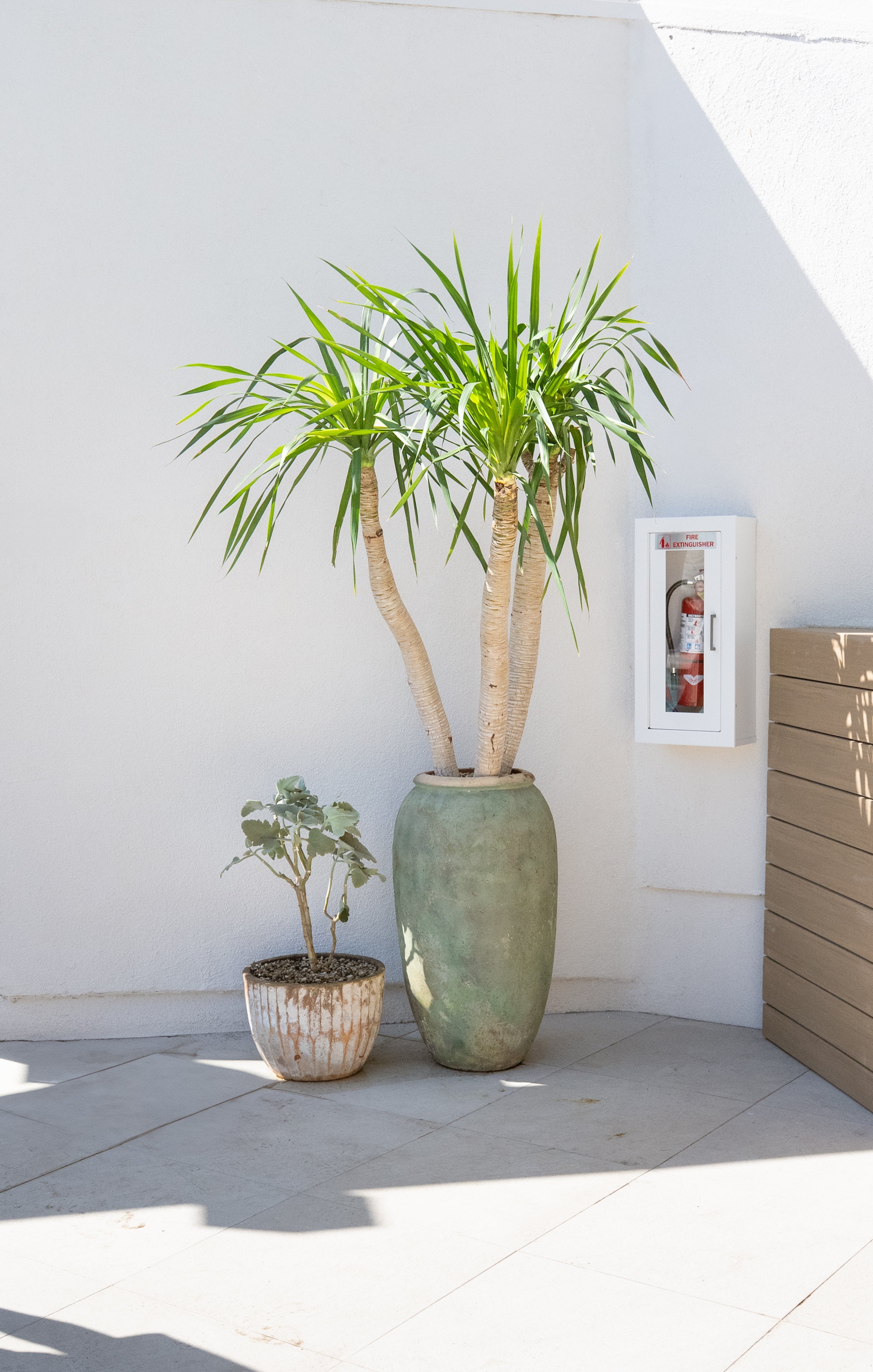
In a container outdoors, it becomes something rare and genuinely commanding. The silhouette is vertical and textural in a way that no other succulent achieves — more graphic than organic, more architectural than botanical. It asks for very little in return: intense sun, infrequent water, frost protection, and the sense to wear thick gloves every time you touch it. Everything else it handles entirely on its own terms.
At a Glance
Light
The Madagascar Ocotillo is an uncompromising full-sun plant. It grows under intense, unfiltered sun in one of the hottest, driest landscapes on earth — and it carries those requirements directly into cultivation. Place it in the brightest, most open outdoor exposure available. A minimum of six to eight hours of direct sun daily is necessary; more is always better.
Insufficient light is the single fastest way to compromise this plant. Without full sun, the stems grow weakly and lean toward the light source, the spines lose their dramatic presentation, and the columnar form — the plant's most defining characteristic — fails to develop with any authority. A leaning, weak Alluaudia in low light is a shadow of what this plant can be. It does not adapt gracefully to dim conditions.
Heat tolerance is a feature, not a risk: South or west-facing positions with reflected heat from walls or paving are ideal — not a concern. This species thrives in hot, bright microclimates that would stress most other plants. If your outdoor space has a sun trap, put this plant in it.
Acclimating from lower light: If the plant has been in a lower-light environment, introduce it to full outdoor sun gradually over one to two weeks. Even full-sun species can scorch when moved abruptly from shade to intense direct exposure.
Watering
The Madagascar Ocotillo stores moisture internally within its stems and is built to survive extended periods without rainfall. In cultivation, err strongly on the side of too little. Allow the soil to dry completely between waterings before introducing moisture again. During warm active growing months, watering every two to three weeks is typically sufficient. In cooler months or dormancy, stretch to once a month or less.
Factor rainfall into your schedule — if your area has had meaningful rain recently, skip the next watering entirely. Deep watering when you do water is more effective than frequent shallow sessions. Water slowly until it flows freely from the drainage holes, then leave it completely alone until the next cycle.
Reading the plant: Seasonal leaf drop is the plant's natural signal that it's entering a dry rest cycle — this is completely normal and expected, not a distress signal. Soft or shriveled stems indicate the dry period has gone on too long and water is genuinely needed. Yellowing leaves combined with heavy, wet soil point to overwatering — the more dangerous of the two scenarios.
Dormancy & Leaf Drop
The Alluaudia procera is deciduous — it sheds its leaves during the dry season, which in cultivation typically aligns with cooler temperatures and shorter days in fall and winter. This is one of the most common points of confusion for new owners. Bare, spine-lined stems in autumn do not mean the plant is dying. They mean it is doing exactly what it is supposed to do.
During dormancy the plant's water requirements drop to near zero. Its stems are storing adequate moisture reserves to sustain it through the leafless period. Do not increase watering in response to leaf drop — this is the single most damaging mistake you can make with this species. Reduce watering instead. The leaves will re-emerge in spring as temperatures rise and light increases, and the refoliation flush is one of the more satisfying moments in this plant's seasonal cycle.
Spring
Leaves returnNew leaves emerge along stems. Resume monthly fertilizing. Repot if needed. Gradually increase watering as temperatures climb.
Summer
Peak seasonMaximum sun. Water every 2–3 weeks when soil is fully dry. Monthly fertilizing. Monitor for pests. Hot conditions are ideal.
Autumn
Wind downStop fertilizing. Reduce watering. Leaf drop begins — this is normal. Plan frost protection if temperatures will drop below 40°F.
Winter
Bare dormancyStems are bare — expected and healthy. Water once a month or less. No fertilizer. Frost protection is essential. Do not overwater bare stems.
Temperature & Frost Protection
The Madagascar Ocotillo is a frost-tender species — this is its most significant practical limitation in cultivation. It thrives in temperatures between 65–100°F and handles intense summer heat with complete ease. Cold is its primary vulnerability. It cannot tolerate frost or prolonged exposure to temperatures below 40°F without significant damage.
In Southern California's climate, it can typically remain outdoors year-round in most locations. In areas with cold winters, move container plants to a frost-free location — an unheated but enclosed patio, covered terrace, or indoors near a bright window — well before the first frost arrives. A single hard frost on an unprotected plant can damage or destroy stems that took years to develop. Plan the transition early, not at the last moment.
Cold damage recovery: Frost-damaged stems turn dark and mushy. Remove affected sections with clean cuts made into healthy, firm tissue. The plant can recover from partial cold damage if caught early and moved immediately to warmth and bright conditions. Remove all damaged material promptly — leaving it in place accelerates decline.
Soil & Container
The Alluaudia procera demands exceptionally fast-draining soil. In its native spiny thicket, it grows in rocky, sandy, virtually nutrient-free ground where water disappears almost immediately after rainfall. In a container, use a cactus and succulent mix combined with 40–50% perlite, pumice, or coarse horticultural sand. The finished mix should feel gritty and drain water almost instantly.
Unglazed terracotta or porous concrete containers work especially well — their breathable walls allow excess moisture to evaporate and keep the root zone drier between waterings. Always use a container with drainage holes. As the plant grows tall and columnar, a heavy, low-profile pot provides important stability against wind — a tall Alluaudia in a lightweight container is a liability in any outdoor space with meaningful airflow.
Fertilizing
The Madagascar Ocotillo evolved in some of the poorest soils on earth — it needs very little. Feed once a month through spring and into early fall with a balanced liquid fertilizer at half strength, or a cactus-specific formula with lower nitrogen. High nitrogen encourages soft, rapid stem growth that lacks the structural rigidity and dense spine presentation this species is known for. Light and infrequent is always the right approach.
Stop fertilizing completely in fall and through winter. During dormancy, feeding provides no benefit and accumulates as damaging salt deposits in the soil. Resume in spring when new leaves begin to emerge and the plant signals the start of its active cycle.
Handling & Spine Safety
The spines of the Alluaudia procera are among the sharpest of any succulent in cultivation. They are paired, rigid, and positioned to catch anything that brushes against the stem from any direction. This is not a plant you can handle casually.
Every time you interact with this plant: Thick leather gloves — not gardening gloves, leather — are required. Long sleeves. Long-handled pruning tools whenever possible. For repotting or moving, a second person to help stabilize the plant significantly reduces the risk of accidental contact. Never reach into the plant barehanded, even briefly, and never assume you can move quickly enough to avoid a spine. The stems are covered in them at every angle.
Pruning is rarely necessary — the columnar form develops without intervention. If shaping is needed, make clean cuts in spring before the growing season begins, at the desired height or just above a node. Use the longest-handled tools available and position yourself well clear of the stems before cutting. Remove fallen cuttings carefully — they remain hazardous.
Repotting & Propagation
Repot every two to three years, or when roots emerge from drainage holes or the plant becomes visibly top-heavy. Spring is the right window. Choose a container only one to two inches larger with good drainage and refresh the soil mix entirely. Full protective gear is mandatory — thick gloves, long sleeves, ideally a second person to stabilize the plant during the process. After repotting, wait one to two weeks before watering.
Propagation from stem cuttings is viable and the preferred method. Take a healthy stem section in late spring or early summer, make a clean cut, and allow the cut end to callous completely for 48–72 hours before planting. This step is not optional — a fresh unhealed cut placed directly into soil almost always rots before roots develop. Plant the calloused cutting in dry gritty mix, place in full sun, do not water for the first week, then begin very light infrequent watering. Roots typically develop within three to six weeks.
Common Issues
Leaf Drop (fall/winter)
Completely normal seasonal behavior — the plant is entering its dry rest cycle. Bare stems in autumn and winter are expected and healthy. Do not increase watering in response. Reduce it.
Leaf Drop (in season)
Out-of-season drop points to overwatering or cold stress. Check soil moisture — if wet, stop watering immediately. Check temperatures — if the plant was exposed to cold below 40°F, move it to warmth and assess for frost damage.
Soft or Mushy Stems
Overwatering or root rot. Stop all watering immediately. Ensure drainage is adequate and allow a complete dry-out period. Remove any darkened, mushy stem sections with clean cuts into healthy tissue.
Leaning or Weak Stems
A direct signal of insufficient light. Move to a location with more direct sun immediately. Rotate the container periodically to encourage upright, even growth across all stems.
Cold Damage
Frost-damaged stems turn dark and become mushy. Move the plant to warmth immediately. Remove all affected sections with clean cuts into healthy firm tissue. The plant can recover from partial cold damage if addressed quickly.
Mealybugs, Scale & Spider Mites
Concentrate at spine bases and leaf joints where they're difficult to spot early. Check those areas specifically. Treat with neem oil or insecticidal soap weekly for three to four weeks. Always wear thick gloves when treating this plant.
Growth & Lifespan
The Alluaudia procera grows slowly to moderately in cultivation — steadily adding vertical height each season in good light, building the tall, increasingly dramatic columnar silhouette that makes it one of the most architecturally compelling outdoor specimens available. Each growing season the stems extend, the spine density deepens, and the overall presence of the plant in a space becomes more pronounced and more commanding.
This is a plant for someone who wants something that looks like nowhere else on earth in their outdoor space. It does not blend in, it does not disappear into a corner, and it does not look like anything else you can buy. Given full sun, minimal water, and frost protection, it rewards you with a specimen that becomes more extraordinary every year it grows — a living artifact from one of the rarest ecosystems on earth, kept alive in a container in Southern California.
The Plant Daddies Society
Let us handle
the care.
Weekly expert visits, full plant protection, and a living collection that grows with you. The Society takes the guesswork out of plant ownership entirely.