How to Care for your Dracaena marginata (Dragon Tree)
Care Guide
Dracaena
marginata
The Madagascar Dragon Tree — a slender-stemmed, graceful Dracaena with long, narrow leaves edged in red or purple, extraordinary low-light tolerance, and one of the most distinctive and reliable silhouettes of any interior tree.
The Plant
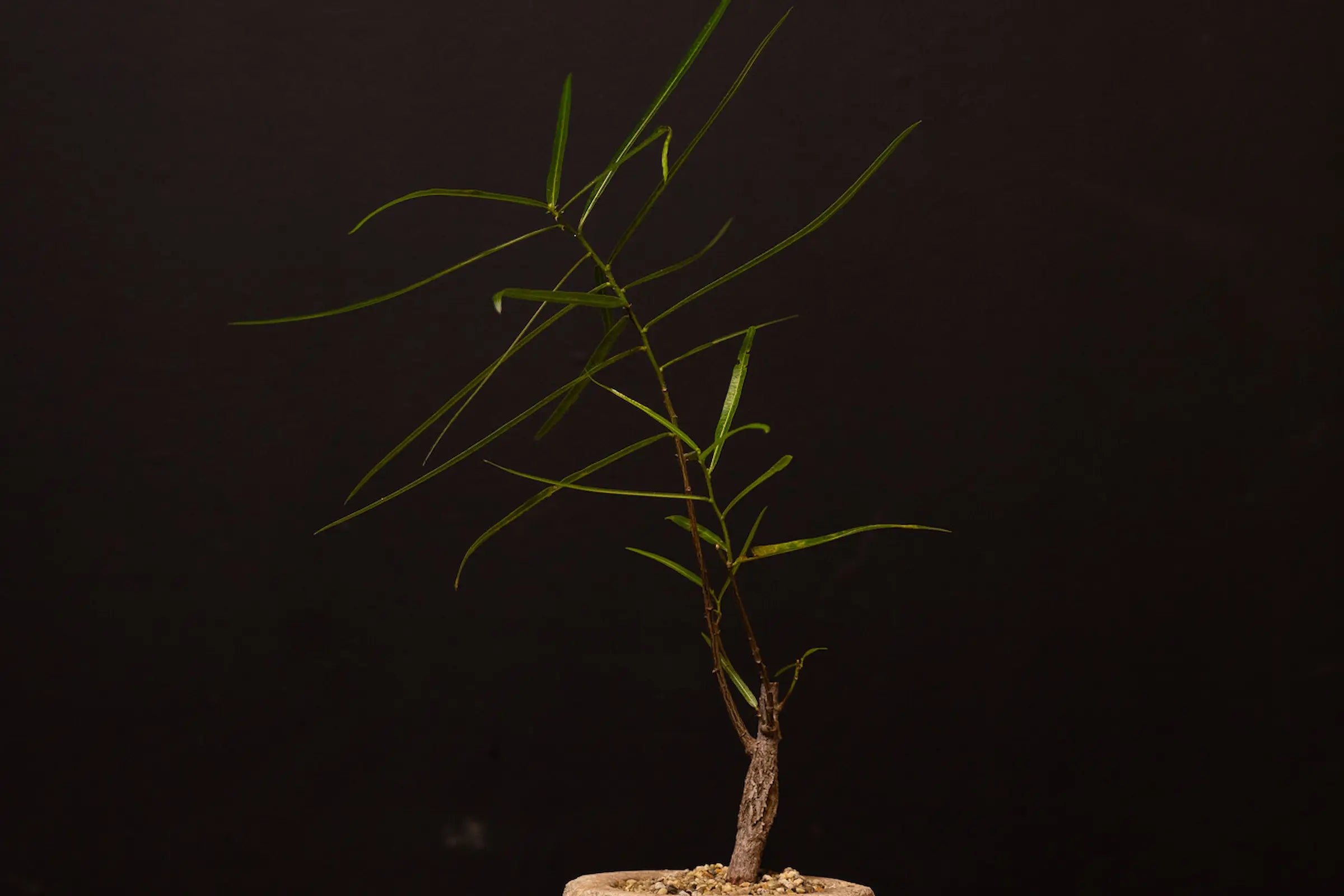
Slender stems.
Red-edged leaves.
Native to Madagascar, the Dracaena marginata is one of the most widely grown and reliably successful interior trees available — combining excellent low-light tolerance with a distinctive architectural silhouette and the minimal maintenance demands that the Dracaena family is known for. The slender, multi-branching stems extend in graceful arcs, each tipped by a dense cluster of long, narrow, arching leaves with characteristic red or purple margins.
Over years the stems extend upward, branch occasionally, and develop a sculptural, sinuous character that becomes increasingly distinctive and refined. The combination of the graceful stems, the arching leaf clusters, and the red-edged color is found in no other interior tree and makes the marginata one of the most recognizable and design-friendly indoor plants available.
At a Glance
Light & Placement
Dracaena species are among the most light-adaptable large interior trees available — they maintain their characteristic form across a wide range from bright indirect to medium indirect light that would stress most other species in this collection. A position near a south or east-facing window is ideal, with bright indirect exposure throughout the day.
While they tolerate lower light better than most interior trees, they perform noticeably better in genuinely bright indirect conditions — producing more active new growth, better stem development, and richer leaf coloration. For a practical framework on evaluating your interior light levels, see our Interior Plant Placement Guide.
Watering & Reading the Plant
Allow the top half of the soil to dry between waterings. Dracaena species prefer a moderate watering cycle rather than extended drought or consistent moisture. When the upper half of the soil is dry, water slowly and thoroughly until it flows from the drainage holes, then allow the dry cycle to complete before returning. In the active growing season this is typically every ten to fourteen days; in winter, extend to two to three weeks. See our guide on how to know when to water your plants.
Well Hydrated
Leaves are held with full tension and the soil is still moist in the upper half. No water needed — continue the current interval.
Ready to Water
The top half of the soil is dry when probed. Leaves may show very slight reduction in their usual crisp tension. Water slowly and thoroughly.
Overwatered
Stop watering immediately. Yellowing or soft-based leaves while soil remains consistently wet indicate root stress. Allow extended drying and assess drainage before resuming.
The Slender Stem & Red Margin
The Dracaena marginata's most distinctive qualities are the combination of its slender, arcing, multi-branching stems — which develop a sculptural sinuousness over years of upward growth — and the characteristic color of its leaves: long, narrow, and arching, with red or purple margins that contrast distinctively with the dark green center.
Cultivar selection determines the intensity of the margin color — from the standard single-colored margin of the straight species to the broader, more intense coloration of cultivars like 'Tricolor' and 'Colorama'. All perform identically from a care perspective. The stems, given time, become one of the most characterful structural elements of any interior space they occupy.
Temperature & Humidity
Dracaena species prefer consistent warmth — 60 to 85 degrees Fahrenheit — and are sensitive to temperatures below 55 degrees Fahrenheit and cold drafts. Keep away from exterior doors, air conditioning vents, and uninsulated windows in winter. Cold exposure causes leaf drop and tip browning that is permanent and cannot be reversed.
Moderate humidity — 40 to 55 percent — is sufficient for most Dracaena species. In very dry interior conditions during winter heating season, some tip browning may occur — a characteristic Dracaena sensitivity to dry air.
Fluoride sensitivity. Most Dracaena species are sensitive to fluoride in tap water, which causes progressive brown leaf tip and margin browning. Use filtered water, collected rainwater, or allow tap water to sit overnight before use.
Fertilizing
Feed monthly during spring and summer with a balanced liquid fertilizer at half strength. Dracaena species grow slowly and do not need or benefit from heavy feeding — consistent light feeding produces steadier, better-quality growth than periodic heavy application. Stop fertilizing in fall and winter when growth slows. Resume in spring when new growth becomes visible.
For the complete approach to indoor fertilizing, see our guide on fertilizing indoor plants properly.
Pruning & Maintenance
Dracaena species require minimal pruning. Remove fully yellowed or damaged lower leaves by pulling them downward cleanly at the base — they separate from the stem without cutting. As the stem elongates over years and lower leaves drop naturally, the bare stem below the active leaf head progressively reveals itself.
If a Dracaena has become too tall for its space, the top can be cut off at any point along the bare stem — this is called "topping" — and new growth will emerge from just below the cut within several weeks. The removed top can often be rooted as a cutting. See our pruning guide for the complete technique.
Repotting
Repot every two to three years in spring, or when roots are clearly filling the container and emerging from the drainage holes. Dracaena species grow slowly and can remain in the same container for longer than most faster-growing interior plants. Use a quality well-draining indoor potting mix and size up by one container.
Propagation: The stem sections removed during topping root readily in moist potting mix in warm conditions. Lay sections horizontally in the mix or plant upright — both work. New growth emerges from nodes within four to eight weeks in bright indirect light.
Common Issues
Most Dracaena issues trace to one of three causes: fluoride in the water supply causing progressive tip browning, cold exposure causing leaf drop, or overwatering causing root rot.
Brown Leaf Tips and Margins
Fluoride sensitivity — the most common Dracaena issue in interior settings. Switch to filtered water, rainwater, or water allowed to sit overnight. The brown areas already present will not reverse but new growth in fluoride-free conditions will emerge clean.
Yellow Lower Leaves
Natural aging of the oldest leaves is normal — some sequential yellowing and drop of the lowest leaves is part of the plant's growth cycle. If yellowing is rapid or widespread, check for overwatering.
Cold Damage
Cold drafts or temperatures below 55 degrees Fahrenheit cause immediate, permanent leaf damage — browning, yellowing, and eventual leaf drop. Identify and eliminate any cold source immediately.
Slow or No Growth
Insufficient light is the most common cause for a Dracaena that is otherwise healthy but not producing new leaves. Move to a brighter position within the indirect-light range.
Fine webbing and stippling on leaf surfaces in dry conditions. Treat with neem oil or insecticidal soap applied to all surfaces. Repeat weekly for three to four weeks.
White cottony deposits at the base of leaves where they meet the stem. Treat with isopropyl alcohol on a cotton swab then follow with neem oil. Repeat weekly.
Inspect neighboring plants immediately. Scrape away and treat with neem oil. Repeat weekly for a full month.
Dust on Leaves
The broad leaf surfaces collect dust and reduce photosynthetic efficiency over time. Wipe gently with a soft damp cloth, top and underside. Do not use leaf shine products. Regular cleaning also lets you detect early pest activity before it spreads.
Growth & Lifespan
Dracaena species are among the most patient and long-lived interior trees available. They grow slowly and deliberately, adding height and stem character season by season, and can reach impressive mature sizes given years of appropriate care in a bright interior position.
The bare stem that develops below the active leaf heads over time is not a problem — it is the progressive revelation of the plant's architectural character. A well-established Dracaena with a meter or more of bare stem topped by an active, dense leaf cluster is one of the most refined and distinctive forms available in interior horticulture. Given consistent, moderate care, any Dracaena becomes more interesting and more valuable with each passing year.
The Plant Daddies Society
Let us handle
the care.
Weekly expert visits, full plant protection, and a living collection that grows with you. The Society takes the guesswork out of plant ownership entirely.