
How to care for Your Dracaena tarzan (Tarzan Dracaena)
Care Guide
Dracaena
'Tarzan'
The Tarzan Dracaena — a bold, large-leafed Dracaena cultivar with wide, dark green leaves, a more substantial and tropical presence than typical narrow-leafed forms, and exceptional adaptability to interior conditions.
The Plant
Bold leaves.
Maximum adaptability.
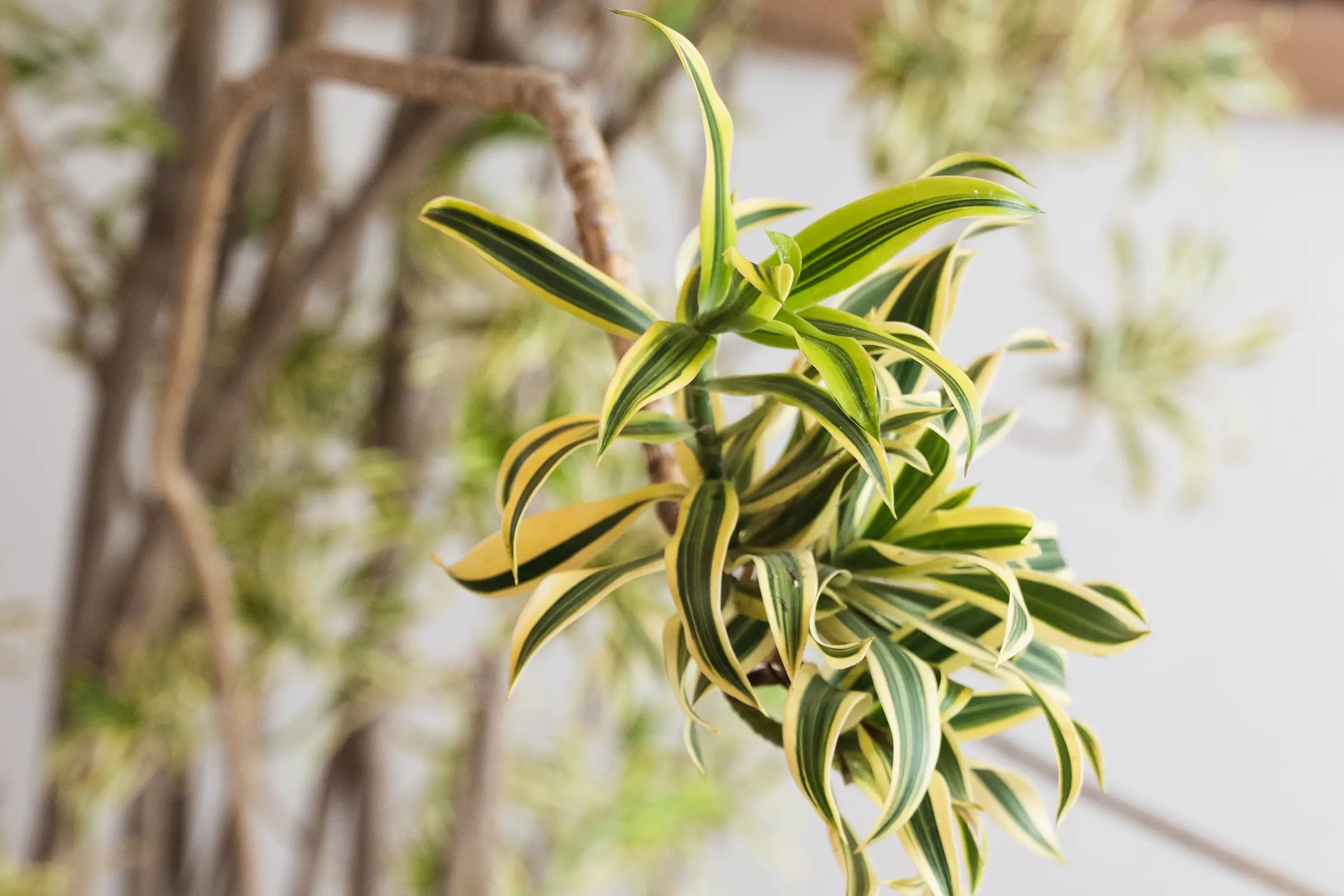
The Dracaena 'Tarzan' is a large-leafed cultivar selected for its bold, tropical-feeling foliage — broader and more substantial than the typical Dracaena leaf forms, producing a presence that reads as genuinely architectural and tropical without requiring the scale or specific light conditions of a Ficus or a Schefflera. The leaves are wide, deeply glossy, and a rich, consistent dark green.
It combines the bold decorative quality of a large-leafed tropical with the exceptional adaptability of the Dracaena family — performing well across a wider range of interior light conditions than most bold-leafed plants, and requiring less maintenance than the fussier tropical alternatives. For a designer or plant owner who wants tropical scale and reliability simultaneously, the Tarzan is one of the strongest options available.
At a Glance
Light & Placement
Dracaena species are among the most light-adaptable large interior trees available — maintaining their characteristic form across a wide range from bright indirect to medium indirect light. A position near a south or east-facing window is ideal, with bright indirect exposure throughout the day.
No direct sun. Despite its bold, tropical-scale leaves, the Dracaena Tarzan should be kept in bright indirect light rather than direct sun, which will bleach and burn the deep green leaf surfaces.
While they tolerate lower light better than most interior trees, they perform noticeably better in genuinely bright indirect conditions. For a practical framework on evaluating your interior light levels, see our Interior Plant Placement Guide.
Watering & Reading the Plant
Allow the top half of the soil to dry between waterings. When the upper half of the soil is dry, water slowly and thoroughly until it flows from the drainage holes, then allow the dry cycle to complete before returning. Every ten to fourteen days in the active season; two to three weeks in winter. See our guide on how to know when to water your plants.
Well Hydrated
Leaves are held with full tension. Soil is still moist in the upper half. No water needed — continue the current interval.
Ready to Water
The top half of the soil is dry when probed. Water slowly and thoroughly through the full root zone.
Overwatered
Stop watering immediately. Yellowing or soft-based leaves with consistently wet soil indicate root stress. Allow extended drying before resuming.
The Bold Leaf & Tropical Scale
The Dracaena 'Tarzan' is distinguished from the typical narrow-leafed Dracaena species by the substantially greater width of its leaves — broad, glossy, and tropical in scale, producing a canopy that reads as bolder and more substantial than any standard Dracaena marginata or reflexa while requiring identical care conditions.
This breadth of leaf surface makes the Tarzan one of the most effective Dracaenas for large-format interior applications — it fills space with genuine presence rather than the fine-leafed texture of the narrower forms, and it holds its character across the full range of interior light conditions from bright indirect to the medium indirect light that would challenge most bold-leafed tropicals.
Temperature & Humidity
Dracaena species prefer consistent warmth — 60 to 85 degrees Fahrenheit — and are sensitive to temperatures below 55 degrees Fahrenheit and cold drafts. Keep away from exterior doors, air conditioning vents, and uninsulated windows in winter.
Fluoride sensitivity. Most Dracaena species are sensitive to fluoride in tap water. Use filtered water, collected rainwater, or allow tap water to sit overnight before use.
Fertilizing
Feed monthly during spring and summer with a balanced liquid fertilizer at half strength. Stop fertilizing in fall and winter. Resume in spring. For the complete approach, see our guide on fertilizing indoor plants properly.
Pruning & Maintenance
Remove fully yellowed lower leaves by pulling downward cleanly. If the Dracaena has become too tall, the top can be cut at any point on the bare stem — new growth emerges from just below the cut within several weeks, and the removed top can often be rooted as a cutting. See our pruning guide for the full technique.
Repotting
Repot every two to three years in spring. Use a quality well-draining indoor potting mix and size up by one container. Stem sections removed during topping root readily in moist potting mix in warm bright indirect conditions — new growth emerges from nodes within four to eight weeks.
Common Issues
Most Dracaena issues trace to fluoride in the water causing tip browning, cold exposure causing leaf drop, or overwatering.
Brown Leaf Tips and Margins
Fluoride sensitivity. Switch to filtered water or water allowed to sit overnight. Existing brown areas will not reverse but new growth in fluoride-free conditions will emerge clean.
Yellow Lower Leaves
Natural aging of the oldest leaves is normal. If yellowing is rapid or widespread, check for overwatering.
Cold Damage
Permanent leaf damage from cold drafts or temperatures below 55 degrees Fahrenheit. Identify and eliminate any cold source immediately.
Slow Growth
Insufficient light. Move to a brighter position within the indirect-light range.
Fine webbing and stippling on leaf surfaces in dry conditions. Treat with neem oil or insecticidal soap applied to all surfaces. Repeat weekly for three to four weeks.
White cottony deposits at the base of leaves where they meet the stem. Treat with isopropyl alcohol on a cotton swab then follow with neem oil. Repeat weekly.
Inspect neighboring plants immediately. Scrape away and treat with neem oil. Repeat weekly for a full month.
Dust on Leaves
The broad leaf surfaces collect dust and reduce photosynthetic efficiency over time. Wipe gently with a soft damp cloth, top and underside. Do not use leaf shine products. Regular cleaning also lets you detect early pest activity before it spreads.
Growth & Lifespan
Dracaena species grow slowly and deliberately, adding height and stem character season by season. The bare stem that develops below the active leaf heads over time is the progressive revelation of the plant's architectural character — a well-established specimen with a meter or more of bare stem topped by an active leaf cluster is one of the most refined forms in interior horticulture.
Given consistent, moderate care in bright indirect light, any Dracaena becomes more interesting and more valuable with each passing year.
The Plant Daddies Society
Let us handle
the care.
Weekly expert visits, full plant protection, and a living collection that grows with you. The Society takes the guesswork out of plant ownership entirely.
%0A%0A%0A%0A%0A%0A%20%20%0A%0A%20%20Care%20Guide%0A%20%20Dracaena'Tarzan'%0A%0A%20%20The%20Tarzan%20Dracaena%20%E2%80%94%20a%20bold,%20large-leafed%20Dracaena%20cultivar%20with%20wide,%20dark%20green%20leaves,%20a...)