
How to Care for Your Ipomoea platensis (Caudiciform Morning Glory)
Care Guide
Ipomoea
platensis
The Morning Glory Caudex — a South American caudiciform with an enormous, potato-like storage caudex from which vigorous twining vines emerge seasonally, sometimes producing the characteristic morning glory trumpet flowers.
The Plant
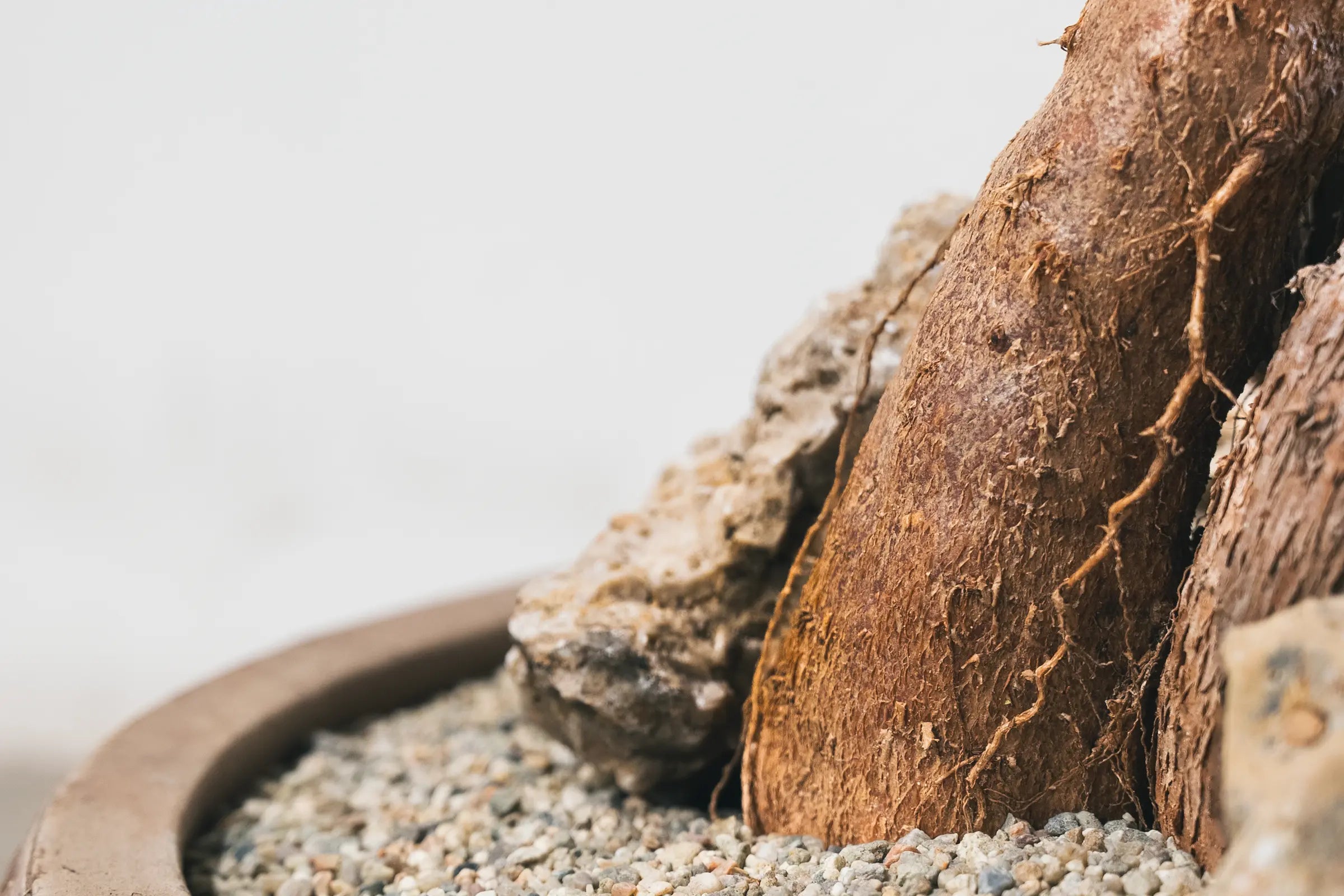
The giant caudex.
South American morning glory.
Native to the dry grasslands and rocky slopes of Argentina, Uruguay, and southern Brazil, the Ipomoea platensis is a caudiciform morning glory — a relative of the ornamental vines grown on fences worldwide, but evolved for extreme seasonal drought survival rather than prolific climbing. The defining feature is the caudex: an enormous, rounded, potato-like storage organ that can reach extraordinary dimensions over decades, from which vigorous seasonal vines emerge bearing three-lobed morning glory leaves and sometimes trumpet-shaped flowers in pink or lavender.
It is a plant of dramatic annual contrast: the vigorous, leafy vine growth of summer replaced by bare caudex in winter — with the caudex itself as the permanent, growing, increasingly impressive centerpiece around which the seasonal drama revolves.
At a Glance
Light & Placement
The Ipomoea platensis requires maximum direct sun — a south-facing window with several hours of unobstructed direct light daily is essential. Native to the dry grasslands and rocky slopes of Argentina, Uruguay, and southern Brazil, it evolved in full, open sun and brings that requirement entirely into cultivation. In strong direct light it maintains compact vine growth and develops the impressive swelling caudex that is its primary visual asset. In lower light the vines become leggy and the caudex develops slowly.
Position it at the glass, not back from it. See our Interior Plant Placement Guide for a framework on assessing your interior light levels.
Watering & Reading the Plant
Allow the soil to dry almost completely between waterings. The Ipomoea platensis stores massive water reserves in its large, swelling caudex — the same strategy that allows morning glory relatives to survive the severe droughts of the Argentine pampa. In the growing season, every two to three weeks; in winter dormancy, once a month or less. The caudex is the most reliable diagnostic: firm and full means well-hydrated; marginally softer or showing surface wrinkling means water is needed. See our guide on how to know when to water your plants.
Well Hydrated
The caudex feels firm and full. Vines are held with good tension. No water needed — continue the dry interval.
Ready to Water
The caudex feels marginally softer than at peak hydration. The soil is completely dry when probed. Water slowly and deeply, then allow a complete dry cycle.
Overwatered
Stop watering immediately. Soft tissue at the caudex surface indicates rot. Allow extended drying before any further water.
The Swelling Caudex
The Ipomoea platensis is a caudiciform morning glory — a member of the same family as the ornamental vines grown on fences worldwide, but evolved for survival in severe seasonal drought rather than for prolific flowering. The caudex — an enormous, rounded, potato-like storage organ — can reach extraordinary proportions over decades in the wild, with the largest specimens documented at over a meter in circumference.
From this caudex, vigorous twining vines emerge in the growing season bearing the characteristic three-lobed leaves of the morning glory family, sometimes producing trumpet-shaped flowers in pink or lavender. The vines die back in winter dormancy and re-emerge in spring — a seasonal cycle that is both a characteristic of the species and a reminder that what is growing above the soil is temporary, while what is building below is permanent.
Temperature & Humidity
The Ipomoea platensis prefers warm, dry conditions — 65 to 95 degrees Fahrenheit — and low humidity. It evolved in the seasonal dry grasslands of the Southern Cone of South America and is adapted to alternating wet growing seasons and prolonged dry winters. In cultivation it should be kept dry and warm in winter when it is dormant.
It is somewhat cold-tolerant when the caudex is completely dry — established plants in their native habitat survive occasional frost events. In a container, protect from sustained frost. Standard interior air is appropriate without supplemental humidity.
Fertilizing
Feed lightly once a month during spring and summer with a balanced liquid fertilizer at half strength. The platensis evolved in lean savanna soils and does not benefit from heavy feeding. Stop feeding entirely in fall and through the winter dormancy period. Resume in spring when new vine growth emerges from the caudex.
For the complete approach, see our guide on fertilizing indoor plants properly.
Vine Management & Pruning
The Ipomoea platensis produces vigorous twining vines that can be trained on a support structure, allowed to cascade from a raised position, or trimmed back periodically. In winter when the vines die back to the caudex, remove the dead material cleanly. New vines will emerge in spring.
Flowering, if it occurs, appears on the current season's vine growth. Remove spent flowers promptly to redirect energy toward caudex development rather than seed production. See our pruning guide for the general approach.
Repotting
Repot every three to four years in spring, or when the caudex has clearly outgrown the container. Use a fast-draining cactus and succulent mix with high perlite or grit content. Raise the caudex above the soil surface when repotting to showcase its form and prevent moisture accumulation against the base.
Propagation: Most reliably from seed. The dramatic caudex only develops from seed-grown plants. Seed germinates well in warm, moist conditions.
Common Issues
Most problems trace to overwatering causing caudex rot, or insufficient light preventing vigorous vine growth and caudex development.
Caudex Softening or Rot
Stop watering immediately. Soft tissue at the caudex base indicates rot. Unpot and remove affected tissue. Allow to dry completely before repotting in fresh fast-draining mix.
Winter Vine Dieback
Normal seasonal dormancy. Remove dead vine material and wait for spring regrowth from the caudex surface. Do not increase watering.
Slow Caudex Development
Driven by maximum light and the correct alternating dry cycle. Insufficient light is the most common cause of slow development. Move to maximum available direct sun.
Failure to Vine in Spring
If no new vines emerge from the caudex in spring after dormancy, check that the caudex is not rotting at the base. A healthy caudex will always push new growth in spring in adequate light.
Fine webbing on vine foliage in dry stagnant conditions. Treat with neem oil applied to all vine surfaces. Repeat weekly for three to four weeks.
White deposits in vine nodes and caudex crevices. Treat with isopropyl alcohol on a cotton swab then follow with neem oil. Repeat weekly.
Inspect neighboring plants immediately. Treat with neem oil. Repeat weekly for a full month.
Dust on Leaves
The broad leaf surfaces collect dust and reduce photosynthetic efficiency over time. Wipe gently with a soft damp cloth, top and underside. Do not use leaf shine products. Regular cleaning also lets you detect early pest activity before it spreads.
Growth & Lifespan
The Ipomoea platensis is a long-lived, slow-developing caudiciform that becomes more extraordinary with each passing year in appropriate conditions. The caudex grows season by season, the surface becoming more complex and the form more impressive, while the annual cycle of vine emergence, growth, flowering, and dormancy provides seasonal rhythm and the reminder that the real character is being built underground.
Given maximum direct sun and an appropriately dry watering cycle, it becomes one of the most distinctive and genuinely unusual caudiciform plants available for an interior collection — different from the typical succulent and different from the typical indoor tree, entirely its own remarkable thing.
The Plant Daddies Society
Let us handle
the care.
Weekly expert visits, full plant protection, and a living collection that grows with you. The Society takes the guesswork out of plant ownership entirely.
%0A%0A%0A%0A%0A%0A%20%20%0A%0A%20%20Care%20Guide%0A%20%20Ipomoeaplatensis%0A%0A%20%20The%20Morning%20Glory%20Caudex%20%E2%80%94%20a%20South%20American%20caudiciform%20with%20an%20enormous,%20potato-like%20s...)