
How to Care for Your Radermachera sinica (China Doll)
Care Guide
Radermachera
sinica
The China Doll — a fine-leafed indoor tree from southern China with bipinnate compound leaves of extraordinary texture and density, and a sensitivity to relocation that rewards thoughtful, committed placement.
The Plant
Fine-leafed precision.
Consistent placement.
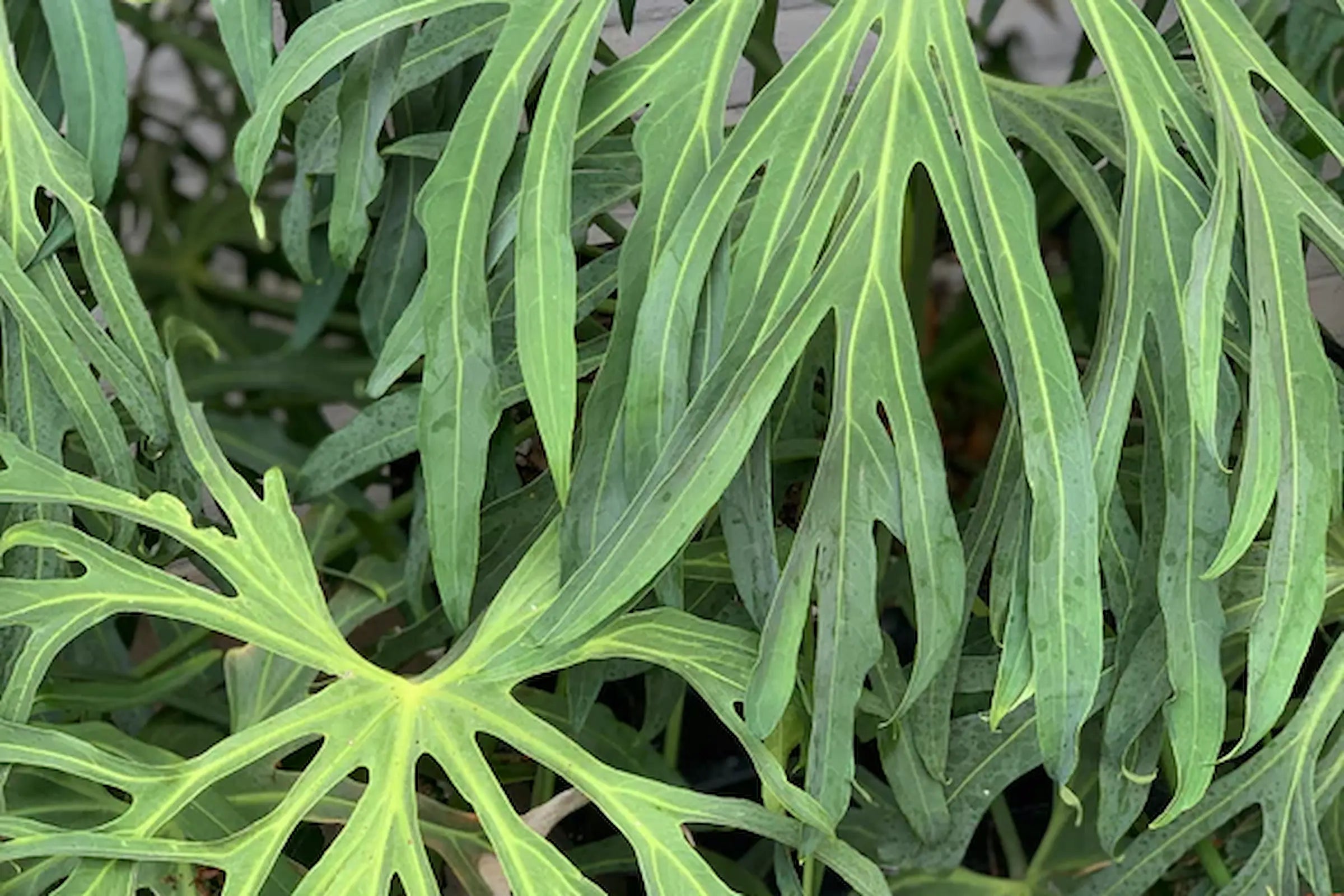
Native to subtropical mountain forests of southern China, the Radermachera sinica has been widely cultivated as an interior tree for its remarkable fine-textured canopy. The bipinnate compound leaves — composed of many small, glossy elliptical leaflets arranged symmetrically along branching stems — create a canopy of extraordinary density and visual texture that reads as delicate from a distance but reveals precise organization up close.
It is a tree that rewards commitment to a position. Once settled in a bright, stable interior spot, the China Doll performs beautifully and grows actively. The challenge is its well-known sensitivity to relocation, which triggers dramatic leaf drop. Understanding this characteristic before placing the tree is the most important aspect of owning it well.
At a Glance
Light & Placement
The China Doll Tree thrives in bright, indirect light — a position near a south or east-facing window with strong, indirect exposure throughout the day, with occasional gentle direct sun tolerated in the morning. In good light it produces dense, glossy foliage and maintains its compact form. In lower light the branching becomes leggy, the internode spacing increases, and the fine-leaved quality that makes this species so architecturally appealing gradually diminishes.
Like most Radermachera species, the China Doll is highly sensitive to relocation — moving it triggers significant leaf drop. Choose its position thoughtfully and commit to it. For a framework on evaluating interior light levels, see our Interior Plant Placement Guide.
Once settled, leave it. The China Doll's sensitivity to relocation is its most notable characteristic. The leaf drop that follows a move can be dramatic but is usually temporary — the tree will restabilize and re-leaf from the same branches within four to six weeks once conditions normalize.
Watering & Reading the Plant
Allow the top inch to two inches of soil to dry between waterings. The China Doll prefers moderate, consistent moisture — not the extended drying of a succulent, but not the consistently wet conditions of a tropical fern. Water thoroughly when you water, allowing it to flow from the drainage holes, then allow the partial dry cycle to complete before returning. In the active growing season this is typically every seven to ten days; in winter, extend to ten to fourteen days. See our guide on how to know when to water your plants.
Well Hydrated
The fine compound leaves are held with full tension and the soil is still moist in the top inch or two. No water needed — continue the current interval.
Ready to Water
The top one to two inches of soil are dry when probed. Leaves may show a very slight loss of their characteristic crispness. Water slowly and thoroughly through the full root zone.
Overwatered
Stop watering immediately. Yellowing leaves dropping while the soil remains consistently wet indicate root stress from overwatering. Allow an extended dry period and assess the root zone if symptoms persist.
The Fine-Leafed Canopy
The Radermachera sinica produces bipinnate compound leaves — leaves made up of many small, glossy, elliptical leaflets arranged symmetrically along branching stems. The individual leaflets are small, but collectively they compose a canopy of impressive texture and density that has a delicate, almost feathery quality from a distance and reveals its precise, organized structure on closer inspection.
This leaf quality — simultaneously delicate in texture and organized in structure — gives the China Doll a versatility in interior design contexts that few other indoor trees can match. It reads as refined and light in rooms where a bold-leafed Ficus would dominate, and as substantial and present in rooms where delicate accent plants would disappear. It holds the middle ground beautifully.
Temperature & Humidity
The China Doll prefers consistent warmth — 65 to 85 degrees Fahrenheit — and moderate humidity. It is sensitive to temperatures below 60 degrees Fahrenheit and to cold drafts from exterior doors, air conditioning vents, or windows left open in cold weather. Cold exposure triggers leaf drop, which is the same response as relocation — dramatic in the short term but usually temporary if the cold source is identified and eliminated.
Moderate humidity — 40 to 55 percent — is sufficient. Standard interior air in most Southern California homes is appropriate without supplemental intervention. In very dry interior conditions during winter heating season, positioning near other plants or placing a tray of water nearby helps maintain adequate ambient moisture.
Fertilizing
Feed monthly during spring and summer with a balanced liquid fertilizer at half strength. The China Doll is an active grower in good conditions and benefits from consistent nutrition through the growing season to support its dense leaf production and active branch development. Stop fertilizing in fall and winter when growth slows significantly. Resume in spring as light increases and new growth becomes visible.
For the complete approach to indoor fertilizing, see our guide on fertilizing indoor plants properly.
Water first, then fertilize. Applying concentrated fertilizer to dry soil damages the root system directly. Water the medium thoroughly first, then apply the diluted fertilizer as a second pass.
Pruning & Shaping
The China Doll responds very well to pruning and can be shaped significantly over time. Prune in spring before the main growing flush. Make clean cuts just above a leaf node using sterilized shears. Each pruned tip will produce multiple branches below the cut, progressively building a denser, fuller canopy. This is how the tree's characteristic compact form is maintained over time — consistent tip pruning rather than heavy cutting.
Remove any leggy, sparse, or poorly positioned stems cleanly at their origin. Do not remove more than one-third of the canopy in any single pruning session — this would reduce the plant's photosynthetic capacity too severely. Regular light pruning is more beneficial than occasional heavy cutting. See our pruning guide for the complete technique.
Repotting
Repot every two years in spring, or when roots are clearly filling the container. The China Doll is a moderately fast root-grower in good conditions. Use a quality well-draining potting mix and size up by one container. After repotting, water lightly and keep the tree in its established position — do not relocate it while it is recovering from the disturbance of repotting.
Propagation: From stem cuttings taken in spring or summer. Take a cutting with two to three leaf nodes, allow the cut end to dry briefly, then place in moist potting mix. Roots develop in three to five weeks in warm, humid conditions. New plants are sensitive to low humidity during establishment — maintain humidity above 50 percent until the cutting has established.
Common Issues
Leaf drop is the most common concern with the China Doll, and it has multiple possible causes — relocation, cold draft, overwatering, or underwatering all trigger the same response. Before adjusting anything, identify the specific cause of the drop.
Leaf Drop (Relocation)
Moving the China Doll to a new position almost always triggers leaf drop. This is temporary — the tree will re-leaf from the same branches within four to six weeks once conditions in the new position stabilize. Do not move it again during the re-establishment period.
Leaf Drop (Environmental)
Cold draft, temperature fluctuation, or overwatering causes the same dramatic leaf drop as relocation. Identify and address the specific source. Stabilize conditions and allow the tree time to recover.
Leggy or Open Branching
Insufficient light — the tree stretching toward its light source with increasing internode spacing. Move to a brighter position and tip-prune to encourage dense regrowth in better conditions.
Yellow Leaves
Overwatering is the most common cause. Allow the soil to dry more between waterings and confirm drainage is functioning correctly. If yellowing is of very old lower leaves, some natural aging of the oldest foliage is normal.
Fine webbing and stippling on the fine compound leaf surfaces in dry conditions. Treat with neem oil or insecticidal soap applied to all surfaces, including the undersides of the small leaflets. Repeat weekly for three to four weeks.
White cottony deposits at leaf axils and new growth points. Treat with isopropyl alcohol on a cotton swab then follow with neem oil. The fine leaf structure provides good cover for mealybug colonies — inspect carefully. Repeat weekly.
Inspect neighboring plants immediately. Scrape away manually and treat all surfaces with neem oil. Repeat weekly for a full month.
Dust on Leaves
The broad leaf surfaces collect dust and reduce photosynthetic efficiency over time. Wipe gently with a soft damp cloth, top and underside. Do not use leaf shine products. Regular cleaning also lets you detect early pest activity before it spreads.
Growth & Lifespan
The China Doll Tree is a rewarding long-term interior tree that grows actively in good light, producing new branch growth and leafing throughout the warm months. Given a stable position, consistent care, and regular tip pruning to encourage density, it develops into a refined, compact specimen of genuine visual presence.
The key insight about owning a China Doll successfully is the stability principle: once it is in the right position and performing well, leave it there. The tree rewards the commitment to a good position by maintaining its remarkable, dense, fine-leafed canopy for years without demanding much more than consistent moderate moisture and monthly feeding through the growing season.
The Plant Daddies Society
Let us handle
the care.
Weekly expert visits, full plant protection, and a living collection that grows with you. The Society takes the guesswork out of plant ownership entirely.
%0A%0A%0A%0A%0A%0A%20%20%0A%0A%20%20Care%20Guide%0A%20%20Radermacherasinica%0A%0A%20%20The%20China%20Doll%20%E2%80%94%20a%20fine-leafed%20indoor%20tree%20from%20southern%20China%20with%20bipinnate%20compound%20leaves...)