How to Care for Your Thaumatophyllum bippinatifidum (Tree Philodendron)
Care Guide
Thaumatophyllum
Bipinnatifidum
The Tree Philodendron. Deeply lobed, dramatically scaled leaves on a thickening self-heading trunk — a tropical statement plant that earns its space and keeps earning it for decades.
The Plant
Bold structure.
South American origin.
Native to the subtropical rainforests of southern Brazil, Bolivia, Argentina, and Paraguay, the Thaumatophyllum bipinnatifidum — long sold under the name Philodendron selloum — is one of the most architecturally significant plants available for interior use. In the wild it grows as a sprawling, ground-hugging giant with leaves that can exceed a meter across, developing a thick, scarred trunk and long aerial roots that anchor it into the forest floor. Indoors, it grows more contained but loses none of its impact.
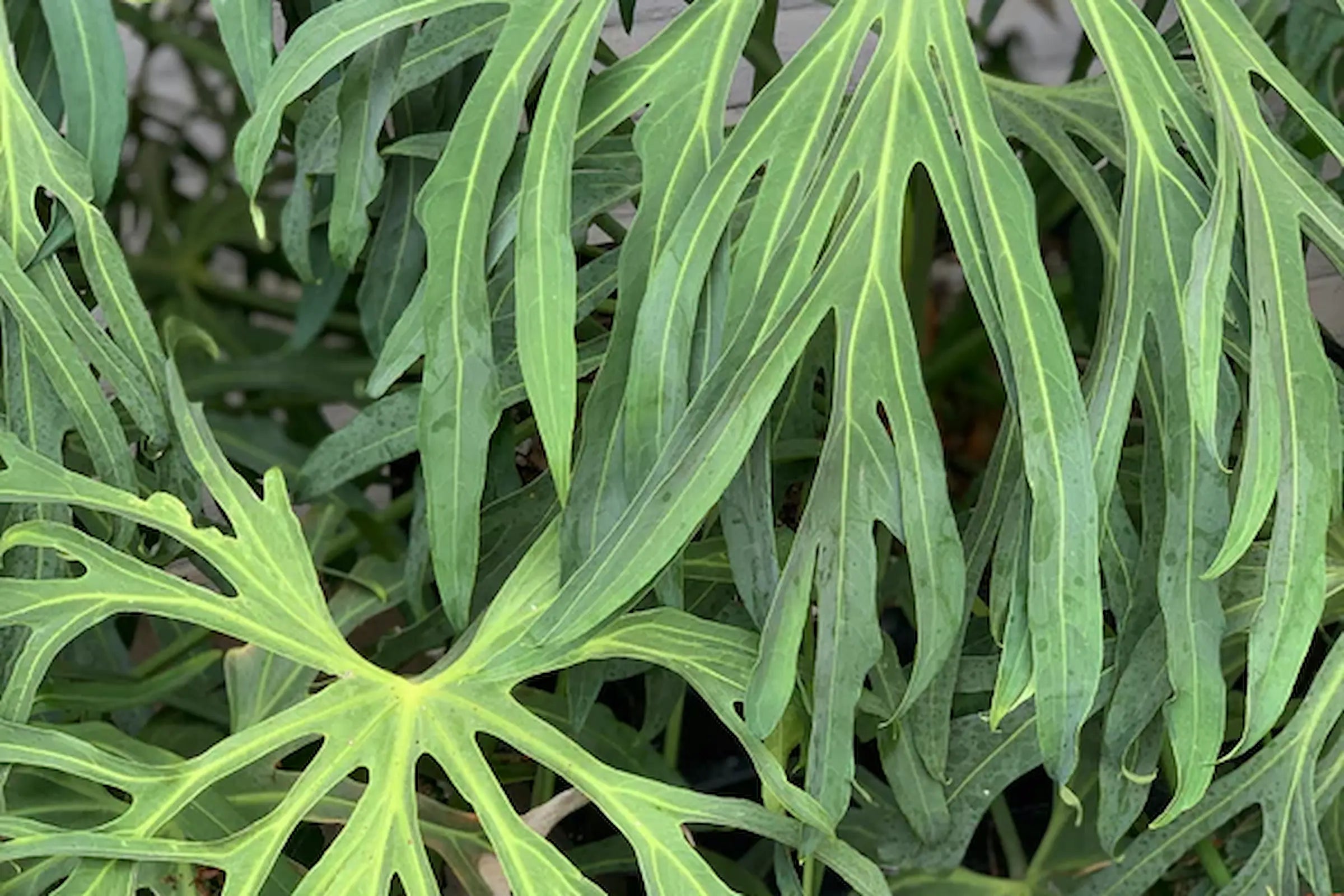
What sets this species apart from most tropicals in a collection is the leaf itself. Each one is deeply, irregularly lobed — cut almost to the midrib in mature specimens — creating a dimensional, almost sculptural silhouette that moves in the slightest air current. No two leaves lobe identically, which gives the canopy an organic, unpredictable quality that no artificial arrangement can replicate. It is a plant that commands attention by simply existing.
At a Glance
Light
The Thaumatophyllum bipinnatifidum is more forgiving of lower light than many tropicals, but it does its best work in bright, indirect interior light with steady daily illumination. In strong light, the leaves develop their deepest lobing, their richest color, and the dense, layered canopy structure that makes a mature specimen so visually compelling. In lower light, the plant survives — but growth slows, leaves emerge smaller and less deeply cut, and the plant loses the sculptural presence that makes it worth having.
A north-facing room will keep it alive but not thriving. An east- or south-facing position with several hours of indirect light daily is the right target. It does not need or benefit from direct sun through glass — filtered, ambient brightness is ideal. If you're unsure how to assess what your space actually offers, our Interior Plant Placement Guide covers the practical approach.
On consistency: Like many large-leafed tropicals, this species prefers a stable position. Occasional rotation to even out growth is fine, but frequent relocations — particularly to lower-light areas — cause leaves to emerge progressively smaller as the plant adapts. Choose the brightest available position from the start.
Watering & Reading the Plant
Allow the soil to dry partially — roughly the top third to half — between waterings. The Thaumatophyllum bipinnatifidum originates from a tropical environment with regular rainfall, but it is not a plant that wants to sit in saturated soil. The roots need both moisture and oxygen, and a medium that stays consistently wet begins to degrade root health in ways that manifest slowly as yellowing, drooping, and reduced vigor.
Check below the surface before every session rather than watering on a schedule. In summer with good light and warmth, weekly or every ten-day watering is typical. In winter as growth slows, that extends to every two weeks or more. When the top half of the soil feels dry to the touch and dry on a skewer or finger pushed a few inches in, water slowly and thoroughly until it flows from the drainage holes. Our guide on how to know when to water covers the full approach.
Leaves firm, upright
Well-hydrated. The petioles are holding strong and the leaves have good tension. No water needed — check again in a few days.
Slight droop or softness
Ready for water. The plant is signaling mild dryness. Confirm with the soil — if the top half is dry, water deeply and allow a full partial-dry cycle before the next session.
Yellowing, mushy stems
Overwatering. Stop all watering immediately. Allow the medium to dry significantly before the next session. Check the base of the trunk for any softening that would indicate rot.
Humidity & Aerial Roots
As a rainforest native, the Thaumatophyllum bipinnatifidum genuinely benefits from moderate to high ambient humidity — 50% and above is ideal, though it tolerates typical household levels without dramatic distress. In very dry indoor air, particularly during winter when heating systems strip moisture from the environment, the leaf edges may begin to crisp and brown over time. This is cosmetic damage that does not harm the plant, but it accumulates over seasons and progressively impacts the appearance of the canopy.
A humidifier running nearby is the most effective solution. Pebble trays, misting, and grouping plants together all help marginally but are not substitutes for genuine ambient humidity in a very dry environment. If the plant is near an air conditioning or heating vent, relocate it — the direct airflow is more damaging than low humidity alone.
As the plant matures, aerial roots emerge from the trunk — thick, cord-like structures that in the wild extend to the ground to anchor the plant and absorb additional moisture and nutrients. Indoors, they hang freely or can be guided into the soil. Do not remove them; they are a sign of a healthy, maturing specimen. If they become unwieldy, they can be tucked into the soil of the same pot rather than severed.
Fertilizing
Feed monthly through spring and summer with a balanced liquid fertilizer at full strength, or a formula higher in nitrogen to support the large-leafed, fast-growing canopy this species is capable of producing. Unlike slow-growing succulents or caudiciforms that respond poorly to heavy feeding, the Thaumatophyllum bipinnatifidum actually rewards consistent fertilization with noticeably larger, more deeply lobed leaves and a denser overall form. For a full guide on indoor plant fertilizing, see our post on fertilizing indoor plants properly.
Pause feeding entirely in fall and winter when growth slows and the plant enters a lower-metabolic period. Resume in spring when new leaves begin to push from the center of the rosette — the tightly furled new growth that unfurls over days into full-sized leaves is one of the most rewarding things to watch with this species. Each new leaf, as it opens, can be noticeably larger than the last in a well-fed, well-lit specimen.
Never fertilize into dry soil. Always water thoroughly before feeding. Fertilizer applied to dry roots concentrates salts at the root tips — a slow injury that manifests as edge browning and reduced vigor weeks after it occurs.
Pruning & Grooming
The Thaumatophyllum bipinnatifidum is a self-heading species — meaning it does not vine or climb, but grows outward and upward from a central point, gradually forming its characteristic trunk. It cannot be pruned to control its overall size in the way a vining plant can. The leaves are what they are, and the plant will continue expanding as long as conditions support it. What can be managed is the removal of older, aging leaves as they naturally yellow and decline.
Remove spent leaves cleanly at the base of the petiole, close to the trunk. This is not just cosmetic — it prevents the decaying material from sitting against the stem where it can harbor moisture and encourage rot. As the lower leaves are removed over time, the trunk gradually becomes visible: a distinctive, scarred, ring-marked structure that adds architectural character and reveals the plant's age. This deliberate exposure of the trunk is the same approach used with the Aloe barberae — grooming that celebrates the structure slow growth has built. Our guide on pruning indoor plants professionally covers technique in detail.
Repotting
Younger specimens grow quickly and may need repotting every one to two years as roots fill the container. Mature plants with established trunks settle into a slower pace and can remain in the same vessel for several years before outgrowing it. The signal to repot is roots visibly emerging from drainage holes, circling at the soil surface, or a noticeable slowdown in growth and vigor despite adequate light and water. Spring is the right window — the plant has the active growth energy to establish quickly into fresh medium.
Use a well-aerated indoor potting mix — the Thaumatophyllum bipinnatifidum wants moisture retention but not waterlogging. A base mix amended with perlite or chunky bark creates the balance of moisture and drainage this species performs best in. Size up by one container only. An oversized pot holds excessive moisture between root systems, extending the dry-down period and creating conditions that resemble overwatering even when you're watering correctly.
After repotting, the plant may drop a lower leaf or two as it redirects energy toward root re-establishment. This is temporary. Maintain its position, continue normal watering, and hold fertilizer for three to four weeks to allow the root system to stabilize in the fresh medium.
Common Issues
Yellowing Lower Leaves
The most common sign of overwatering. Some lower leaf turnover is natural as the plant matures, but progressive yellowing upward through the canopy points to a watering issue. Allow a longer dry interval and check that drainage is functioning correctly.
Crispy Leaf Edges
Low humidity, direct vent airflow, or extended dryness. Check that the plant is not near a heating or cooling vent, assess ambient humidity during winter months, and ensure the watering interval isn't extending too far.
Drooping Leaves
Typically signals the plant has dried out past its comfortable threshold. Check the soil — if confirmed dry, water deeply. If the soil is wet and drooping persists, the issue is root stress from overwatering rather than underwatering.
Small or Poorly Lobed Leaves
Insufficient light or nutrition. Deep lobing requires strong light and adequate feeding during the active season. Move to a brighter position and ensure consistent monthly fertilization through spring and summer.
Fine speckling on leaf surfaces or webbing in dry, stagnant conditions. Treat with neem oil or insecticidal soap applied thoroughly to all surfaces. Wipe large leaves clean with a damp cloth after treatment. Repeat weekly for three to four weeks.
White cottony clusters at leaf joints, along the trunk, and where petioles meet the stem. Treat with isopropyl alcohol on a cotton swab for direct contact, then follow with a full neem oil application. Repeat weekly until completely clear.
Small rounded bumps along stems and petioles — easily overlooked until surrounding foliage begins to yellow or decline. Scrape off manually, then treat with neem oil across all stem surfaces. Check neighboring plants immediately.
Root Rot
Softening at the base of the trunk, a sour smell from the soil, and persistent wilting despite wet soil are the main signals. Remove from the pot, cut away any black or mushy roots, allow to dry for a day, then repot into fresh well-draining medium. Adjust the watering interval significantly going forward.
Growth & Lifespan
The Thaumatophyllum bipinnatifidum is among the most rewarding large-format plants for a bright interior. In good conditions — strong indirect light, consistent moisture, regular feeding — it pushes new leaves at a pace that is genuinely satisfying: each one emerging as a tightly coiled spear from the center of the rosette, slowly unfurling over several days into a full-sized, deeply lobed blade that dwarfs the leaf before it. A well-grown specimen in its second or third year looks categorically different from the one that arrived.
Over years, the trunk develops visibly — ringed with the scars of shed petioles, thickening slowly, taking on the textured, ancient quality of a plant that has been growing in the same spot for a long time. The aerial roots extend. The canopy opens. The overall scale of the plant shifts from impressive to genuinely commanding — something that anchors a room rather than decorating it.
Given adequate space, consistent care, and a bright interior position, this species can grow for decades. It does not have a natural ceiling indoors in the way a tree does — it simply continues expanding until its environment limits it. Plan for its footprint. A mature specimen with a full canopy may spread two meters or more across. That is not a problem to manage; it is the point. This is a plant that fills a space with intention, and grows more worth the space it occupies with every passing year.
The Plant Daddies Society
Let us handle
the care.
Weekly expert visits, full plant protection, and a living collection that grows with you. The Society takes the guesswork out of plant ownership entirely.