How to Care for Your Acacia burkei (Black Monkey Thorn)
Care Guide
Acacia
Burkei
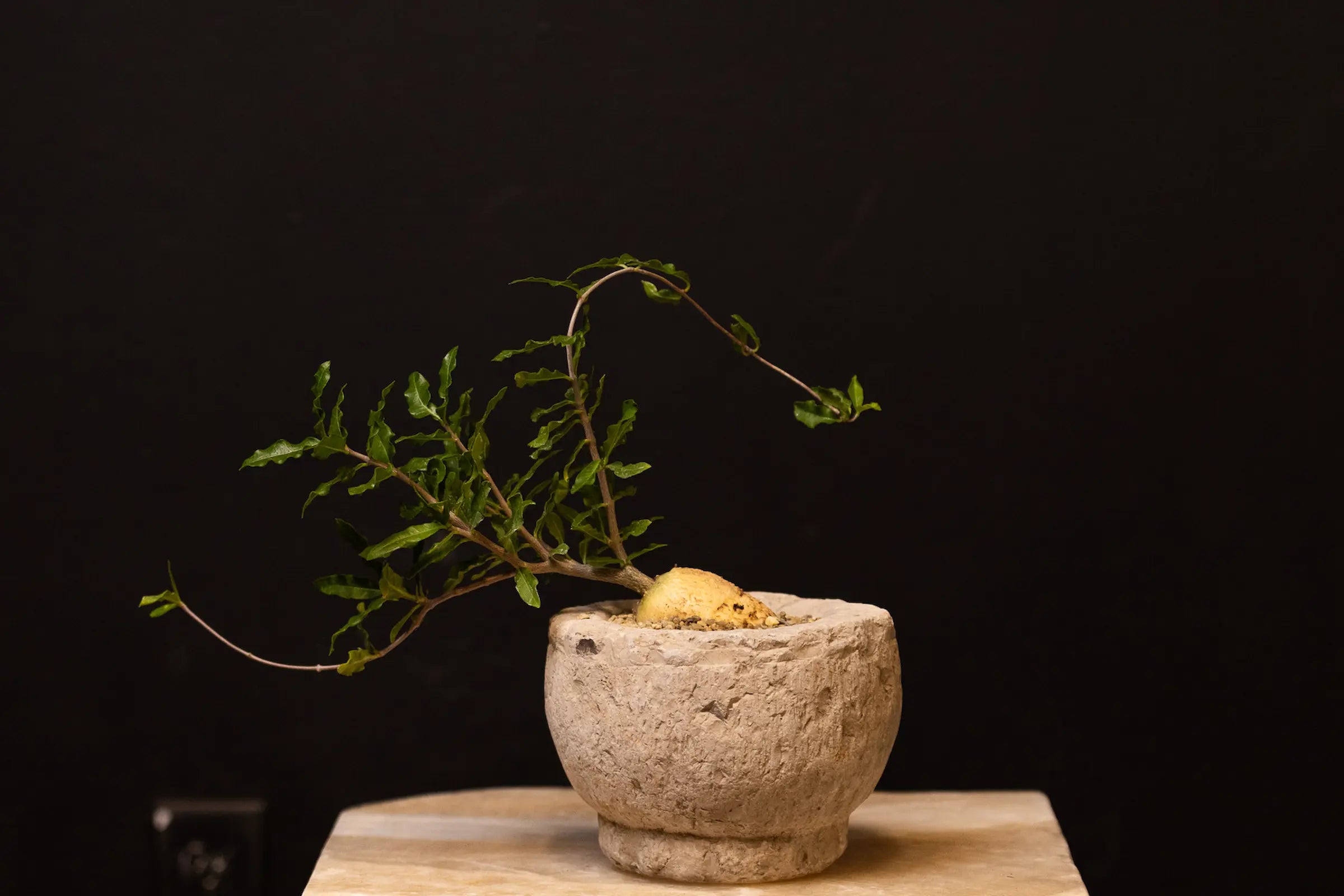
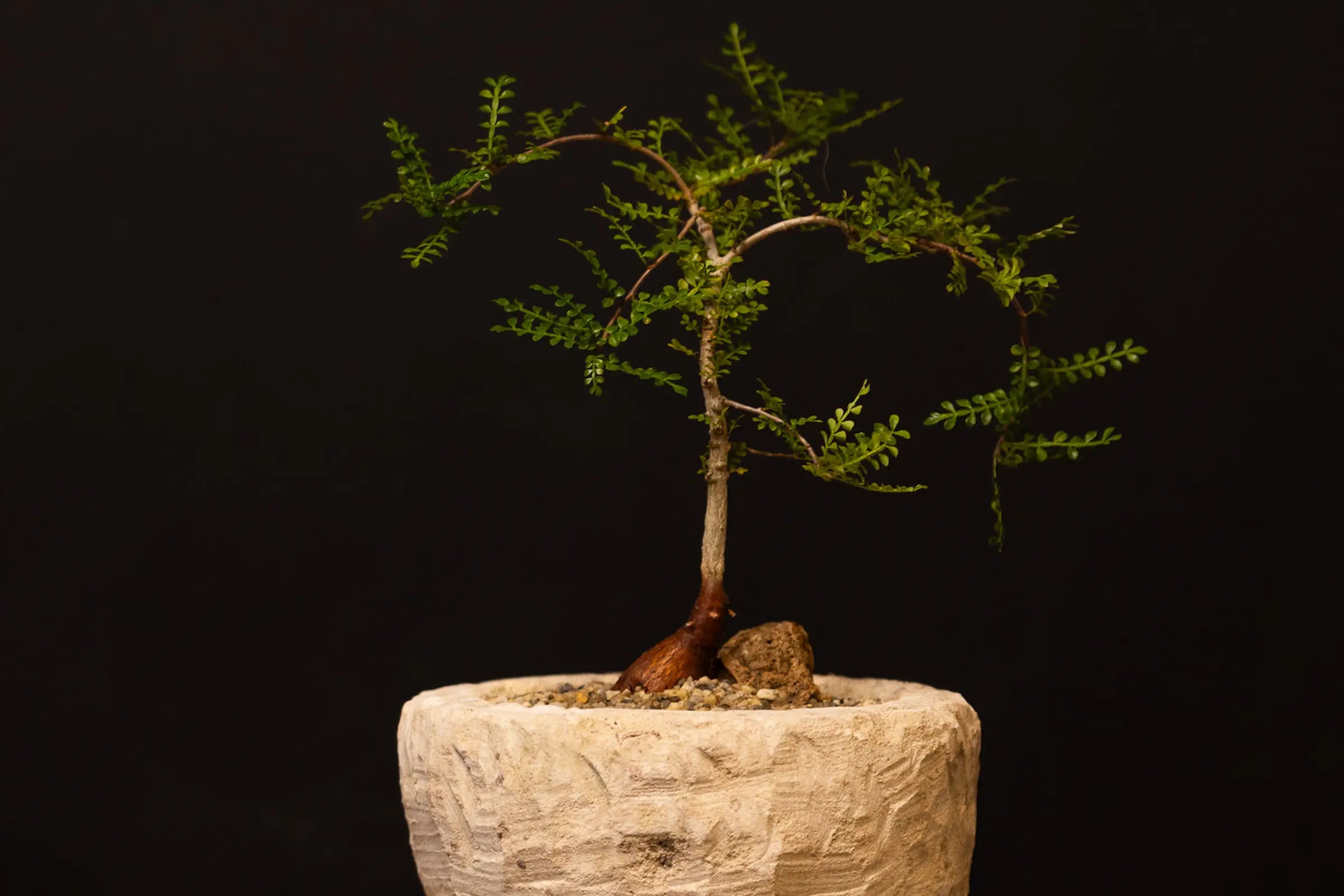
The Black Monkey Thorn. A savanna-native with feathery bipinnate foliage, dark curved thorns, and the refined architectural presence of the African bushveld.
The Plant
Wild structure.
Minimal demands.
Native to the savannas and bushveld of South Africa, Zimbabwe, Mozambique, and Botswana, the Acacia burkei has spent thousands of years adapting to conditions most plants couldn't survive — thin, rocky soil, scarce rainfall, and relentless sun. The result is one of the most structurally beautiful and genuinely easy-care statement trees you can bring indoors.
Its fine, bipinnate foliage creates a soft, layered canopy that feels both wild and considered. Its dark, curved thorns give it an edge that most indoor trees lack entirely. And unlike most statement plants that demand constant attention, this one actively thrives on a hands-off approach.
At a Glance
Light
The Black Monkey Thorn is a savanna species — it is built for intense, unfiltered sun, and indoors it needs as close to that as you can provide. A south-facing window with several hours of direct sunlight daily is ideal. Unlike most indoor trees that prefer bright indirect light, this one genuinely benefits from direct sun exposure, which keeps the canopy tight, the branching well-defined, and the overall structure strong and compact.
In lower light, the tree survives but slowly loses what makes it remarkable. Foliage becomes sparse, the feathery quality of the canopy diminishes, and new growth stretches rather than building substance. Strong light is not optional for this species — it's what the plant is optimized for.
Supplementing with grow lights: If your space doesn't offer strong natural light, a high-output full-spectrum grow light positioned close to the canopy is a highly effective substitute. Rotate the pot a quarter turn every few weeks to maintain a balanced, symmetrical silhouette.
Watering
The Acacia burkei is a true drought-tolerant species, evolved for environments where rainfall is scarce, unpredictable, and followed by extended dry periods. Indoors, this means less is almost always more. Allow the soil to dry almost completely between waterings. When you do water, do it thoroughly — slowly until the entire root ball is saturated — then allow an extended dry period before watering again.
In summer, with more light and warmth, you may water every 10–14 days. In winter, stretch to once a month or even less. When in doubt, wait. This species is far more tolerant of drought than of excess moisture, and consistent overwatering is the primary way it declines indoors.
Reading your plant: Slight leaf droop or minor foliage softening signal the tree is ready for water. Yellowing leaves or soft stems at the base are signs of too much moisture — pull back immediately and allow a full dry-out before watering again.
Humidity & Temperature
Unlike almost every other statement tree, the Black Monkey Thorn actively prefers dry air. It evolved in low-humidity savanna conditions and adapts well to the dry interiors that challenge most tropical plants — heated spaces, air-conditioned rooms, and arid climates are all comfortable for this species. No humidifier needed, no grouping required.
Temperature should stay between 60–90°F. It can handle brief dips slightly below this range without serious damage, but sustained cold — anything below 50°F — causes stress, foliage loss, and potential root damage. Keep it away from cold drafts near windows in winter. As with light, this is a plant that rewards a warm, bright position and asks very little else.
Soil & Fertilizing
This species demands a light, fast-draining, low-nutrient growing medium. In its native habitat it grows in poor, rocky, well-aerated soils — rich, moisture-retaining mixes are the opposite of what it needs. A standard indoor potting mix amended heavily with perlite or coarse horticultural sand creates the right structure.
Indoor Potting Mix
Perlite or Coarse Sand
Fertilizing follows the same principle — less than you'd use for almost any other plant. Feed at quarter strength once a month through spring and summer only. This species is highly sensitive to over-fertilizing; too much produces weak, rapid growth that loses the refined, compact quality that makes it architecturally beautiful. Pause entirely from late fall through winter.
Quarter strength only: Half the dilution you'd use for most tropical plants — and only during the active growing season. If you notice white crusty deposits forming on the soil surface, flush with plain water to clear accumulated salts.
Pruning & Shaping
The Black Monkey Thorn responds beautifully to considered pruning and can be shaped into increasingly refined forms over time. Its naturally architectural branching structure means even light, intentional cuts dramatically improve the tree's silhouette. Prune in early spring before new growth emerges, making clean cuts just above a node or branching point. Remove crossing or inward-growing branches to keep the canopy open and airy.
Always wear gloves and use long-handled shears. The dark, curved thorns are sharp and can cause serious injury during pruning. Take care with disposal of clippings as well — thorns remain hazardous even on removed material.
Collector's Note
Exceptional bonsai potential
The Acacia burkei is highly regarded in the bonsai community for its striking thorned branches, delicate bipinnate foliage, and naturally architectural form. With patient, deliberate pruning over years, it develops into an extraordinary specimen that showcases the full drama of its wild origin at an intimate scale. If bonsai practice is of interest, this is one of the most rewarding African species to work with.
Repotting & Propagation
Repot every two to three years, or when roots begin to circle the container or growth slows noticeably despite consistent care. This species is a slow grower indoors — it won't need repotting as frequently as most tropical trees. Spring is the right window. When repotting, choose a container only one to two inches larger than the current one and refresh the entire soil mix. Handle the roots with care — aggressive disturbance can cause a setback of several weeks.
For propagation, the Black Monkey Thorn is most reliably grown from seed. Scarify lightly by nicking the outer coat or soaking in warm water for 24 hours before planting. Sow in a warm, well-lit position in a sandy, well-draining mix. Germination typically occurs within one to three weeks. Stem cutting propagation is possible but variable — take semi-hardwood material in late spring, treat with rooting hormone, and expect mixed results.
Seasonal Calendar
Spring
Resume light fertilizing. Repot if needed. Begin pruning and shaping. Gradually increase watering as temperatures rise.
Summer
Peak season. Water when soil is nearly fully dry. Fertilize monthly at quarter strength. Maximize light. Monitor for pests on new growth.
Autumn
Wind down. Stop fertilizing. Extend dry periods significantly. Move to the brightest available window as days shorten.
Winter
Deep rest. Water sparingly — allow soil to dry fully for 3–4 weeks between sessions. No fertilizer. Keep warm and away from cold drafts.
Common Issues
Yellowing Leaves
Almost always a moisture issue. Allow the soil to dry out completely for an extended period — longer than feels comfortable. This tree's roots are built for drought, not sustained moisture.
Leaf Drop
Triggered by relocation, sudden temperature changes, or cold drafts. Some seasonal leaf drop in winter is completely normal — allow 2–4 weeks for the tree to settle before making any changes.
Sparse or Leggy Growth
A direct sign of insufficient light. Move to the brightest available location. This species needs more direct sun than most indoor trees to maintain its characteristic compact, refined canopy.
Crispy Leaf Tips
Usually caused by an extended dry period or hot forced air nearby. Check soil moisture and move away from any direct heat sources such as radiators or heating vents.
Dusty Foliage
The fine, feathery foliage accumulates dust over time, reducing light absorption. Gently mist the canopy or wipe with a soft damp cloth periodically to keep it clean and efficient.
Scale, Mealybugs, Spider Mites
Particularly common in dry indoor environments. Treat at first sight with neem oil or insecticidal soap weekly for 3–4 weeks. Early detection matters — fine foliage allows infestations to spread quickly before becoming obvious.
Growth & Lifespan
The Acacia burkei is a slow, deliberate grower — and that pace is exactly what gives it such enduring architectural quality. It will not transform quickly, and it doesn't need to. Each season it adds refined new branching and extends its canopy in a way that compounds beautifully over years.
With strong light, appropriate drying cycles, and consistent seasonal care, it becomes one of the most distinctive and long-lived specimens in any interior. A plant that is left in a good spot, watered correctly, and allowed to grow at its own pace will reward you with a silhouette that no rapidly-growing tropical tree can replicate. This is a plant for people who think in decades.
The Plant Daddies Society
Let us handle
the care.
Weekly expert visits, full plant protection, and a living collection that grows with you. The Society takes the guesswork out of plant ownership entirely.