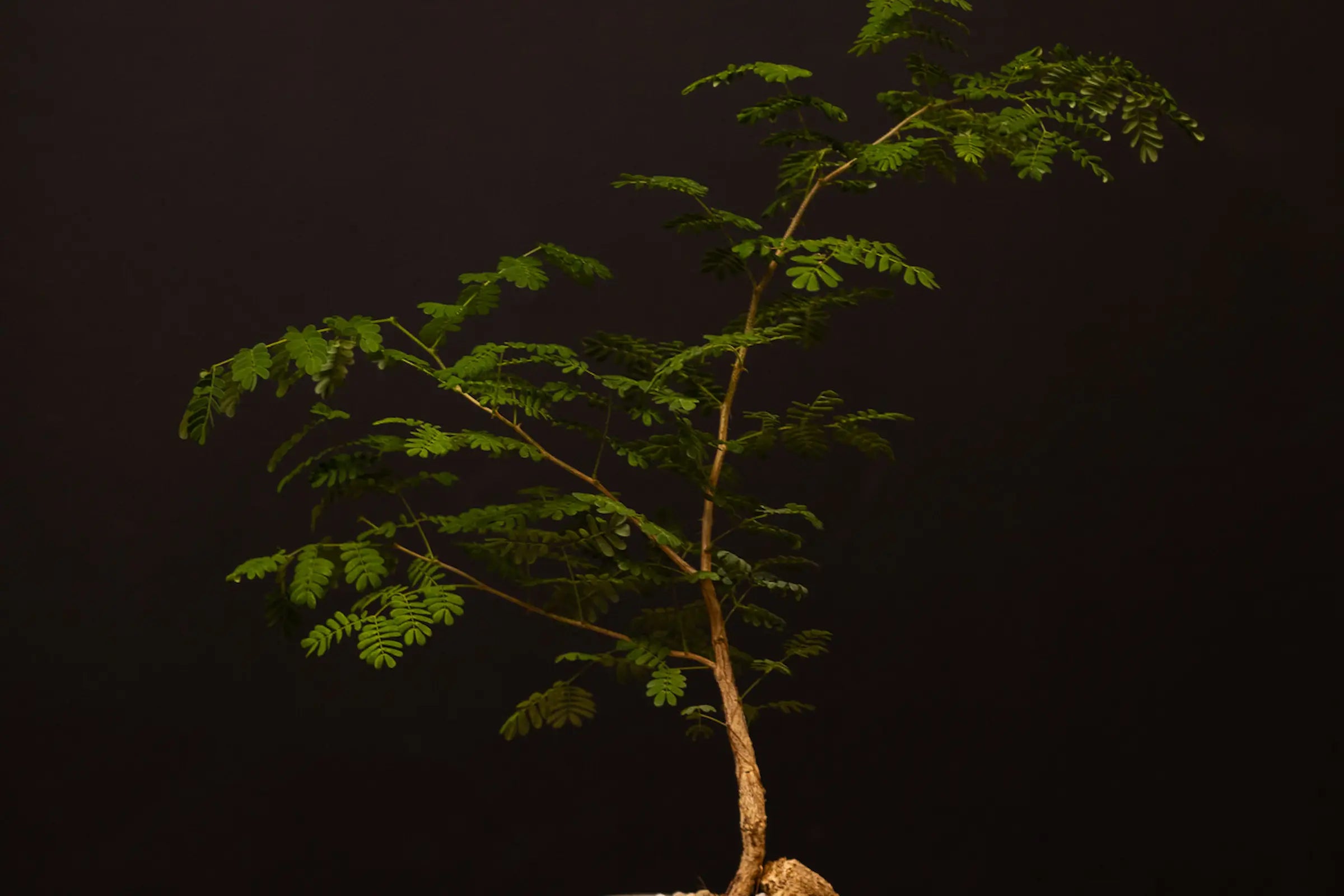
How to Care for Your Fockea crispa
Care Guide
Fockea
Crispa
A South African caudiciform with a deeply wrinkled, warty caudex and wandering twining vines — one of the most texturally fascinating sculptural plants you can keep indoors.
The Plant
Ancient texture.
Wandering vines.
Native to the arid rocky landscapes of Namibia and South Africa, the Fockea crispa is a member of the milkweed family — a relative of Hoya, Stapelia, and Adenium. Like all caudiciforms, it survives the long dry seasons of its native habitat by storing water and nutrients in a dramatically swollen underground base. Above ground, it produces slender twining vines with small, wavy-edged leaves — the crispa name referencing those curled, undulating leaf margins.
What makes it extraordinary is the caudex itself. Deeply furrowed, warty, and irregular in texture, it develops over years into something that looks genuinely geological — less like a plant base and more like a piece of carved stone. It is one of the most texturally compelling caudiciforms available for indoor collections, and it asks very little in return for the character it builds.
At a Glance
Light
The Fockea crispa comes from sun-exposed, rocky terrain and performs best in the brightest position available — a south-facing windowsill with direct sun for several hours daily is ideal. Strong, consistent light supports a firmer caudex, more balanced vine production, and the compact leaf character that gives the plant its refined quality. It will tolerate bright indirect light but develops more slowly and with less structural intensity.
In lower light the vines elongate, leaves space further apart, and the plant loses the tidy, wandering quality it has in good conditions. It also becomes more vulnerable to overwatering in dim conditions, since reduced light slows the drying process while watering intervals often stay the same. The two problems compound quickly — more light solves both.
Stability matters: Choose a position and commit to it. The Fockea crispa adjusts its growth orientation over time and benefits from the stability of a consistent location. Avoid frequent moves — each relocation triggers a re-adjustment period that can manifest as leaf drop or paused vine growth for several weeks.
Watering
The caudex stores moisture between watering cycles — the Fockea crispa is built for extended dry periods and genuinely benefits from them. Allow the soil to dry almost completely before watering again. Check a few inches below the surface rather than judging by the top layer alone, then water slowly and thoroughly so the entire root zone hydrates before the next long dry period begins.
In summer this may mean watering every two to three weeks. In winter, once a month or less is appropriate — and if the plant drops its leaves for dormancy, you can hold off almost entirely until new growth emerges in spring. Overwatering is the primary cause of decline, and the damage is rarely visible until it has already progressed to the caudex base.
Firm & taut
Well-hydrated. The caudex is holding adequate moisture. No water needed — continue the current dry interval.
Slightly wrinkled
Ready for water. Surface wrinkling signals the caudex is drawing on reserves. Water thoroughly, then allow a full dry cycle.
Soft or spongy
Overwatering. The caudex tissue is saturated. Stop watering immediately, allow extended drying, and inspect the base for rot.
Milky sap: When vines or leaves are damaged, the Fockea crispa produces a white milky sap characteristic of the milkweed family. This sap is mildly toxic and can cause skin irritation — wash your hands after handling any cut stems and keep the plant away from children and pets.
The Caudex
The caudex is the defining feature of this plant and what separates a mature Fockea crispa from almost everything else available for indoor collection. It develops over years into a deeply furrowed, warty, irregularly textured base that resembles carved stone more than living tissue — each groove and protrusion accumulated slowly over seasons, each one the record of a dry period survived.
Caudex development cannot be rushed. What you can do is support it: strong light, appropriate dry cycles, and a snug container that encourages the root system to build density rather than sprawling into excess soil. Each time you repot, raise the caudex slightly higher above the soil line to expose more of the base — this is both visually dramatic and completely healthy for the plant.
Dormancy
The Fockea crispa is semi-deciduous — in cooler months with reduced light it may drop some or all of its leaves and enter a rest period. This is completely normal and mirrors its natural seasonal cycle in southern Africa. Do not mistake bare vines for a dying plant.
During dormancy, reduce watering significantly — once a month or less, guided entirely by caudex firmness rather than any fixed schedule. Do not fertilize. Keep the plant in its warmest, brightest position and maintain temperatures above 55°F. New vine growth will emerge in spring as temperatures and light increase, often pushing from multiple points simultaneously. The caudex should remain firm throughout the dormant period — softness is the only genuine cause for concern during rest.
Vine drop vs. caudex health: A bare plant with a firm caudex is a resting plant. A bare plant with a soft or collapsing caudex is an overwatered plant. These two situations require completely opposite responses — never water in response to bare vines alone.
Soil & Temperature
Use a fast-draining, low-organic mix — a quality cactus or succulent base amended with 30–40% perlite or pumice. The medium should dry within two to three days of watering at most. Standard potting mix retains too much moisture and creates conditions the Fockea crispa's root system cannot handle for extended periods.
Keep temperatures between 65–95°F. This species is cold-sensitive and should never be exposed to temperatures below 50°F for sustained periods. Keep it away from cold windows, drafts, and exterior walls in winter. Warmth and light are the two environmental constants that matter most — everything else is secondary to getting those right.
Fertilizing
Feed monthly through spring and summer with a balanced liquid fertilizer at standard dilution. The Fockea crispa is a moderate feeder during its active season and responds to consistent light feeding with stronger vine production and steadier caudex development. Avoid overfeeding — excess fertilizer promotes rapid, weak vine growth at the expense of the compact, textured character the plant is known for.
Stop feeding entirely when the plant drops its leaves or as growth visibly slows in fall. Resume only when new growth emerges in spring — not on a calendar schedule, but in response to what the plant is actually doing.
Vines & Training
The wandering vines of the Fockea crispa are part of what makes it so visually interesting — they wind and reach in a way that feels animated, like the plant is always mid-movement. You have two main options for managing them.
Vine Management
Let them wander or train them up
Left to trail freely, the vines drape and wander in whatever direction they encounter light — creating a soft, organic contrast against the hard, sculptural caudex. This is the most natural presentation and requires only occasional trimming to keep lengths manageable.
Alternatively, provide a small trellis, bamboo stake, or piece of driftwood for the vines to twine around. The plant will grip readily and can be guided into a more upright, architectural shape that emphasizes the caudex at the base. Training also encourages more branching along the vine, producing a denser, fuller appearance over time.
Either approach is valid — the choice depends on the aesthetic you're working toward in the space.
To encourage branching, pinch or trim the growing tip of an active vine just above a node. The plant will push new growth from below the cut, gradually producing a fuller vine structure. Remove yellowing or aging leaves and spent sections of vine cleanly at the base to keep the presentation tidy.
Repotting
Repot every two to three years, or when roots have filled the container and growth has slowed noticeably despite consistent care. Spring is the right window — repot just as new growth begins pushing and the plant is entering its most active phase.
Use a completely fresh fast-draining mix and size up by one container only. At each repotting, raise the caudex slightly higher to expose more of the wrinkled base above the soil line — this is both aesthetically dramatic and structurally healthy, allowing the surface of the caudex to breathe and develop its texture more visibly. After repotting, wait one to two weeks before watering to allow disturbed roots to callous.
Common Issues
Yellowing Leaves
Almost always linked to overwatering or soil that stays damp too long between cycles. Allow a full dry-out, review your watering interval, and ensure the medium is draining effectively.
Soft or Spongy Caudex
The most serious warning sign — prolonged moisture has reached the caudex base. Stop all watering immediately. Allow extended drying. Inspect the base and roots for rot and repot in fresh dry mix if affected tissue is found.
Weak or Leggy Vines
Long gaps between leaves and thin, reaching vine growth — insufficient light. Move to a brighter position. Trim the leggiest sections back to a node to encourage denser regrowth in better conditions.
Leaf Drop (winter)
Normal semi-deciduous behavior as light and temperature drop in fall and winter. As long as the caudex remains firm, the plant is resting. Reduce watering and wait for spring regrowth.
Leaf Drop (in season)
Out-of-season drop points to environmental stress — a sudden move, cold draft, or overwatering. Stabilize conditions. Check the caudex firmness to distinguish stress from rot.
Mealybugs / Scale
Check the base of leaves and where vines meet the caudex. Treat with isopropyl alcohol on a cotton swab followed by a neem oil application. Repeat weekly for three to four weeks. Good airflow and appropriate dryness deter reinfestation.
Growth & Lifespan
The Fockea crispa grows very slowly — and the caudex that results from that pace is irreplaceable. There is no way to acquire the texture of a twenty-year-old specimen except by growing it for twenty years. Each wrinkle and groove is the accumulation of seasons of dry cycles, careful watering, and appropriate light. The plant is, in the most literal sense, a record of the care it received.
With patience and consistency it becomes one of the most singular objects in an interior — something that invites close inspection in a way that most plants don't, that reads differently each time you look at it, and that deepens in character every year it stays in your care. It is not a quick acquisition. It is a long-term companion.
The Plant Daddies Society
Let us handle
the care.
Weekly expert visits, full plant protection, and a living collection that grows with you. The Society takes the guesswork out of plant ownership entirely.