How to Care for Your Aloe dichotoma (Quiver Tree Aloe)
Care Guide
Aloe
Dichotoma
The Quiver Tree. One of southern Africa's most iconic desert specimens — perfectly forked golden branches, blue-green rosettes at every tip, and canary-yellow winter flowers that light up the entire plant.
The Plant
Perfect geometry.
Desert permanence.
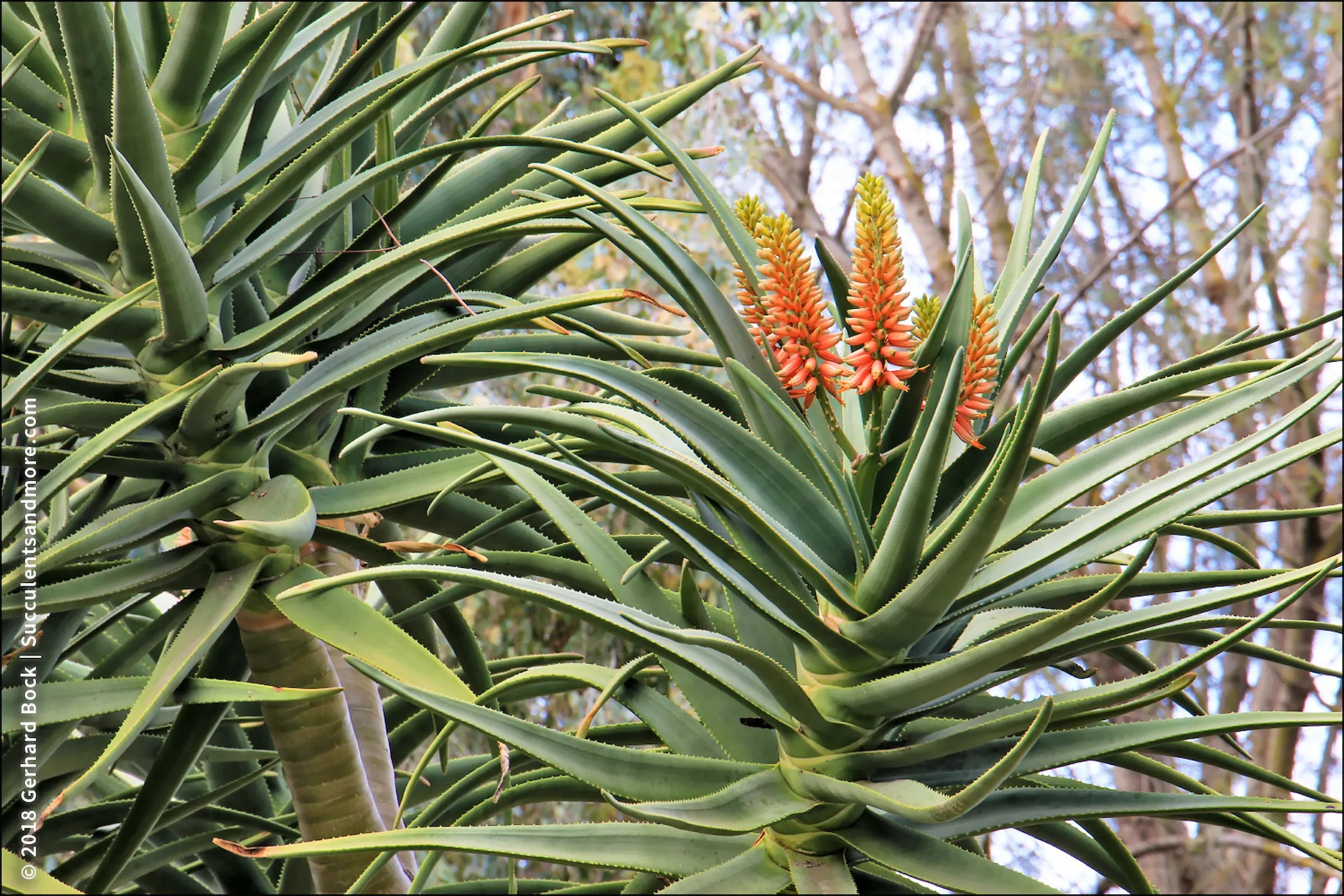
Native to the arid Namaqualand and Namib Desert regions of South Africa and Namibia, the Aloe dichotoma is one of the most architecturally striking plants in existence. Its branching is mathematically precise — each stem forks into exactly two, then two again, then two again — creating a perfectly symmetrical canopy of blue-green rosettes above a trunk covered in smooth, pale golden bark that peels in papery layers like ancient parchment.
The name dichotoma means divided in two — a direct description of that forking pattern. The common name, Quiver Tree, comes from the San Bushmen of southern Africa, who historically hollowed out the branches to craft quivers for their arrows. In nature, mature specimens can be centuries old. In a container outdoors, it becomes one of the rarest and most genuinely extraordinary specimens you can grow.
At a Glance
Light
The Quiver Tree demands full, unfiltered outdoor sun — more intensely than almost any other container specimen. In its native Namaqualand, it grows on exposed rocky hillsides under some of the most intense UV radiation on earth, with constant airflow and no shade at any point in the day. In cultivation, it needs a minimum of six to eight hours of direct sun daily, and a fully open south- or west-facing position with no overhead obstruction is ideal.
Light does more than sustain this plant — it defines it. Sufficient sun maintains the tight, geometric rosettes at each branch tip, supports the gradual thickening of trunk and branches, and is the primary driver of the spectacular winter flowering this species produces. In insufficient light, rosettes stretch and lose their precise geometric form, the trunk develops slowly, and the plant's defining symmetry begins to dissolve. There is no recovering that symmetry once it's gone.
Airflow matters as much as light intensity: The Quiver Tree thrives in open, breezy conditions. Good airflow around the plant reduces pest pressure, prevents moisture buildup at branch bases, and mimics the exposed hillside conditions of its native habitat. A sheltered corner with trapped humid air is the worst possible position for this species — even if the light is strong.
Acclimating to full sun: If your Quiver Tree has been in lower light, introduce it to full outdoor sun gradually over one to two weeks. Even sun-adapted species can scorch when moved abruptly from lower-light conditions — the pale golden bark is particularly vulnerable.
Watering
The Quiver Tree is among the most drought-tolerant plants you can grow — built for a landscape where annual rainfall is measured in single digits. The trunk and branches store significant moisture reserves, allowing the plant to go weeks or months without water without stress. In cultivation, err decisively on the side of too little.
During the active growing season, water every three to four weeks when the soil has dried completely — confirm dryness several inches below the surface, not just at the top. Water deeply when you do water, until it flows freely from the drainage holes. In cooler months, reduce to every six to eight weeks or less.
Firm & plump
Adequate moisture stored. No water needed. Continue the current interval — this plant handles dry periods with ease.
Outer leaves wrinkling
Fully dry and ready for water. The outermost leaves of each rosette wrinkling slightly is the correct signal — water thoroughly and allow a complete dry cycle.
Soft or darkening base
Overwatering. The trunk is holding excess moisture. Stop watering immediately. Allow an extended dry-out and inspect the root zone for rot.
Overwatering is the primary threat: The Quiver Tree is lost to overwatering far more often than to drought. A soft or darkening trunk base, translucent leaves, or a heavy wet growing medium are serious warning signs. When in doubt, always wait another week — this species recovers from dry periods effortlessly, and from root rot very poorly.
Temperature & Cold Hardiness
The Quiver Tree is meaningfully more cold-hardy than most large succulents — established specimens tolerate brief dips to around 25°F (-4°C) without serious damage, which opens up outdoor year-round placement in most Southern California locations. This cold tolerance is a practical advantage that distinguishes it from more tender desert species.
What it cannot tolerate is wet cold. Cold combined with moist soil or high ambient humidity dramatically increases rot risk — the combination attacks the trunk and roots simultaneously. The principle is simple: dry cold is survivable; wet cold is not. Ensure the soil is fully dry before any cold weather arrives, and in regions with wet winters move the container to a covered but bright location to keep the root zone dry even if temperatures drop.
Young plants are more vulnerable than established ones and should be protected more conservatively — a container specimen in its first two years should be brought under cover well before temperatures approach the 30s.
Soil & Top Dressing
Soil selection is critical. In its native rocky desert, water passes through the substrate almost instantly after rare rainfall — prolonged moisture at the root zone simply does not occur in nature. Replicating this requires a highly porous, fast-draining mix that dries completely within one to two days of watering.
Use a cactus and succulent potting mix combined with 50–60% inorganic material — perlite, pumice, or coarse horticultural grit. The finished mix should feel gritty and heavy, and drain water almost instantly when poured through. Use a container with generous drainage holes, and avoid saucers that collect standing water beneath the pot. A heavy container improves stability — the Quiver Tree becomes increasingly top-heavy as the branching canopy develops.
Top dressing: A layer of coarse gravel or stone chips on the soil surface around the trunk base looks striking, improves drainage at the surface, and prevents moisture from sitting against the trunk after watering. It is both an aesthetic and a functional choice — one of the most effective things you can do for this species in a container.
Fertilizing
The Quiver Tree is an extremely light feeder — it has evolved in some of the most nutrient-poor soils on earth and needs very little supplemental nutrition. Feed once every six to eight weeks during the active growing season only, using a cactus-specific or balanced liquid fertilizer diluted to quarter strength. This is significantly less than most other large outdoor plants you'd maintain.
Over-fertilizing produces soft, weak growth that disrupts the plant's naturally precise, geometric branching structure — the opposite of what you want. Stop all fertilizing in fall and through winter. During the cool season the plant's growth rate drops to near zero, and any feeding accumulates as salt deposits in the soil without benefit.
Pruning & Geometry
The Quiver Tree requires almost no pruning — its naturally symmetrical, self-directing branching structure is one of its most distinctive qualities, and intervention should be minimal. The most common maintenance task is removing dried lower leaves as they age and detach from each rosette, which keeps the branch structure clean and progressively exposes more of the beautiful peeling golden bark beneath.
If any dead or damaged branch sections need removal, prune in early spring with clean, sharp tools. The hollow nature of older branches means cuts should be made carefully to avoid splitting. Remove spent flower stalks cleanly at their base after winter blooms fade.
Preserve the geometry: The Quiver Tree's perfectly forked branching structure is its most remarkable feature and one that cannot be recreated once removed. Every branch tip that is cut eliminates a future rosette and a future flower spike. The plant's natural form is almost always more beautiful than anything pruning can achieve — resist the urge unless absolutely necessary.
Winter Flowering
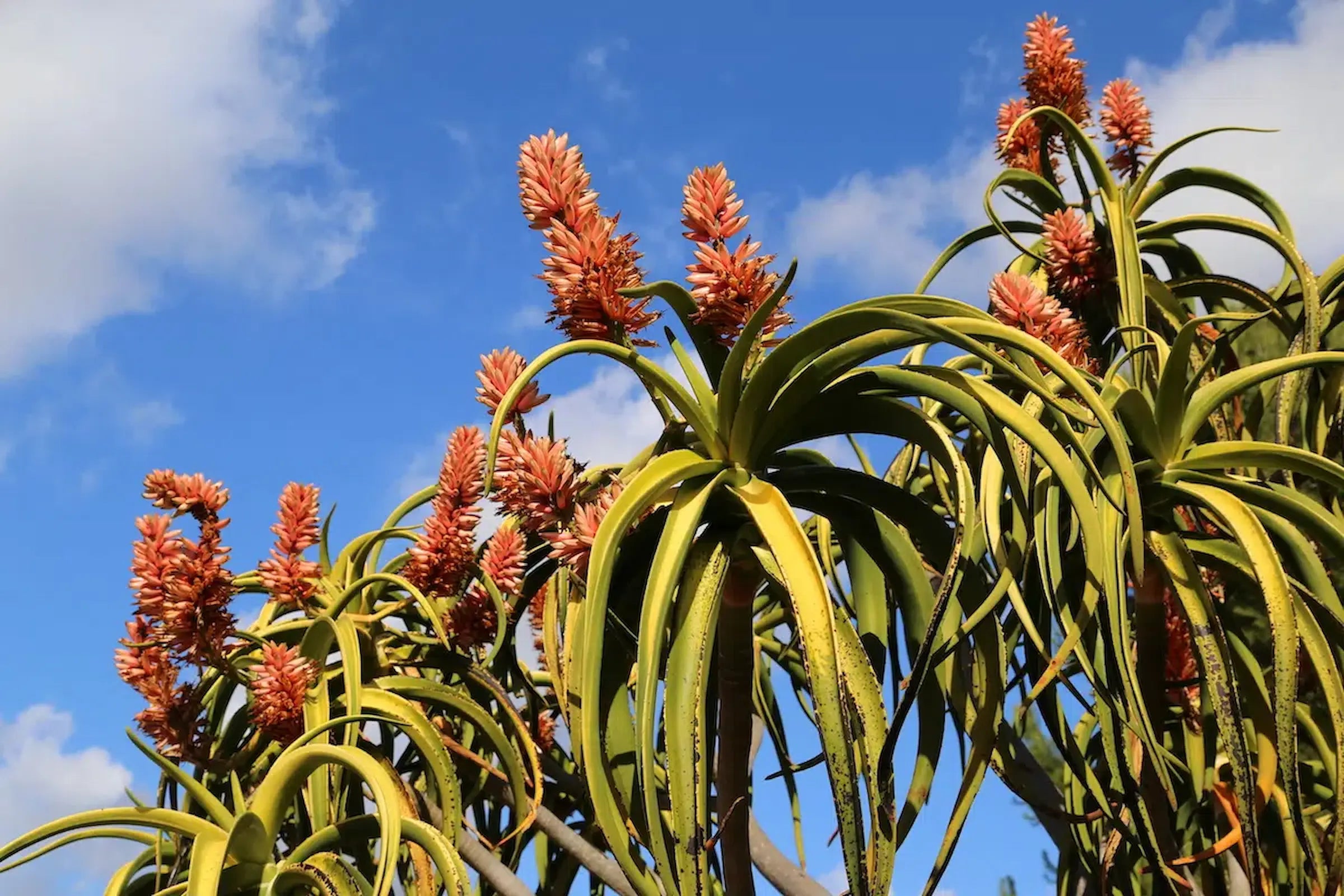
The Quiver Tree's winter flowering is one of the most extraordinary displays any outdoor succulent can produce. Mature specimens develop bright canary-yellow flower spikes from each rosette tip between late fall and early spring — a dramatic eruption of color that is all the more compelling against the pale trunk and blue-green foliage. In its native Namaqualand, flowering Quiver Trees are considered among the great natural spectacles of the region.
Flowering is not guaranteed in cultivation — it requires a mature specimen and specific seasonal conditions to trigger reliably. Understanding those conditions is the key to getting this plant to bloom.
Flowering Requirements
What triggers
the blooms
Flowering is most reliably triggered by the combination of maximum summer sun followed by a cool, dry fall rest. The plant must accumulate heat and light energy through summer, then experience a pronounced reduction in both water and temperature in fall before it will produce flower spikes. Plants watered too generously year-round, or grown in insufficient light, rarely bloom regardless of age. After flowers fade, remove spent stalks cleanly at the base — each rosette that flowered will continue to develop and produce blooms in subsequent years.
Bloom window
Late fall through early spring
Summer requirement
Maximum direct sun — no compromise
Fall trigger
Dry, cool rest — reduce water sharply
Most common reason for no bloom
Overwatering + insufficient light
Seasonal Calendar
Spring
Recovery & repottingRemove spent flower stalks. Resume light fertilizing. Repot if needed. Gradually increase watering as temperatures rise.
Summer
Peak growing seasonMaximum sun exposure. Water every 3–4 weeks when soil is fully dry. Fertilize every 6–8 weeks at quarter strength. Monitor for pests.
Autumn
Dry rest — flower triggerStop fertilizing. Reduce watering to every 6–8 weeks. Flower spikes begin forming on mature specimens. Ensure soil is dry before cold arrives.
Winter
Peak floweringMinimal to no watering. No fertilizer. Protect from hard frost and wet cold. Enjoy the yellow blooms — the reward for a full year of correct care.
Repotting & Propagation
Repot young specimens every two to three years as the root system fills the container. Mature specimens can go longer between repottings — the Quiver Tree has a compact, non-aggressive root system relative to its above-ground size. Spring is the ideal window, giving the plant a full growing season to re-establish in fresh soil.
Choose a container only one to two inches larger than the current one and refresh the soil mix entirely. After repotting, allow the soil to dry completely for two weeks before watering — any disturbed roots need time to callous before moisture is introduced. Use a heavy container for stability as the canopy develops and the plant becomes increasingly top-heavy over the years.
The Quiver Tree is most reliably propagated from seed — cutting propagation is difficult due to the hollow nature of mature branches. Fresh seed germinates readily within two to three weeks in warm, bright conditions in a gritty dry mix. Seedling growth is very slow — patience over years rather than months is required, and that pace cannot be meaningfully accelerated without compromising the plant's structural integrity.
Common Issues
Soft or Darkening Trunk Base
The most serious warning sign — root rot from overwatering. Stop all watering immediately. Allow a complete extended dry-out. Assess the root zone and repot in fresh dry mix if affected tissue is found.
Translucent or Water-Logged Leaves
Leaves appearing glassy or swollen with water — overwatering. Reduce immediately and allow a full extended dry period. Do not water again until the soil is completely dry several inches down.
Stretching Rosettes
Rosette leaves elongating and losing their tight geometric precision — reaching for more light. Move to a brighter, more fully exposed location. Once stretched, individual leaves won't revert, but new growth in better light will be correctly formed.
No Flowering
Requires a mature plant, maximum summer sun, and a pronounced dry cool rest in fall and winter. Overwatering and insufficient light are the two most common reasons established plants fail to bloom — address both before the next flowering season.
Scale Insects
Small rounded bumps along branches and at the base of rosette leaves. Treat with neem oil or insecticidal soap applied weekly for three to four weeks. Strong sun and good airflow are the most effective long-term deterrents for this species.
Mealybugs & Spider Mites
Mealybugs form white cottony clusters at leaf bases. Spider mites appear in dry, stagnant conditions — look for fine stippling on leaves. Treat both with neem oil or insecticidal soap weekly for three to four weeks. Improve airflow around the plant.
Growth & Lifespan
The Quiver Tree grows very slowly — this is one of the slowest-growing large succulents you can cultivate, and that pace is inseparable from what makes it extraordinary. Wild specimens in Namaqualand can be centuries old, their trunks and branching canopies the accumulated product of generations of desert survival. In cultivation, you won't reach those timescales, but you will see steady, annual addition of trunk girth, new branch forking, and progressive rosette development that compounds into something genuinely remarkable over a decade or more.
This is a permanent fixture, not a rotating seasonal plant. It earns the space it occupies every year it grows — becoming progressively more architectural, more culturally significant, and more visually extraordinary as its forking geometry deepens and the canopy fills. Of all the outdoor specimens available for a curated exterior space, the Quiver Tree is among the most irreplaceable.
The Plant Daddies Society
Let us handle
the care.
Weekly expert visits, full plant protection, and a living collection that grows with you. The Society takes the guesswork out of plant ownership entirely.