How to Care for Your Hercules Aloe
Care Guide
Aloe
'Hercules'
A large-scale architectural hybrid — upright blue-green rosettes, a developing trunk, and the combined character of two of southern Africa's most extraordinary aloe species.
The Plant
Two great aloes.
One hybrid.
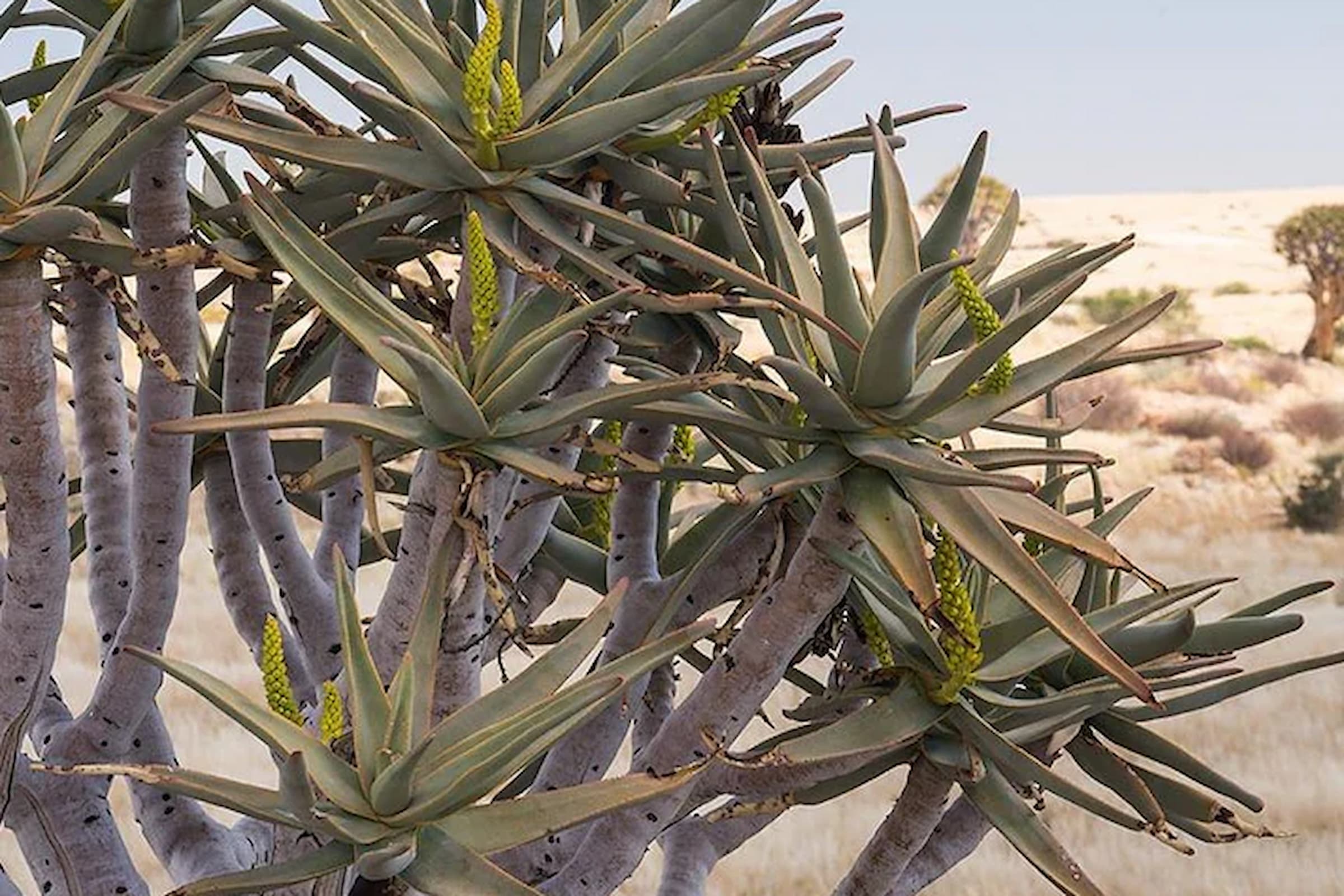
The Aloe 'Hercules' is a cultivated hybrid — a cross between Aloe barberae (the Tree Aloe) and Aloe dichotoma (the Quiver Tree). Both parent species are among the most architecturally compelling aloes in existence, and the Hercules inherits the best of both: the scale and upright structure of the barberae, and something of the branching, sculptural quality of the dichotoma, in a plant that is more adaptable to cultivation — including bright interior settings — than either parent alone.
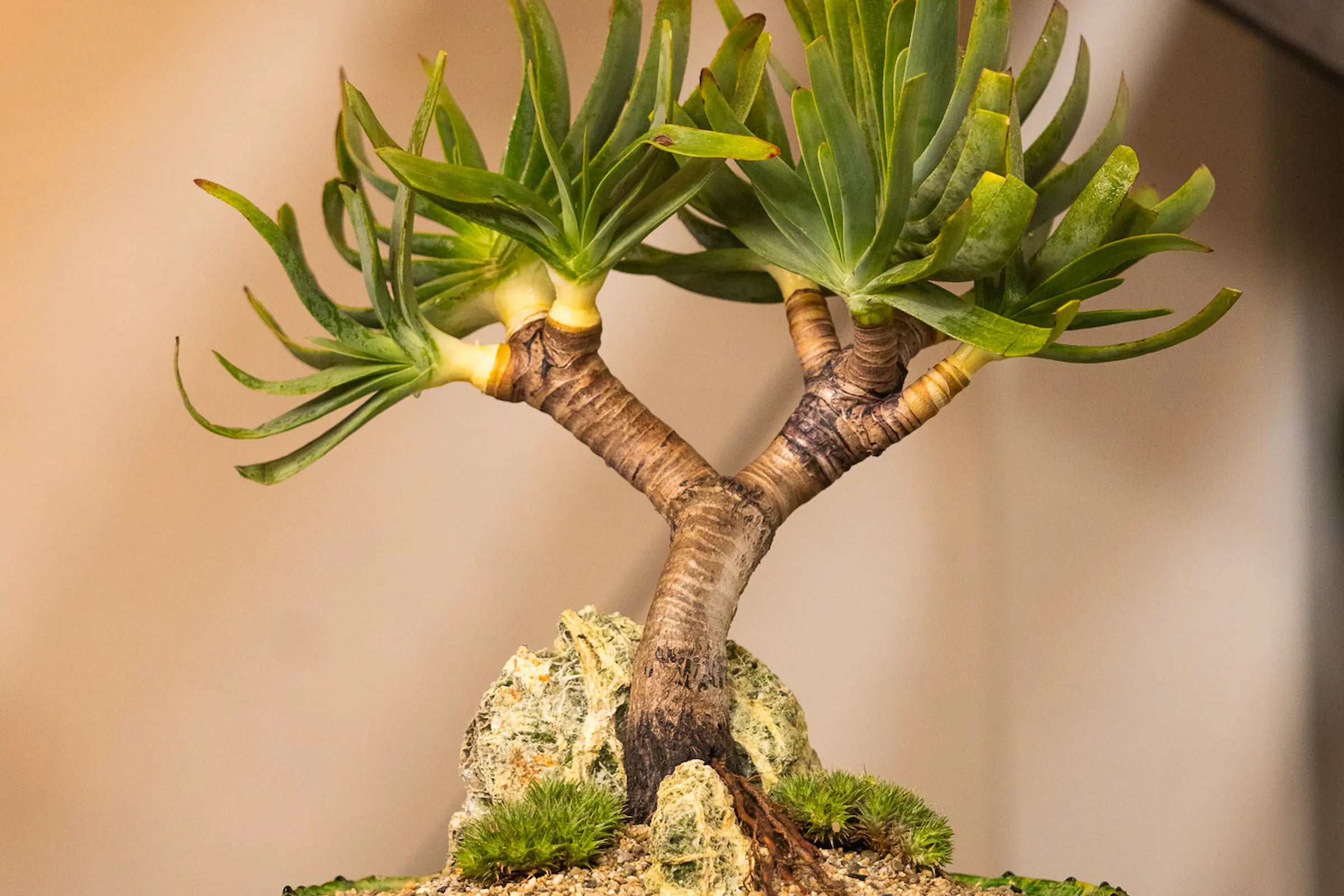
What distinguishes it in practice is its unusual versatility. While the barberae and dichotoma are primarily outdoor specimens, the Hercules can genuinely thrive indoors in very bright conditions — making it one of the few large architectural aloes accessible to interior spaces. It develops steadily into a strong-trunked, blue-green rosette tree that commands a room without demanding the full outdoor sun its parents would require.
At a Glance
Aloe barberae
Tree Aloe
The world's largest aloe. Provides the Hercules with its scale, upright trunk structure, and the capacity for impressive height over time. Also the source of its adaptability to a range of outdoor conditions and its relatively accessible watering requirements compared to true desert aloes.
Contributes: scale, trunk development, outdoor adaptability
Aloe dichotoma
Quiver Tree
The iconic desert aloe of Namaqualand. Provides the Hercules with its blue-green coloration, the sculptural quality of its rosettes, and aspects of its drought tolerance and structural precision. Also passes along some cold hardiness and the potential for winter flowering in mature specimens.
Contributes: coloration, rosette character, drought tolerance
Light
The Hercules Aloe is one of the few large architectural aloes that can genuinely thrive in a bright interior — this is its defining practical advantage over its parent species. It performs best in the brightest available light, whether that is a south-facing windowsill with direct sun indoors, or a sunny outdoor position. A minimum of four to six hours of direct sun daily is the target for healthy, compact rosette formation and steady trunk development.
Outdoors in full sun, the Hercules thrives and develops most rapidly. Indoors, a south- or west-facing window with unobstructed direct light is the closest equivalent. In lower light — bright indirect without any direct sun — the plant will survive but rosettes stretch, the trunk develops more slowly, and the sculptural quality of the form gradually diminishes. Light is what makes this plant look extraordinary rather than merely acceptable.
The indoor advantage: Unlike the parent species — which want outdoor sun to truly perform — the Hercules tolerates interior conditions well enough to be a genuine statement piece inside a very bright room. This is genuinely unusual for an aloe this large and architecturally significant. Place it at the most prominent window in the space.
Watering
The Hercules stores moisture in its thick leaves and developing trunk — it is built for cycles of deep watering followed by almost complete drying. Allow the soil to dry nearly all the way through before watering again. Check several inches below the surface rather than judging by the top layer alone, then water slowly and thoroughly until it flows from the drainage holes.
In spring and summer, watering every two to three weeks is typically appropriate indoors, adjusted for light intensity and container size. In fall and winter, extend the interval to three to four weeks or longer. Outdoors in full sun, soil dries faster — adjust accordingly. The leaves are your most reliable real-time indicator.
Firm & upright
Well-hydrated. No water needed. The leaves hold firm tension and the soil is still holding residual moisture.
Slightly soft or flexible
Ready for water. The outermost leaves losing slight firmness or showing fine surface wrinkling signal the right moment. Water deeply.
Mushy or translucent
Overwatering — leaf cells are saturated. Stop all watering immediately, allow extended drying, and check the base for rot.
Temperature & Placement
The Hercules is comfortable across a wide range — 55–100°F — and handles both indoor climate control and outdoor summer heat without stress. It is more cold-tolerant than many tender succulents, tolerating brief dips near freezing without damage, though it should be protected from sustained hard frost. In Southern California's climate it can typically remain outdoors year-round in most locations.
For indoor placement, stable warmth matters as much as light. Keep it away from cold drafts near exterior doors or uninsulated windows in winter, and away from forced air heating and cooling vents that would rapidly desiccate the large leaf surface. A bright, stable interior position — warm in all seasons, unobstructed for light — is the ideal permanent home for an indoor specimen.
Transitioning outdoors for summer: The Hercules benefits significantly from spending spring and summer outdoors in full sun if the space allows. Acclimate it gradually over one to two weeks to prevent leaf scorch when transitioning from indoor to outdoor conditions. Return it inside before temperatures drop below 40°F in fall.
Soil & Drainage
Use a fast-draining succulent or cactus mix amended with 30–40% perlite or coarse horticultural sand. The medium should dry within two to three days of watering — soil that stays damp for longer retains too much moisture for this species, particularly indoors where airflow is reduced compared to an outdoor environment. Always use a container with drainage holes.
As the Hercules develops and becomes increasingly top-heavy over the years, choose a heavy, stable container that anchors the plant. Unglazed terracotta works well — it is breathable, heavy, and allows excess moisture to evaporate through the walls. A heavy pot now saves you from a toppled specimen later when the rosettes are fully developed above a tall trunk.
Fertilizing
Feed lightly once a month through spring and summer with a balanced liquid fertilizer at half strength, or a cactus-specific formula with lower nitrogen. Heavy feeding produces soft, weak growth that undermines the compact, structural quality the plant's form depends on. The goal is steady, dense development — not rapid, loose extension.
Pause feeding in fall and winter when growth slows. If the plant is kept indoors year-round, it may grow slowly but steadily through winter in good light — even so, reducing or eliminating feeding in the cooler months is appropriate. Resume full monthly feeding in spring as light levels and temperatures increase.
Pruning & Maintenance
The Hercules requires minimal pruning. The most regular maintenance task is removing the dried lower leaves that accumulate along the trunk as the rosettes mature and the trunk extends — clearing these progressively reveals the clean gray trunk beneath and keeps the plant looking intentional rather than neglected.
If any damaged or diseased leaves need removal, cut cleanly at their base. The leaf tips are sharp — handle with care, particularly when working around the lower rosette where leaves are at face height. Beyond basic grooming, the natural form of the Hercules develops well without significant intervention. Let it grow.
Seasonal Calendar
Spring
Resume & refreshResume monthly fertilizing. Repot if needed. Increase watering as light and temperatures rise. Consider moving outdoors to accelerate summer growth.
Summer
Peak seasonMaximum light. Water every 2–3 weeks when nearly dry. Monthly fertilizing. Monitor for pests. Outdoors in full sun if possible.
Autumn
Wind downStop fertilizing. Extend dry intervals. Bring indoors before 40°F if outdoors. Mature specimens may develop winter flower spikes.
Winter
Rest periodWater every 3–4 weeks. No fertilizer. Maintain bright light. Keep warm and away from cold drafts. Enjoy any winter bloom if present.
Repotting
Repot every two to three years, or when roots have clearly filled the container and growth has slowed despite good care and light. Spring is the right window. Choose a container one to two inches larger, refresh the soil mix entirely, and water lightly after repotting. Wait one to two weeks before resuming normal watering to allow any disturbed roots to settle.
As the plant grows taller and more top-heavy, prioritize container stability at each repotting. A heavier, lower-profile container anchors the plant against movement — particularly important if the specimen lives outdoors where wind exposure is a factor.
Common Issues
Stretching Rosettes
Leaves elongating and the overall rosette losing its tight, compact form — insufficient light. Move to the brightest available position immediately. Indoors, this means a south-facing window with direct sun. Outdoors, full exposure.
Mushy or Translucent Leaves
Overwatering. Stop all watering and allow a full extended dry-out. Check the base of the trunk for softening that would indicate root rot has reached the stem. Increase the drying interval going forward.
Base Rot
Soft, darkening tissue at the trunk base from sustained moisture. Stop watering immediately. Allow complete dry-out. Remove affected tissue with clean cuts and repot in fresh fast-draining mix. Improve drainage if this occurs more than once.
Wrinkling Leaves
The plant is fully dry and ready for water — this is the correct moment to water. Water deeply and completely, then return to the normal dry interval. Fine surface wrinkling on outer leaves is a healthy readiness signal, not distress.
Mealybugs & Scale
Mealybugs cluster at leaf bases and where leaves meet the trunk — check those areas first. Scale appears as small bumps along stems. Treat both with neem oil or insecticidal soap weekly for three to four weeks. Good light and airflow deter reinfestation.
Spider Mites
Fine stippling on leaf surfaces — most common in dry, stagnant interior conditions. Treat with neem oil or insecticidal soap. Improve airflow around the plant and consider increasing ambient humidity slightly if the interior is very dry.
Growth & Lifespan
The Hercules Aloe grows steadily in good light, building a progressively thicker trunk, broader canopy, and more commanding presence season over season. It is not a fast grower in absolute terms — but relative to the parent species it is meaningfully more vigorous, and indoors it makes visible progress in a way that pure desert species sometimes don't.
What makes it genuinely special is the combination of indoor adaptability and long-term architectural potential. Most interior aloes are small. The Hercules grows large and stays large — a plant that starts impressive and gets more so with each passing year. Given the right light and a measured hand with water, it becomes one of the most distinguished long-term specimens in any bright interior or warm outdoor collection.
The Plant Daddies Society
Let us handle
the care.
Weekly expert visits, full plant protection, and a living collection that grows with you. The Society takes the guesswork out of plant ownership entirely.