How to Care for Your Kumara plicatilis (Fan Aloe)
Care Guide
Kumara
Plicatilis
The Fan Aloe. A rare tree-form succulent from South Africa's Western Cape, with flat fan-shaped leaves, a developing woody trunk, and a silhouette unlike anything else in a planter.
The Plant
Geometric form.
Decades of character.
Endemic to the fynbos biome of South Africa's Western Cape, the Kumara plicatilis is unlike any other aloe. Where most aloes form rosettes or clusters, the Fan Aloe arranges its thick, strap-like leaves in flat, opposite pairs — each set at a precise right angle to the next, building upward into a stacked, fan-like geometry that becomes increasingly architectural as the plant matures.
Over years it develops a woody, branching trunk that elevates the fans above the soil, creating a silhouette that reads more like a sculptural installation than a potted plant. It is slow, rare, and genuinely extraordinary — one of the most structurally compelling succulents available for outdoor garden and terrace settings in Southern California's climate.
At a Glance
Light
The Fan Aloe is a full-sun species. In its native Western Cape habitat it grows on rocky, exposed south-facing slopes under intense, unfiltered Mediterranean sun — and it needs at least six hours of direct outdoor sun daily to maintain its characteristic compact, upright fan geometry. Strong light is what keeps the leaves firm, the spacing tight between fans, and the overall structure looking intentional and architectural.
In insufficient light, the plant stretches — internodal spacing increases, fans splay outward rather than stacking neatly, and the geometric precision that makes this species so striking gradually dissolves into something loose and formless. There is no recovering that structure once it's gone, short of waiting years for new growth to form in better conditions. Place it in your brightest outdoor position from the start.
Indoor placement: The Kumara plicatilis is not suited to long-term indoor living. It can be brought inside briefly for display, but a south-facing window — even a very bright one — cannot replicate the intensity of direct outdoor sun. If kept indoors for more than a few weeks, stretching will begin. Return it outside as soon as conditions allow.
Watering
The Fan Aloe is a true succulent — its thick, fleshy leaves store water, and its woody trunk accumulates moisture reserves that sustain it through extended dry periods. Indoors almost complete drying between waterings is the right approach; allow the soil to dry down fully before watering again, then water slowly and deeply so the entire root zone hydrates before the next dry cycle begins.
Outdoors, the rhythm will vary considerably by season, sun exposure, and wind. In summer a well-drained planter in full sun may need water every ten to fourteen days. In winter, once a month or less is appropriate. When in doubt, wait — this species tolerates drought far better than it tolerates wet roots.
Firm & upright
Moisture is adequate. The plant is well-hydrated. Continue your current interval — no water needed yet.
Slightly soft or flexible
The plant is ready for water. Water thoroughly and allow a full dry cycle before the next session.
Translucent or mushy
Overwatering — the leaf cells are saturated. Stop watering immediately. Allow extended drying and check for root rot at the base.
Base rot: The most serious risk for this species. Caused by water sitting in the soil around the woody stem base. Ensure your planter drains completely and that water never pools at the soil surface. If rot is suspected, unpot, remove affected material, allow the base to dry fully, and repot in fresh fast-draining mix.
Soil & Drainage
Soil selection is critical. The Fan Aloe evolved in thin, rocky, extremely fast-draining Mediterranean soils where water passes through quickly and the root zone never stays wet. A standard potting mix will retain far too much moisture for this species and will eventually rot the base of the trunk — often before any surface symptoms appear.
Use a dedicated succulent or cactus mix as your base, then amend it with 40–50% additional perlite, pumice, or coarse horticultural grit to create a medium that dries out within one to two days of watering. The finished mix should feel visibly gritty and should not clump when squeezed. Ensure your planter has large, unobstructed drainage holes — and if placed in a decorative outer pot, make sure it never sits in standing water inside that vessel.
Fertilizing
The Fan Aloe is a light feeder adapted to nutrient-poor soils. Feed sparingly through spring and summer — once a month at half or quarter strength using a diluted balanced liquid fertilizer or a succulent-specific formula. Less is genuinely more here: over-fertilizing produces weak, rapid growth that undermines the tight, compact structure this species is known for and can cause salt accumulation that damages roots.
Stop fertilizing entirely from late fall through winter. The plant slows significantly in the cooler, shorter-day months and has no use for additional nutrients during this period. Resume in early spring as temperatures climb and growth picks back up.
Pruning & Structure
The Kumara plicatilis requires minimal pruning — its architectural form develops on its own terms over time, and the best approach is to support rather than interrupt that process. Remove fully dry, spent lower leaves cleanly at the base as they occur. Remove any damaged or pest-affected material promptly.
Beyond that, resist the urge to shape or cut. Unlike a shrub or tree, the Fan Aloe's branching pattern and fan geometry are determined by its natural growth programming — intervening with heavy cuts disrupts that geometry and rarely produces a better result. The longer you let it develop undisturbed in good conditions, the more extraordinary its structure becomes.
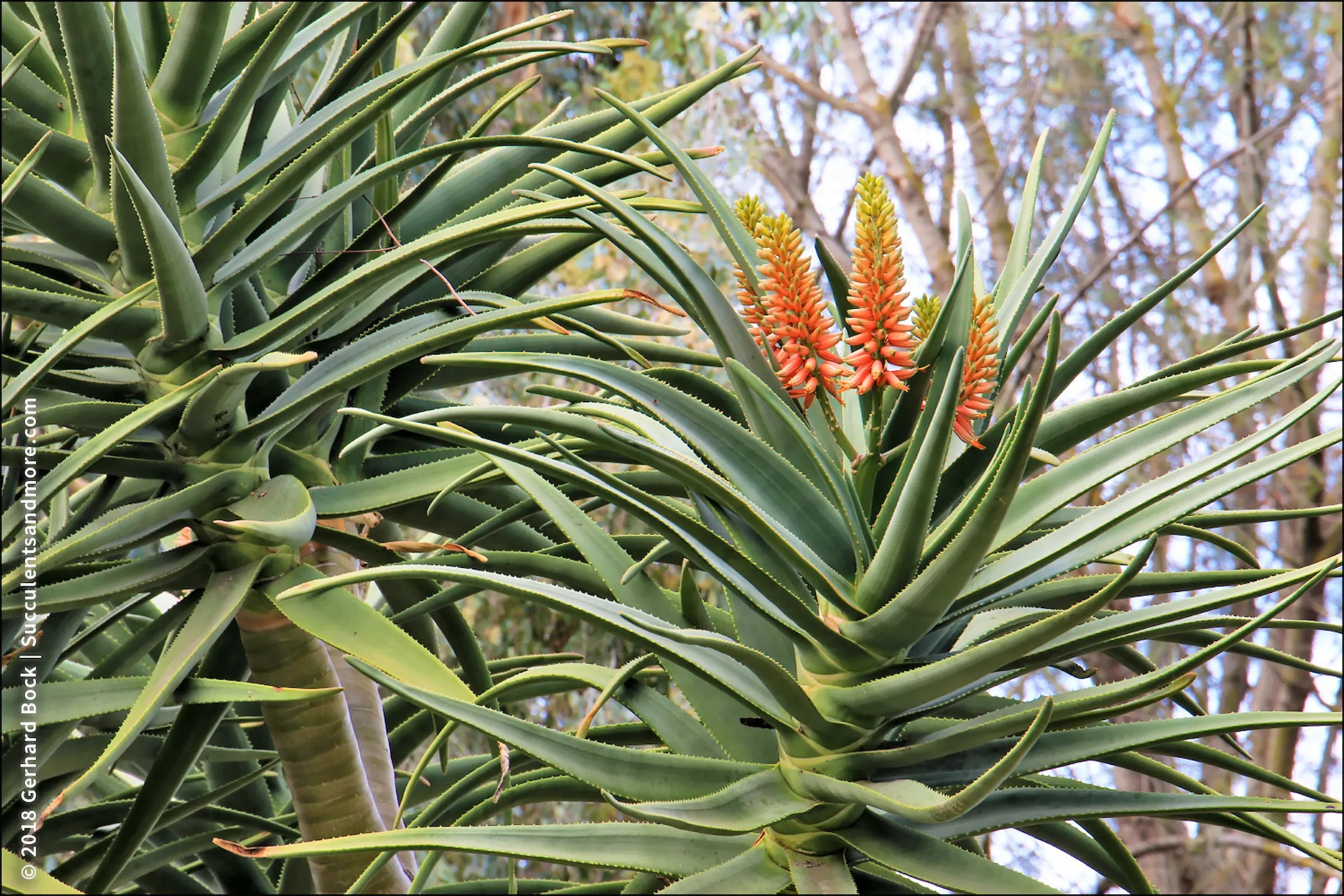
Flowering: Mature specimens produce tall flower spikes with tubular orange-red blooms in late winter to spring — one of the most striking floral displays of any succulent. Allow spent spikes to dry before removing them at the base. Flowering is a sign of a healthy, well-established plant.
Repotting
Repot younger specimens every two to three years as the root system fills the container. Mature plants, once established in a good-sized planter, can be left undisturbed for longer — the Fan Aloe does not need frequent repotting and actually benefits from the stability of staying in one vessel for several years at a time.
When repotting, spring is the right window. Use a completely fresh succulent mix amended with perlite or grit, and size up by one container only. After repotting, wait one to two weeks before watering to allow any disturbed roots to callous before moisture is introduced. The plant may pause growth briefly during the transition — this is expected and temporary.
Common Issues
Stretching Growth
New fans spacing too far apart, leaves splaying rather than stacking neatly. A direct and unambiguous signal of insufficient light. Move to a position with more hours of direct outdoor sun — the sooner, the better.
Soft or Translucent Leaves
The leaf cells are holding excess water — overwatering. Allow a full dry-out period. If softness is at the leaf base or near the trunk, inspect for rot and address drainage immediately.
Base or Trunk Rot
Soft, discolored, or foul-smelling material at the woody base — caused by sustained moisture around the stem. Unpot, remove all affected tissue, allow to dry fully for one to two weeks, then repot in fresh fast-draining mix.
Lower Leaf Drop
As the trunk develops, lower leaves are shed naturally — this is completely normal and how the plant builds its tree-like form over time. No action needed unless leaf drop is occurring higher up the fans or at an unusual rate.
Scale Insects
Small rounded bumps along leaf edges and branching points. Treat with neem oil or insecticidal soap applied to all surfaces. Repeat weekly for three to four weeks. Maintain strong airflow and sun exposure to deter reinfestation.
Mealybugs
White cottony clusters at the base of leaves and in the spaces between fans. Spot treat with isopropyl alcohol on a cotton swab, then follow with a full neem oil application. Check new growth closely — mealybugs target the softest, newest tissue first.
Growth & Lifespan
The Fan Aloe is a slow, long-lived, legacy specimen. In its native fynbos habitat, mature trees can live for over a century, developing broad, multi-branched canopies of stacked fans elevated on gnarled trunks above rocky hillsides. In cultivation, the pace is unhurried — but each year adds measurably to the structure and presence of the plant.
Given full outdoor sun, proper drainage, and restrained watering, the Kumara plicatilis becomes one of the most arresting plants in any outdoor space. The geometry deepens, the trunk thickens, the branching divides and multiplies — and over decades it evolves into something that could only be described as a work of living art. This is a plant you choose once and keep for a very long time.
The Plant Daddies Society
Let us handle
the care.
Weekly expert visits, full plant protection, and a living collection that grows with you. The Society takes the guesswork out of plant ownership entirely.