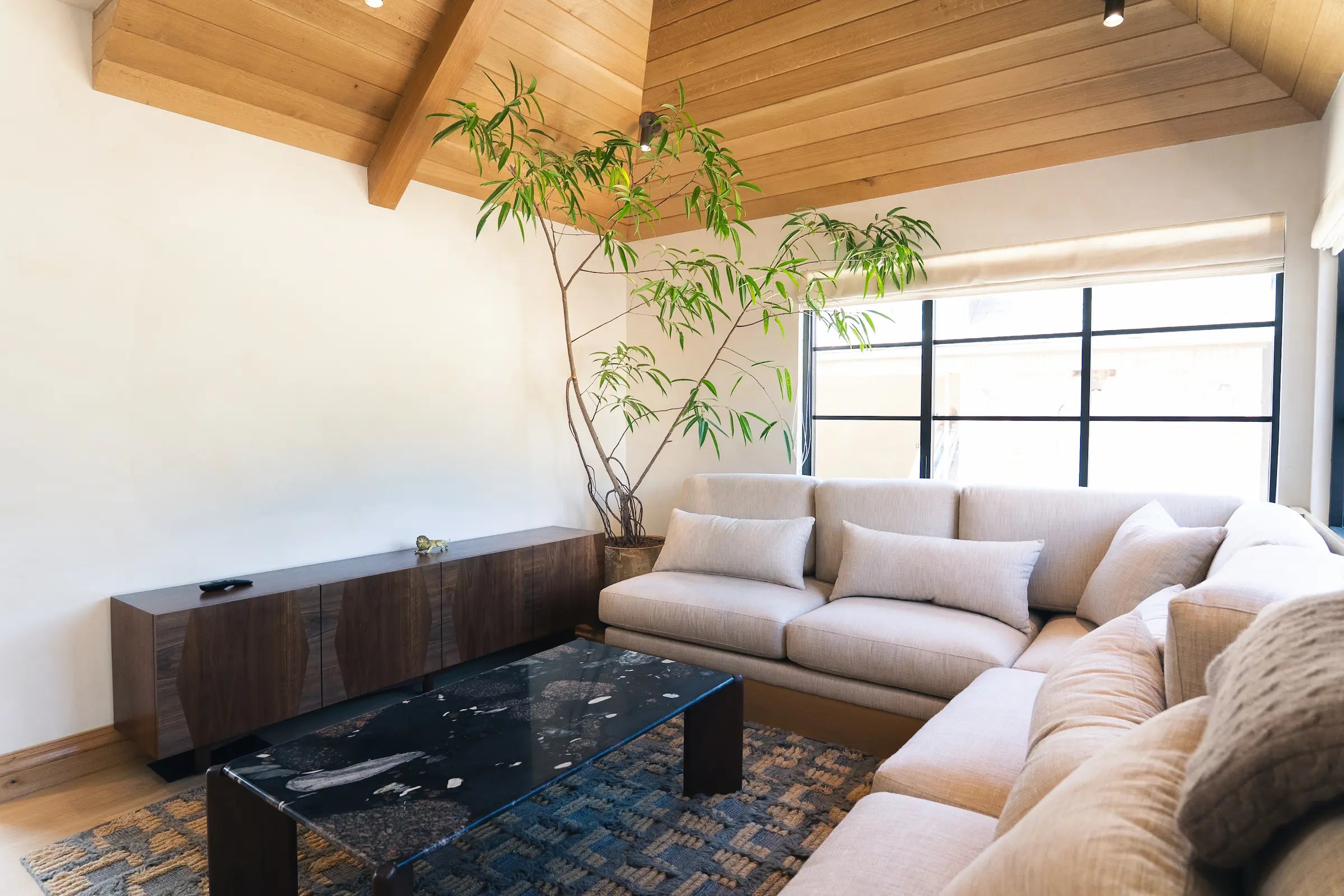
How to Care for Your Bucida buceras (Black Olive Tree)
Care Guide
Bucida
Buceras
The Black Olive Tree. Tiered, architectural, and deeply tropical — one of the most sculptural indoor trees available.
The Plant
Living sculpture.
Coastal origins.
Native to the coastal edges of the Caribbean, Central America, and South Florida, the Bucida buceras is built for heat, humidity, and unfiltered sun. In its natural habitat it grows into a commanding canopy tree, valued for its dense, tiered branching and small, clustered leaves that create a layered, horizontal rhythm unlike almost any other species.
Indoors, that character translates into something genuinely architectural — a tree that doesn't just fill a space but organizes it. With the right conditions, it rewards patience with a silhouette that deepens and refines over years, not months. This is a long-term plant. Treat it accordingly.
At a Glance
Light
Light is the single most critical factor for this species indoors. The Black Olive Tree comes from full coastal sun — which means it needs the brightest position in your home, ideally near a south- or east-facing window where it receives several hours of direct or near-direct light daily. Bright ambient light alone is not enough to sustain its signature form long-term.
In insufficient light, the tree signals its stress clearly and quickly: new growth becomes sparse and elongated, the canopy loses density, and the layered horizontal branching that defines the species fails to develop. Consistent, strong light is what keeps the structure tight and the foliage full. If in doubt, go brighter.
On relocation: The Black Olive is sensitive to abrupt environmental changes. If moving it to a brighter spot, do so gradually over one to two weeks to avoid triggering stress-related leaf drop. Rotate the pot 90 degrees every few weeks to encourage even canopy development across all sides.
Watering
The Black Olive Tree prefers a predictable rhythm of partial drying between waterings — not prolonged drought, and not consistently wet soil. Water thoroughly approximately once a week, allowing the top one to two inches of soil to dry before the next session. Always water slowly and completely so the entire root ball is saturated, not just the surface.
Frequency will shift with the seasons. In summer, warmer temperatures and stronger light mean faster drying — every five to six days may be appropriate. In winter, as light decreases and growth slows, you may stretch to ten days or more. Use the soil as your guide, not the calendar.
Reading your plant: Leaves that soften slightly or angle downward are the first signal that water is needed. Crispy lower leaves and increased drop mean it has stayed dry too long. Yellowing leaves with soft stems typically indicate the soil has been kept too wet.
Your Reservoir Planter
Your Black Olive Tree has been planted in a self-watering reservoir planter, which delivers moisture directly to the root zone from below. Rather than watering from the top, fill the reservoir through the built-in funnel at the side of the planter. The system wicks moisture upward at the pace the roots require — no guesswork, no mess.
When the reservoir empties, fill it slowly until it reaches capacity. During the active growing season expect to refill every one to two weeks. In winter, that interval may extend to three to four weeks as growth slows and the plant draws less water.
Allow the reservoir to empty completely every four to six weeks before refilling. This brief dry period gives the roots a chance to breathe, prevents mineral salt accumulation, and keeps the root system active. The Black Olive thrives on rhythm — not constant saturation. In winter especially, keeping the reservoir too full is the most common cause of decline in this species.
Humidity & Temperature
As a coastal tropical, the Black Olive Tree performs best between 65–85°F with moderate to high ambient humidity. The dry, static air of most heated or air-conditioned interiors is its natural enemy — forced air, whether hot or cold, rapidly desiccates the foliage and disrupts the plant's moisture balance.
Keep the tree away from heating vents, radiators, and air conditioning units. Cold drafts from single-pane windows in winter can shock the root system and trigger significant leaf drop. If your home runs particularly dry in winter, grouping the tree with other tropical plants or running a humidifier nearby at 50–60% will make a visible difference in leaf quality and vigor.
Fertilizing
Feed monthly through spring and into early fall with a balanced liquid fertilizer. The Black Olive is an active grower in good light and responds well to consistent feeding during its growing season — you'll notice tighter new growth, deeper leaf color, and more pronounced branching.
Stop feeding entirely in winter. The plant is resting, growth slows significantly, and fertilizing a dormant root system does nothing productive. Resume in early spring as the light returns and new growth begins pushing again.
Pruning
The Black Olive's tiered structure is its defining quality — pruning should preserve and refine that form, not fight it. Remove any branches that are crossing, growing inward, or disrupting the horizontal layering. Make clean cuts just above a node and allow the plant to recover before additional cuts.
Remove aging or damaged leaves as they appear — they won't recover, and clearing them keeps the canopy looking intentional rather than tired. Spring is the ideal window for any significant shaping, giving the plant a full growing season to fill back in. Avoid heavy pruning in winter when the plant is at its least resilient.
Common Issues
Leaf Drop
The most common complaint with this species. Usually triggered by a sudden environmental change — a move, a draft, or an abrupt shift in watering. Stabilize conditions, resist the urge to compensate with extra water, and allow the plant time to acclimate.
Sparse or Leggy Growth
New growth that stretches and reaches rather than forming tight clusters is a clear light deficiency signal. Move the plant significantly closer to its window before attributing the issue to anything else.
Yellowing Leaves
Soft stems and yellowing foliage together point to overwatering or a reservoir that isn't being allowed to cycle dry. Extend the interval between waterings and ensure the reservoir empties fully every few weeks.
Crispy Leaf Edges
Dry indoor air, proximity to a heating or cooling vent, or soil that has stayed dry too long. Check for drafts, boost ambient humidity, and make sure watering is thorough when it does happen.
Repotting
Repot every two to three years, or when the plant shows clear signs of being rootbound — roots pushing up through the soil surface, dramatically faster drying between waterings, or visibly circling the base of the container.
Use a light, well-aerated mix amended with 30–40% perlite or coarse horticultural sand to replicate the open, coastal soil this species grows in naturally. A mix that holds moisture without compacting over time is essential. Spring is the right window — the plant is entering active growth and will settle into new volume quickly. Move up one container size at a time; an oversized pot retains water the roots can't use, which recreates overwatering conditions regardless of how carefully you water.
Growth & Lifespan
The Black Olive Tree is a legacy plant. In its native habitat it lives for centuries; indoors, with consistent care, it can remain a central piece of a home for decades. Its growth is deliberate and architectural — each season the tiered canopy becomes more refined, the branching more pronounced, the trunk more substantial.
This is not a plant that transforms quickly. It rewards the patience to leave it in one place, water it consistently, and let it build. Given a bright window, stable humidity, and a steady hand, the Black Olive Tree becomes one of the most distinctive and enduring things in a room.
The Plant Daddies Society
Let us handle
the care.
Weekly expert visits, full plant protection, and a living collection that grows with you. The Society takes the guesswork out of plant ownership entirely.