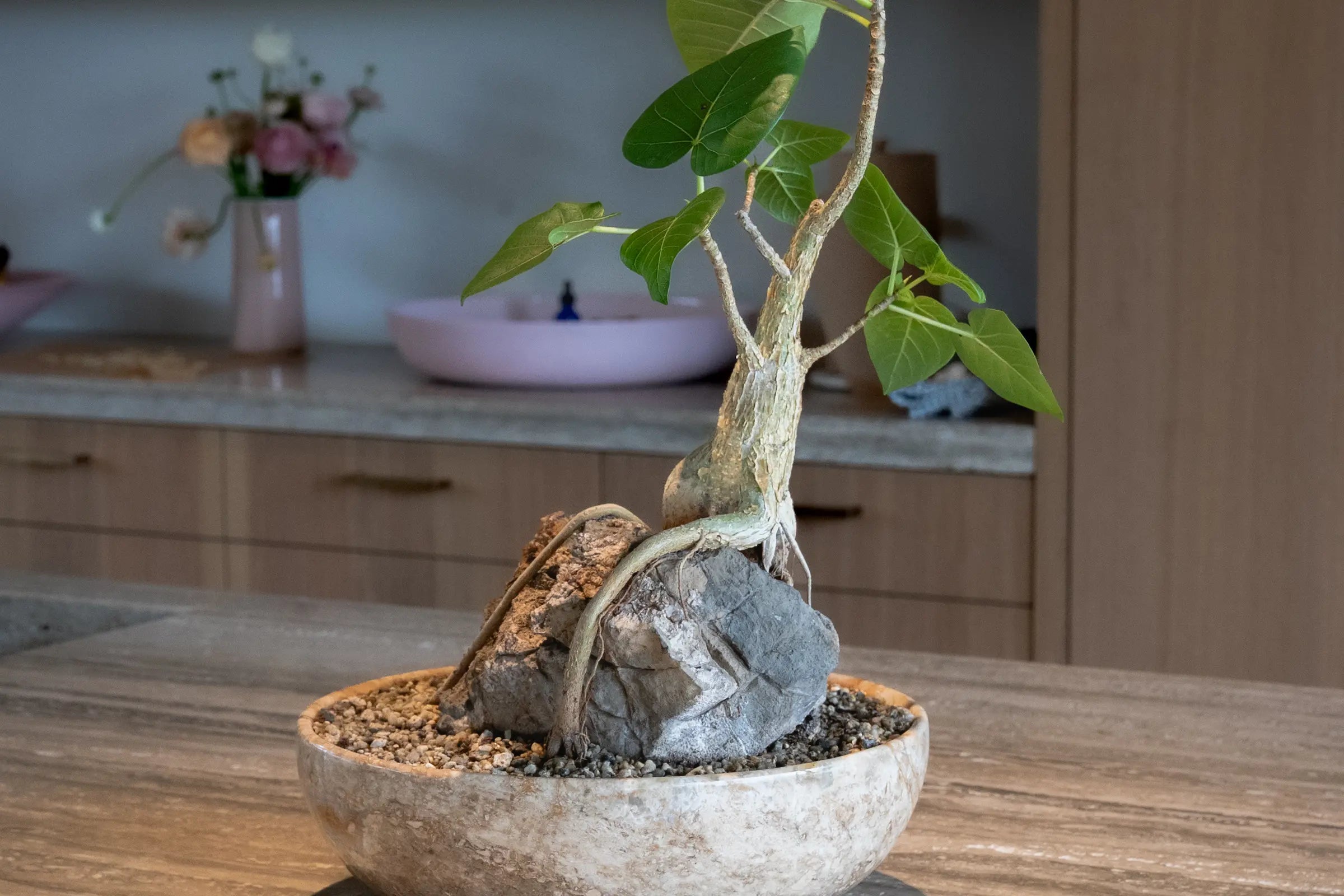
How to Care for Your Ficus maclellandii (Ficus Alii)
The Ficus maclellandii, commonly known as Ficus Alii Fig or Banana Leaf Fig, is a graceful indoor tree admired for its long, narrow leaves and upright, airy structure. It grows with a calm, refined presence and creates a clean vertical silhouette that suits modern interiors beautifully. With steady light, gentle watering rhythms, and consistency in placement, this species becomes a reliable, elegant indoor tree that maintains its lush appearance year round.
Light Requirements
• Prefers bright interior light with steady daily illumination
• Strong light encourages denser leaf clusters and upright branching
• Keep the plant in one stable location so it can acclimate and hold its form
Watering Schedule
• Allow the soil to dry at least halfway down before watering again
• Drying speed varies depending on light, temperature, and airflow
• Water slowly and evenly so the soil hydrates without becoming heavy
• Always check below the surface with your finger or a moisture meter
How to Understand Watering Needs
• Ficus Alii prefers a predictable rhythm of drying between waterings
• Slight leaf drooping or reduced firmness can indicate the soil has fully dried
• Yellowing leaves may suggest watering too frequently
• A steady rhythm of drying supports strong root health and full leaf development
Fertilizer Tips
• Feed monthly during spring and summer with a balanced liquid fertilizer
• Pause feeding during fall and winter as growth slows
• Gentle, consistent fertilization supports leaf production and branching
Trimming and Pruning
• Prune to maintain the desired height or to encourage branching
• Make clean cuts above a node to promote fuller growth
• Remove aging or damaged leaves to maintain a clean, refined appearance
• Occasional grooming keeps the plant sculptural and balanced
Pest Control and Identifying Issues
• Inspect regularly for spider mites, mealybugs, and scale
• Spider mites appear as tiny dots or fine webbing under leaves
• Mealybugs look like soft white cotton in leaf joints
• Scale appears as round bumps attached to stems
• Treat pests with neem oil or insecticidal soap until resolved
• Support recovery by keeping foliage clean and airflow steady
• Early detection prevents spread and maintains healthy growth
Common Issues
• Yellowing leaves: Often caused by watering too frequently
• Leaf drop: Common with environmental changes
• Brown tips: Can occur from dry air or extended dryness
• Dust buildup: Wipe gently to support healthy photosynthesis
Repotting Notes
• Repot every two to three years, or when roots fill the vessel
• Use a structured indoor potting mix with good aeration
• Spring is the ideal season for repotting so the plant can settle during active growth
Lifespan and Growth
Ficus maclellandii grows steadily in bright interiors, forming long elegant leaves and refined vertical canes. With consistent care, it becomes a tall, graceful indoor tree that adds softness, height, and clean structure to any room.
Quick Tips at a Glance
| Care Category | Details |
|---|---|
| Light | Bright interior light with steady daily illumination |
| Watering | Allow soil to dry at least halfway down between waterings |
| Fertilizer | Monthly in spring and summer |
| Repotting | Every two to three years |
| Humidity | Moderate indoor humidity is suitable |
Want expert help keeping your plants thriving?
Our team offers recurring care through The Plant Daddies Society to take the guesswork out of plant ownership.
Sign up here to learn more.