How to Care for Your Cussonia natalensis (Natal Cabbage Tree)
Care Guide
Cussonia
natalensis
The Natal Cabbage Tree — a southern African woodland tree with large, deeply lobed, palmately compound leaves and a progressively developing trunk of extraordinary architectural character.
The Plant
Lobed canopy.
Natal woodland origin.
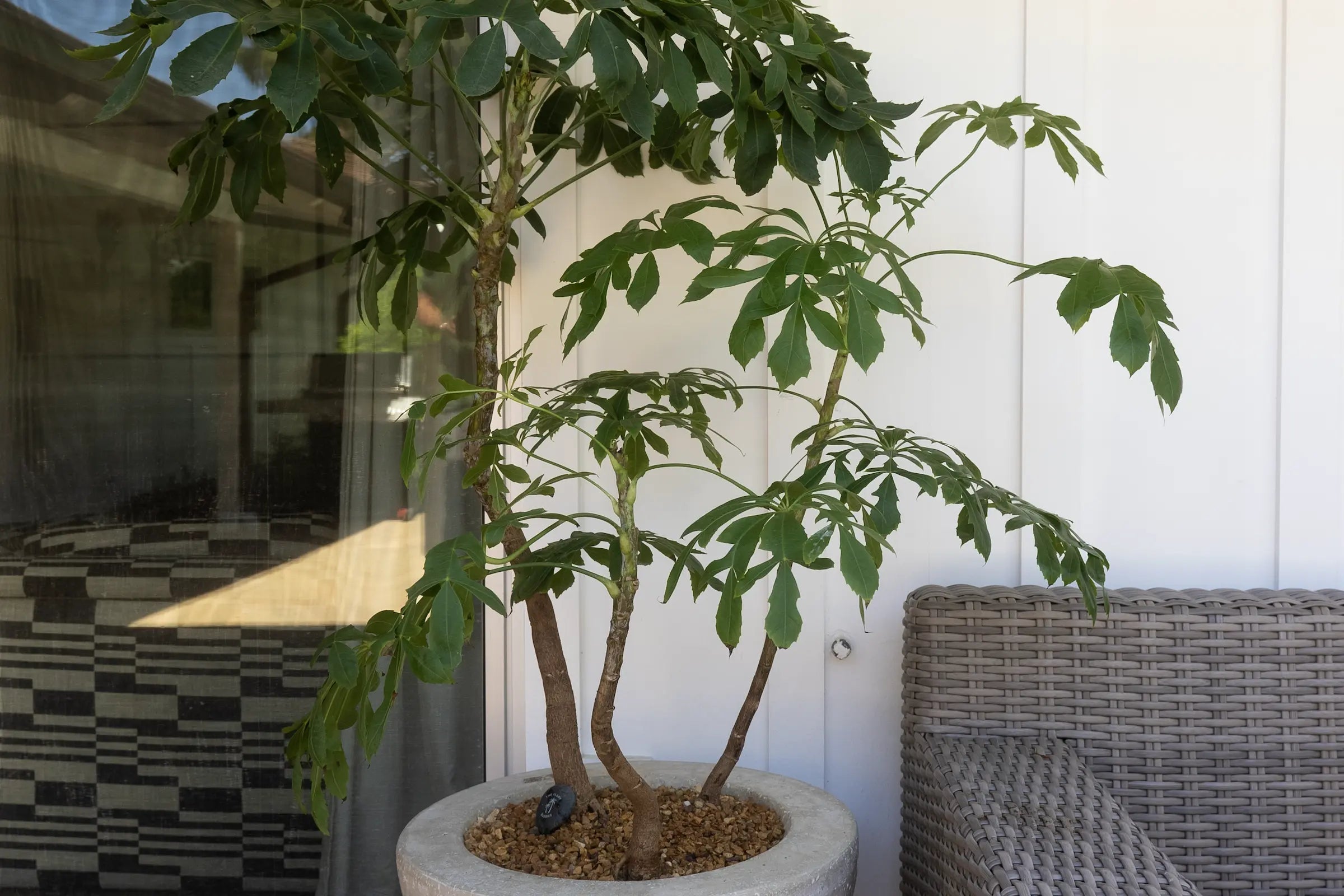
Native to the rocky hillsides and woodland margins of KwaZulu-Natal and the eastern Cape of South Africa, the Cussonia natalensis is one of the smaller Cussonia species — a quality that makes it particularly well-suited to interior use. It produces palmately compound leaves of five to seven deeply lobed leaflets arranged in a neat, spreading pattern, and develops a progressively thickening trunk that reveals more architectural character with each passing year.
It is the most compact and interior-friendly of the commonly cultivated Cussonia species, making it an excellent choice for bright interior spaces where the larger paniculata or spicata would eventually outgrow the available space.
At a Glance
Light & Placement
The Cussonia thrives in a very bright interior position — a south- or west-facing window with strong, indirect or gentle direct light throughout the day. Native to the rocky hillsides and open woodland of southern Africa, Cussonia species evolved in high-light, well-drained environments and bring those requirements into cultivation. In strong light the palmate compound leaves develop their most refined structure and the trunk thickens steadily over time. In lower light the leaf canopy becomes sparser and the overall architectural quality diminishes.
For a practical framework on evaluating your interior light levels, see our Interior Plant Placement Guide.
Watering & Reading the Plant
Allow the soil to dry significantly between waterings — to at least the halfway point of the container before rehydrating. All Cussonia species are adapted to the alternating wet and dry seasons of southern African woodland environments and prefer this moderate drought between waterings rather than consistently moist conditions. Water slowly and thoroughly when you do water, then allow a full dry cycle to complete before returning. Every ten to fourteen days in the active season; two to three weeks in winter. See our guide on how to know when to water your plants.
Well Hydrated
Leaves are held with good tension and the soil still holds residual moisture at depth. No water needed — continue the current dry interval.
Ready to Water
The soil is dry to at least halfway down when probed. Leaves may show very slight reduction in their usual held tension. Water slowly and thoroughly.
Overwatered
Stop watering immediately. Soft or yellowing leaves with consistently wet soil indicate overwatering. Allow extended drying before resuming.
The Deeply Lobed Leaf
The Cussonia natalensis produces palmately compound leaves of five to seven deeply and distinctively lobed leaflets — each leaflet itself broadly notched along its margins, creating a leaf form of considerable complexity and visual interest. These leaves, held on long petioles from the developing trunk and branch structure, create a canopy that reads as both bold and intricate simultaneously.
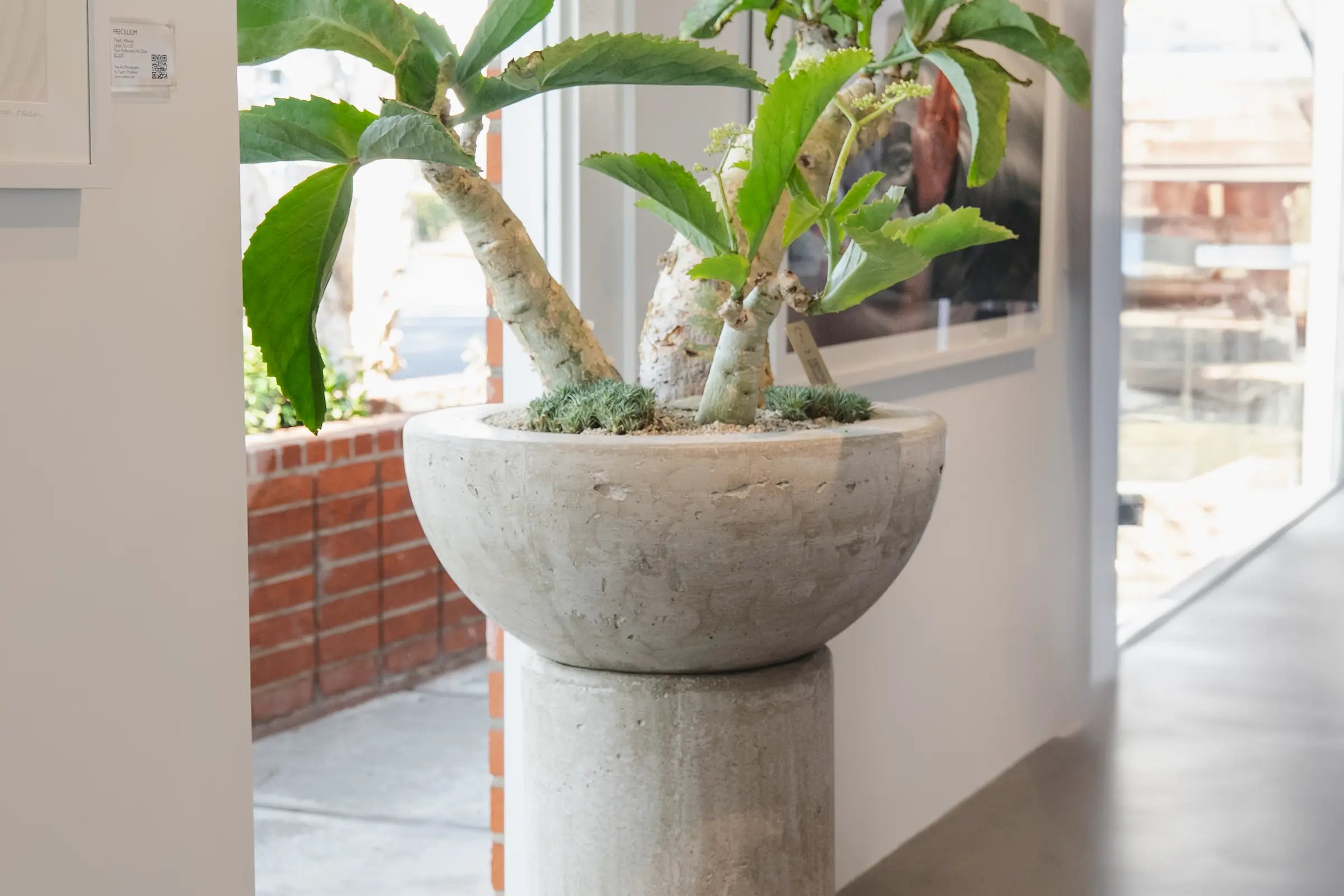
The leaf shape is one of the most distinctive of any southern African woodland tree and gives the natalensis a visual character that is entirely its own — not quite like any other tree in the indoor plant canon. Given bright light and years of patient care, the combination of this remarkable leaf form with an increasingly characterful trunk becomes one of the most genuinely distinctive specimens available for a large interior space.
Temperature & Humidity
Cussonia species prefer warm conditions — 60 to 90 degrees Fahrenheit — and are more cold-tolerant than many tropical plants, reflecting their southern African origin in climates that experience cool winters. They should be protected from sustained frost, particularly in containers. Keep away from cold drafts and air conditioning vents in winter.
Humidity needs are low to moderate — they evolved in the dry to semi-arid environments of southern African hillsides and handle standard interior air without supplemental intervention.
Fertilizing
Feed with a balanced liquid fertilizer at half strength once a month during spring and summer. Cussonia species evolved in nutrient-poor, rocky soils and do not benefit from heavy feeding — consistent, light feeding through the growing season produces better structural growth than periodic heavy application. Stop feeding in fall and winter. Resume in spring when new growth begins.
For the complete approach to indoor fertilizing, see our guide on fertilizing indoor plants properly.
Pruning & Shaping
All Cussonia species require minimal pruning — their natural branching habit develops attractively without intervention. Remove any dead or damaged branches cleanly at their origin. Tip pruning in spring encourages branching below the cut and builds canopy density over time.
As the trunk develops over years, removing lower branches progressively reveals the architectural character of the developing trunk structure. This incremental grooming — doing a little each season — compounds over years into a more refined overall form. See our pruning guide for the complete technical approach.
Repotting
Repot every two to three years in spring, or when the root system has clearly filled the container and growth has slowed. Use a quality well-draining indoor potting mix with additional perlite. Size up by one container. After repotting, wait one to two weeks before returning to normal watering to allow any disturbed roots to settle.
Propagation: Most reliably from seed for all Cussonia species. Seed germinates readily in warm, moist conditions. The developing trunk character that makes Cussonia species so visually compelling only develops naturally from seed-grown plants over time.
Common Issues
Cussonia species are generally robust and low-maintenance. Most problems trace to overwatering or insufficient light.
Leaf Drop
Environmental stress — cold draft, significant temperature change, or overwatering. Identify the specific cause and address it. Some seasonal leaf drop in response to shorter days is also normal for several Cussonia species.
Yellow Leaves
Overwatering while soil remains consistently wet. Allow extended drying and confirm drainage is functioning correctly before resuming watering.
Sparse or Open Canopy
Insufficient light — the plant not producing new growth densely enough in the available conditions. Move to a brighter position.
Slow Growth
Cussonia species are inherently moderate growers, but very slow or absent growth indicates insufficient light or root-bound conditions. Check both.
Fine webbing and stippling on leaf surfaces in dry stagnant conditions. Treat with neem oil or insecticidal soap applied to all surfaces. Repeat weekly for three to four weeks.
White cottony deposits at leaf axils and new growth points. Treat with isopropyl alcohol on a cotton swab then follow with neem oil. Repeat weekly.
Inspect neighboring plants immediately. Scrape away manually and treat all surfaces with neem oil. Repeat weekly for a full month.
Dust on Leaves
The broad leaf surfaces collect dust and reduce photosynthetic efficiency over time. Wipe gently with a soft damp cloth, top and underside. Do not use leaf shine products. Regular cleaning also lets you detect early pest activity before it spreads.
Growth & Lifespan
Cussonia species are rewarding long-term interior trees that develop progressively more architectural character with each passing year. The trunk thickens, the branching becomes more complex, and the overall presence in a space becomes more commanding as the seasons accumulate.
Given appropriate bright light, moderate water cycles, and patient care, any Cussonia species becomes one of the most distinctive southern African trees available for an interior collection — architectural, characterful, and genuinely unlike the typical indoor tree options.
The Plant Daddies Society
Let us handle
the care.
Weekly expert visits, full plant protection, and a living collection that grows with you. The Society takes the guesswork out of plant ownership entirely.