How to Care for Your Operculicarya decaryi (Elephant Tree)
Care Guide
Operculicarya
Decaryi
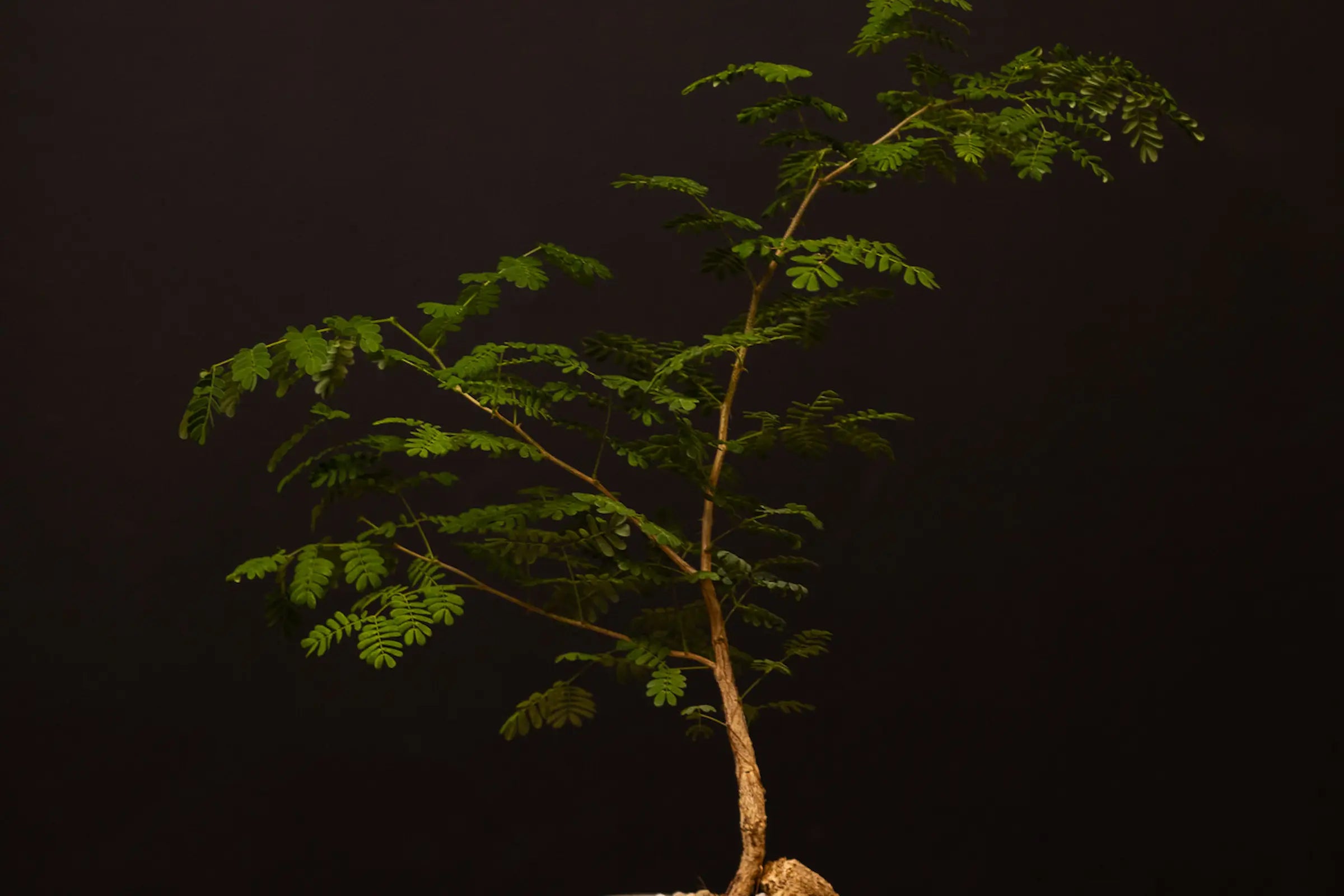
The Elephant Tree. A Madagascan caudiciform with intricate branching, fernlike leaves, and a thickening trunk that makes it look centuries old even when it isn't.
The Plant
Ancient character.
Delicate leaves.
Native to the dry, rocky landscapes of southern Madagascar, the Operculicarya decaryi is a caudiciform that grows in conditions most plants couldn't survive — thin soils, intense sun, and extended dry seasons that strip the tree of its leaves entirely. It responds by storing water and nutrients in its thickening trunk and root base, developing over years into a gnarled, textured structure that reads as ancient long before it actually is.
What makes it immediately striking is the contrast between that heavy, sculptural trunk and its foliage — tiny, delicate, pinnate leaflets arranged along arching branches like the fronds of a miniature fern. No other caudiciform delivers this combination of bold base and fine detail in quite the same way. Indoors, it becomes one of the most character-rich specimens available for a curated interior.
At a Glance
Light
The Operculicarya decaryi is a full-sun species from one of the driest, brightest environments on earth. Indoors, it performs best in the brightest position you can offer — a south-facing windowsill with several hours of direct sun daily is ideal. Strong, consistent light is what drives trunk thickening, tight branching, and the refined, compact character that makes this species so remarkable. It will tolerate bright indirect light, but the pace of trunk development slows considerably.
In lower light, the plant produces longer internodes and more open branching — losing the dense, intricate quality its form is known for. If you want the trunk to thicken meaningfully over time, light is the most important variable you control. A grow light positioned close to the canopy is an effective supplement if direct sun isn't available.
Stability of placement: Like all caudiciforms, the Elephant Tree adjusts its growth orientation to its light source over time. Choose its position and keep it there. Rotating occasionally for even canopy development is fine — relocating to an entirely different room is not.
Watering
The Elephant Tree stores moisture in its trunk and root system and is built for extended dry periods. Allow the soil to dry almost completely between waterings — check a few inches below the surface, not just at the top. When you do water, do it slowly and thoroughly so the entire root zone hydrates, then allow a full dry cycle before the next session.
In the growing season this may mean watering every two to three weeks. In winter dormancy, when the plant drops its leaves, reduce to once a month or stop entirely — the trunk's reserves are sufficient to sustain it through the rest period. Overwatering is the primary cause of decline in this species, and the damage often isn't visible until it's already progressed to the root system.
Firm & taut
The trunk is well-hydrated. No water needed. Continue the current interval and check again in a few days.
Slightly flexible
Ready for water. The trunk is beginning to draw on its reserves. Water thoroughly, then allow a full dry cycle before the next session.
Soft or sunken
Overwatering. The trunk tissue is saturated. Stop all watering immediately, allow extended drying, and inspect roots for rot.
Dormancy
The Operculicarya decaryi is deciduous — it will drop its leaves in fall or winter as temperatures cool and day length shortens, entering a period of dormancy that mirrors its dry season in Madagascar. For first-time owners this can be startling. It is completely normal and not a sign of distress.
During dormancy, reduce watering dramatically — once a month at most, or stop entirely for two to three months if the trunk remains firm. Keep the plant in its brightest, warmest available position. Do not fertilize. Do not repot. Simply wait. New growth will emerge in spring as temperatures rise and light increases, often pushing from multiple branching points simultaneously in a flush of tiny new leaflets that is one of the most satisfying things this plant does.
Check the trunk, not the leaves: During dormancy, a bare trunk is expected. The only thing to monitor is trunk firmness. As long as it remains firm and taut, the plant is healthy and resting. A soft or sunken trunk during dormancy indicates overwatering — the one risk to manage actively during this period.
Soil & Temperature
Use a well-aerated, fast-draining mix that reflects the lean, rocky soils of southern Madagascar. A standard succulent or cactus mix amended with 30–40% additional perlite or pumice is appropriate. The medium should dry within two to three days of watering — if it stays damp for longer, add more inorganic material at the next repotting.
Temperature should stay between 65–95°F. The Elephant Tree is cold-sensitive and should be kept away from cold windows, drafts, and uninsulated exterior walls in winter. Brief dips below 50°F cause stress; anything near freezing causes serious and potentially irreversible damage. Keep it in your warmest, brightest location through the colder months.
Fertilizing
Feed monthly through spring and summer with a balanced liquid fertilizer. The Elephant Tree is not a heavy feeder — light, consistent feeding during the active season supports steady branching development and leaf production without promoting the weak, rapid growth that undermines its compact character.
Stop fertilizing entirely when the plant drops its leaves for dormancy. Feeding a dormant caudiciform serves no purpose and can cause salt buildup in the medium during the period when the plant is least able to process it. Resume in spring only when new growth is visibly emerging.
Pruning & Shaping
The Operculicarya decaryi responds beautifully to pruning and can be shaped with increasing confidence as the trunk develops. Pruning encourages branching — each cut above a node prompts the plant to push two or more new shoots from below, gradually building the dense, intricate canopy structure the species is known for. Early spring as dormancy ends is the ideal window, when the plant is on the verge of pushing new growth and will recover quickly.
Remove any crossing, inward-growing, or structurally redundant branches to keep the canopy open and refined. Remove aging or yellowed leaves as they appear. Beyond active shaping, the plant's natural branching instinct is good — in strong light it produces tight, well-placed growth that generally needs only occasional editing rather than heavy intervention.
Collector's Note
Outstanding bonsai potential
The Operculicarya decaryi is one of the most prized species in tropical bonsai practice. Its naturally intricate branching, thickening caudex, and fine fernlike foliage make it extraordinarily well-suited to formal bonsai training. With patient wiring, pruning, and root work over years, it develops into a specimen of remarkable depth and ancient character. If bonsai practice is of interest, this is one of the few plants that rewards that investment fully.
Repotting
Repot every two to three years, or when the root system has clearly filled the container. Spring is the right window — repot just as new growth begins to push, giving the plant a full growing season to establish in fresh medium.
Each time you repot, consider raising the plant slightly higher in the container to expose more of the upper root system and trunk base above the soil line. This is completely healthy and progressively enhances the visual drama of the caudex — one of the most satisfying things you can do for this plant's appearance over time. Use a fresh, gritty mix and size up by one container only. After repotting, wait one to two weeks before watering.
Common Issues
Leaf Drop (in season)
Out-of-season leaf drop — outside of fall and winter — points to environmental stress: a sudden move, cold draft, or overwatering. Stabilize conditions and give the plant two to four weeks to settle before making further changes.
Leaf Drop (winter)
Completely normal. The Elephant Tree is deciduous — bare branches in fall and winter are expected and healthy. As long as the trunk remains firm, the plant is resting, not declining.
Yellowing Leaves
Most often caused by overwatering or soil staying damp for too long. Allow a full dry-out, review the watering interval, and ensure the mix drains effectively.
Soft Trunk
The most serious warning sign — prolonged moisture in the soil has reached the trunk base. Stop watering immediately. Allow extended drying. Inspect roots for rot and repot in fresh, dry mix if affected tissue is found.
Sparse or Leggy Branching
Long gaps between nodes, weak thin branches — insufficient light. Move to the brightest available position. Prune leggy growth back to a node to encourage denser branching from the cut point.
Dust on Foliage
The fine, fernlike leaves accumulate dust quickly. Wipe gently with a soft damp cloth or give the canopy a light misting outdoors. Clean foliage absorbs light more efficiently and the plant simply looks better.
Growth & Lifespan
The Operculicarya decaryi grows slowly — and that pace is inseparable from what makes it extraordinary. Each season the trunk thickens incrementally, the branching divides and multiplies, and the plant adds another layer of the gnarled, complex character that gives it the appearance of something much older than it is. There is no shortcut to this quality. It accumulates over time, in good light, with appropriate dryness, and a patient hand.
Indoors with consistent care, it becomes a long-lived, deeply personal specimen — one that reflects years of decisions made by the person who kept it. The branching structure you prune for, the trunk exposure you raise with each repotting, the light position you choose — all of it shows in the finished plant. It is among the most rewarding caudiciforms to own for exactly this reason.
The Plant Daddies Society
Let us handle
the care.
Weekly expert visits, full plant protection, and a living collection that grows with you. The Society takes the guesswork out of plant ownership entirely.