How to Identify and Treat Scale Insects on Houseplants
Plant Care — The Plant Daddies
How to Beat Scale.
Scale insects are deceptive — they look like part of the plant until the damage is already done. Knowing what you are looking at changes everything about how you respond.
What It Is
Three things that make scale different
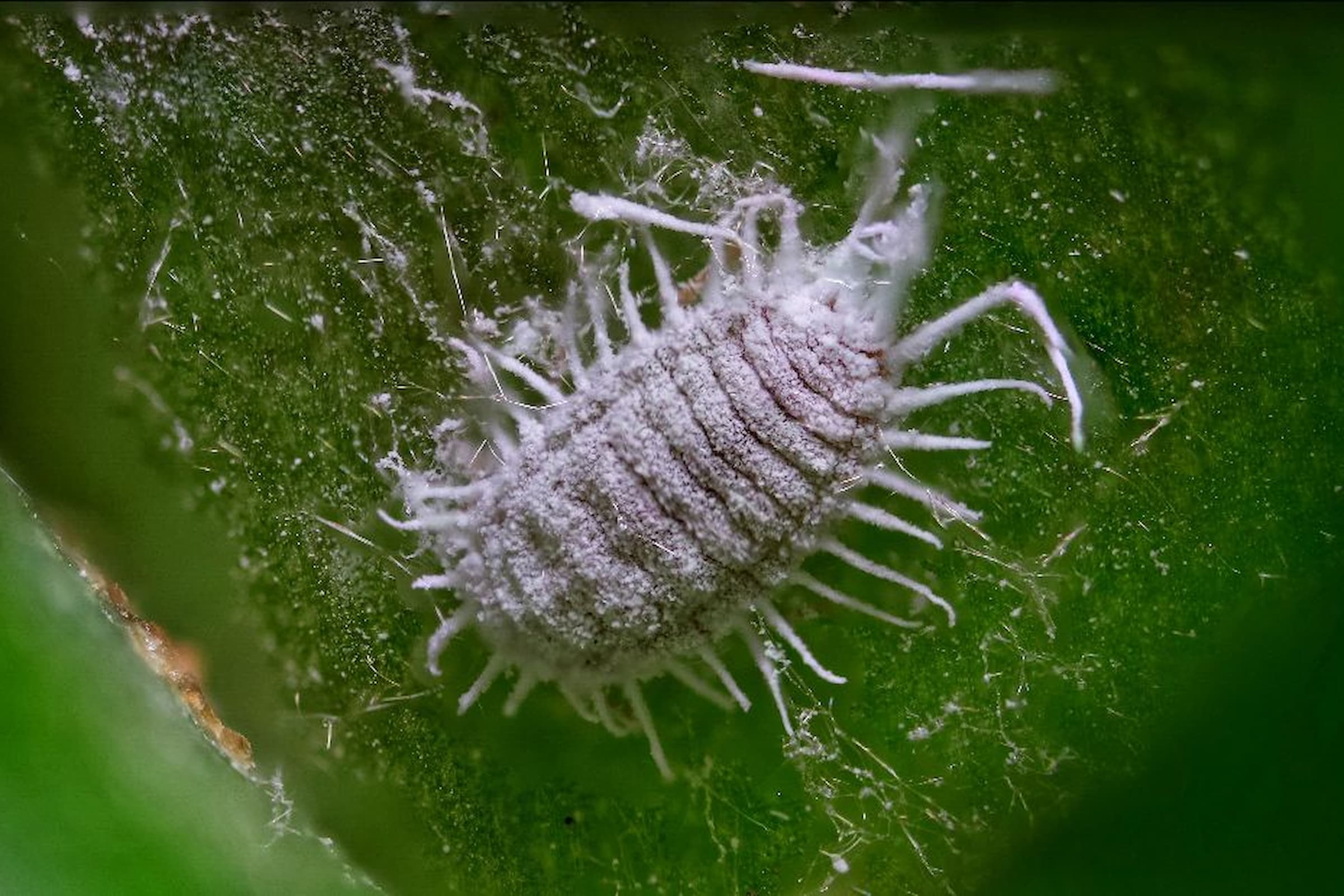
Scale insects are sap-sucking pests that attach to stems and leaves, forming hard or soft shells that feed continuously from one position. Unlike most other pests, they do not move visibly once mature — which is exactly what makes them so easy to miss until an infestation is well established.
Once mature, scale does not move. It settles, attaches, and feeds from one spot for the duration of its adult life. This makes it easy to confuse with natural plant texture — bark bumps, growth nodes, or dried sap. The crawlers that hatch from eggs are the only mobile stage, and they disperse briefly before settling into the same pattern. By the time you notice scale, it has usually been there for a while.
The shell is a defense mechanism, not just an appearance. Hard scale forms a firm, dome-shaped covering that repels contact treatments. Soft scale produces a waxy coating that reduces product penetration. Both types require treatment approaches that either penetrate the covering or target the crawler stage before the shell fully develops. Surface application alone rarely resolves an established infestation.
The damage builds slowly and steadily. Because scale feeds continuously in one place, the harm to plant tissue is gradual — yellowing leaves, slow dieback, honeydew accumulation, sooty mold. A plant can host a significant infestation for weeks before the symptoms become obvious enough to prompt action. This is why routine close inspection is the most powerful thing you can do.
Hard Scale
- Brown, tan, or gray dome-shaped bumps
- Firm and shell-like to the touch
- Does not produce sticky residue
- Commonly found along stems and leaf midribs
- Shell separates from the insect body underneath
Scrape gently with a fingernail — if it lifts and reveals plant tissue beneath, it is hard scale. The shell and insect body will separate cleanly.
Soft Scale
- Slightly raised, waxy, and flatter in profile
- May appear tan, brown, or greenish
- Produces honeydew — a sticky residue on leaves and surfaces below
- Often accompanied by sooty mold on honeydew deposits
- Shell remains attached to the insect body
If the bump smears or bleeds when scraped, it is soft scale. The honeydew it produces is often the first sign you notice — look for sticky surfaces or black mold beneath the plant.
Early Detection
What to look for and where to look
Scale is most manageable when caught early — before populations establish across multiple stems and before honeydew accumulation invites secondary fungal issues. The challenge is that early-stage scale looks almost nothing like a pest. Building a habit of close inspection at specific locations is the most reliable way to catch it before it progresses.
Where to inspect
Stems and midribs
The most common locations. Scale prefers the slightly raised, protected areas along stems and the central vein on the underside of leaves. Run your fingers along stems — scale will feel like small irregular bumps that do not belong to the plant's natural texture.
Where to inspect
Branch junctions
The intersections where branches meet the main stem offer protected crevices with reduced airflow. These spots are among the first to be colonized and among the hardest to treat thoroughly. Inspect them closely with every check, especially in dense canopies.
What to look for
The scratch test
When uncertain, gently scrape a suspicious bump with your fingernail. Natural plant texture will not lift or leave residue. Scale either lifts cleanly to reveal green tissue beneath (hard scale) or smears (soft scale). This test takes seconds and removes all ambiguity.
Secondary signs
Honeydew and sooty mold
A sticky film on leaf surfaces or the floor or furniture beneath a plant is honeydew — evidence of active soft scale feeding. Black sooty mold growing on that residue confirms the infestation has been active long enough to produce multiple cycles of waste. Look upward for scale when you find these signs below.
Treatment Protocol
Four steps. Persistence is the strategy.
Scale is not defeated in one session. The protective shell resists contact treatments, and eggs hatch in overlapping cycles that guarantee new crawlers will emerge after each application. The protocol below is structured to reduce the population at each step while targeting the crawler stage — the most vulnerable window in the life cycle — with repeat applications.
Isolate immediately
Move the affected plant away from others before doing anything else. Crawlers are mobile and spread through direct contact between foliage, on tools, and across shared surfaces. Even a plant that appears uninfested should be treated as potentially exposed if it has been in close proximity. Containment is the first act of treatment.
Manual removal first
Physically scrape and wipe scale from every stem, midrib, and junction before applying product. A soft cloth, fingernail, or soft-bristled brush works well. Remove any honeydew residue at the same time. Reducing the active population this way dramatically improves what any treatment product can accomplish. Do not skip this step in favor of a product-first approach.
Apply treatment — and repeat
Apply insecticidal soap, neem oil, or a spinosad-based product to all surfaces — stems, leaf undersides, midribs, and branch junctions. One application targets only what is currently exposed. Repeat every 7 to 10 days for at least three to four cycles to catch each new generation of crawlers before they harden into protected adults. Stopping after one or two applications almost always results in reinfestation.
Correct the environment
Scale thrives in stable, low-airflow environments where stressed plants are easy targets. After treatment, review the plant's light placement, airflow, and spacing. A plant returned to the same conditions that allowed the infestation to develop will remain vulnerable. Improved light, better air circulation, and regular leaf cleaning reduce susceptibility significantly over time.
What We Use
Three products for a complete treatment
Insecticidal Soap
Works on contact by disrupting the soft tissue of crawlers and nymphs before their protective shell fully develops. Most effective during the crawler stage — which is why repeat applications on a consistent schedule matter more than a single heavy application. Safe for most indoor plants when used as directed, and gentler on the surrounding environment than systemic alternatives.
Recommended on Amazon
Insecticidal Supersoap
Neem Oil
A naturally derived oil that penetrates the waxy coating of soft scale more effectively than soap alone, and disrupts the life cycle of hard scale crawlers. Alternating neem oil with insecticidal soap across treatment cycles targets the infestation from two different mechanisms. Apply in the evening to avoid leaf stress and ensure thorough coverage on all stem and leaf surfaces.
Recommended on Amazon
Neem Oil Concentrate
Electric Sprayer
Scale hides in the most protected, hard-to-reach parts of the plant — stem junctions, leaf midribs, dense canopy interiors. A fine, even mist from an electric sprayer reaches these areas far more consistently than a hand-pump bottle. For larger indoor trees, thorough coverage is what separates a treatment that works from one that leaves entire colonies untouched.
Recommended on Amazon
Electric Garden Sprayer
What Not To Do
Scale management requires thoroughness
Most scale infestations that return after treatment were not the result of a resistant pest or an ineffective product. They came back because one step was rushed, one area was missed, or the treatment schedule was not completed. These are the patterns that account for the majority of recurring outbreaks.
- Treating only once — Scale eggs hatch in overlapping waves. A single treatment, no matter how thorough, will not catch the crawlers that hatch in the days and weeks that follow. Commit to the full schedule.
- Focusing only on leaves — The majority of scale lives on stems, branch junctions, and midribs — not on leaf surfaces. Treating only the visible leaf area leaves the core population intact.
- Missing undersides — Soft scale in particular clusters on the undersides of leaves. Any application that only coats the top surface provides incomplete coverage and will not interrupt the life cycle.
- Leaving honeydew residue — Honeydew on leaf surfaces blocks light, encourages sooty mold, and keeps the environment attractive to new infestations. Remove it as part of every treatment session.
- Skipping isolation — A single infested plant left among others while you plan treatment gives crawlers the time they need to disperse. Isolate first, treat second.
Every plant we place is selected to last. When scale appears, catching it early is everything. Our team monitors for exactly this — so you don't have to do it alone.
Explore Plant Maintenance