Skip to content

Cart

Your cart is empty

How to Keep Houseplants Pest Free and Get Rid of Spider Mites, Fungus Gnats, and Scale

Plant Hygiene & Pest Control — The Plant Daddies

Plant Care — The Plant Daddies

Keep Your Plants Pest Free

Prevention is always easier than recovery. Hygiene first, targeted treatment second — in that order, every time.

Scroll to explore

The Foundation

Most infestations are preventable

Healthy houseplants do not attract pests by accident. Most infestations begin slowly due to dust buildup, stagnant air, inconsistent watering, or environmental stress. A consistent hygiene practice — wiping leaves, maintaining airflow, monitoring moisture — discourages pests before treatment is ever needed. The tools below are organized by purpose: prevention first, then targeted intervention.

Why indoor plants get pests

Poor air circulation around foliage

Soil staying wet too long between waterings

Dust accumulation on leaf surfaces

Insufficient or inconsistent light

Environmental or relocation stress

Prevention

Preventative

01

Microfiber Cleaning Gloves

The simplest and most underrated tool in plant care. Dusty leaves block light, invite mites, and signal neglect. Running microfiber gloves across both sides of foliage weekly takes less than a minute per plant and makes a meaningful difference in both plant health and appearance.

Effective against

Spider Mites Dust Buildup General Prevention
Wipe both sides of leaves weekly or biweekly
Pay close attention to leaf undersides where pests hide and lay eggs
Use a clean glove per plant to avoid cross-contamination

Recommended on Amazon

Microfiber Cleaning Gloves
Preventative + Curative

02

Neem Oil

One of the most versatile natural pest control solutions available. Neem disrupts insect feeding and reproduction cycles, creates a protective barrier on foliage, and acts as a mild fungicide. At light dilution, it is excellent for routine prevention. At stronger concentration, it helps control early infestations.

Effective against

Spider Mites Mealybugs Scale Aphids Thrips Mild Fungal Spotting
Dilute according to label instructions before applying
Spray foliage thoroughly, covering all undersides
Apply in the evening and keep away from intense light after treatment

Recommended on Amazon

Neem Oil Concentrate

Active Treatment

Primarily Curative

03

Insecticidal Supersoap

When pests are actively spreading, a targeted insecticidal soap disrupts the cell membranes of soft-bodied insects on contact. It works quickly, breaks down without leaving toxic residue, and is safe for most indoor plant environments when used as directed.

Effective against

Mealybugs Spider Mites Aphids Thrips Whitefly
Apply directly to affected foliage, ensuring thorough coverage
Repeat every five to seven days until the infestation is resolved
Avoid applying in direct heat or immediately after watering

Recommended on Amazon

Insecticidal Supersoap

Preventative + Curative

04

Diatomaceous Earth

Fungus gnats thrive in consistently moist soil. Diatomaceous earth works mechanically rather than chemically — its microscopic sharp particles damage the exoskeletons of soft-bodied insects and larvae moving through the soil surface. A light top dressing breaks the lifecycle without introducing chemical treatments to the root zone.

Effective against

Fungus Gnats Soil Larvae Crawling Insects
Apply a thin, even layer across the dry soil surface
Reapply after watering once the surface has dried again
Avoid inhaling dust during application — follow product safety instructions

Recommended on Amazon

Diatomaceous Earth

Preventative + Curative

05

Sulfur Plant Fungicide

Not all plant problems are insect-related. Powdery mildew, fungal leaf spots, and other spore-based issues can mimic pest damage or appear alongside it — particularly in humid environments or after irregular watering. Sulfur-based fungicide addresses the fungal side of the equation without harsh synthetic chemistry.

Effective against

Powdery Mildew Fungal Leaf Spots Rust
Apply as directed on the product label — spray or dust depending on form
Do not combine with oil-based sprays unless specified on the label
Avoid application during heat above 90°F as it can cause leaf burn

Recommended on Amazon

Sulfur Plant Fungicide

Application

Tool

06

Electric Sprayer

Uneven application is one of the most common reasons treatments fail. A battery-powered electric sprayer produces a consistent, fine mist that reaches the leaf undersides and deep into the canopy without oversaturating any single area. It makes every treatment faster and more effective.

Ideal for neem oil and insecticidal soap applications
Consistent fine mist ensures coverage of undersides and dense canopies
Always follow dilution instructions for whichever product you are applying

Recommended on Amazon

Electric Garden Sprayer

Pest Identification

Know what you are dealing with

Early detection is the single most important factor in managing infestations. Inspect regularly — undersides of leaves, stem joints, and soil surface — so you recognize a problem before populations grow.

Spider Mites

Fine speckling across leaf surface Barely visible webbing in branch junctions Thrive in dry, stagnant air

Mealybugs

Soft white cottony clusters Hide in leaf axils and stem joints Sticky residue on nearby surfaces

Scale

Small firm round bumps on stems Easy to overlook until significant May cause yellowing above attachment

Thrips

Silvery streaking on foliage Distorted or scarred new growth Tiny dark specks of frass visible

Fungus Gnats

Small black flies near soil surface Larvae damage roots at soil level Thrive in consistently moist conditions

Weekly Preventative Routine

Wipe leavesRun microfiber gloves across both sides of foliage to remove dust and physically disrupt early pest activity before it establishes.

Inspect undersidesLift leaves and look closely at axils and joints. Most pests begin here, where they are sheltered and hard to spot at a glance.

Maintain airflowStagnant air is one of the primary conditions pests exploit. Keep space between plants and avoid areas with no circulation.

Allow appropriate drying between wateringsOverly moist soil invites fungus gnats and root-level stress. Let the medium approach dryness before watering again.

Apply neem oil during seasonal transitionsSpring and fall are peak vulnerability windows. A light preventative neem application at these transitions reduces the chance of an infestation taking hold.

Top-dress with diatomaceous earth during high-risk periodsParticularly useful in warmer months when fungus gnat populations tend to spike. Apply to dry soil surface and reapply after watering.

Early detection changes everything.

Most infestations are manageable when caught in time.

The Plant Daddies Society

Want expert help keeping your plants thriving?

Learn more

Read more

How to Care for Your Cyphostemma juttae (Wild Grape)
Care Guides

How to Care for Your Cyphostemma juttae (Wild Grape)

How to Care for Your Cyphostemma juttae (Cabbage Grapevine) Care Guide Cyphostemmajuttae The Cabbage Grapevine — a large, sun-demanding caudiciform from the Namib desert margins...

Read more
How to Care for Your Deuterocohnia brevifolia (Chilean Rock Plant)
Care Guides

How to Care for Your Deuterocohnia brevifolia (Chilean Rock Plant)

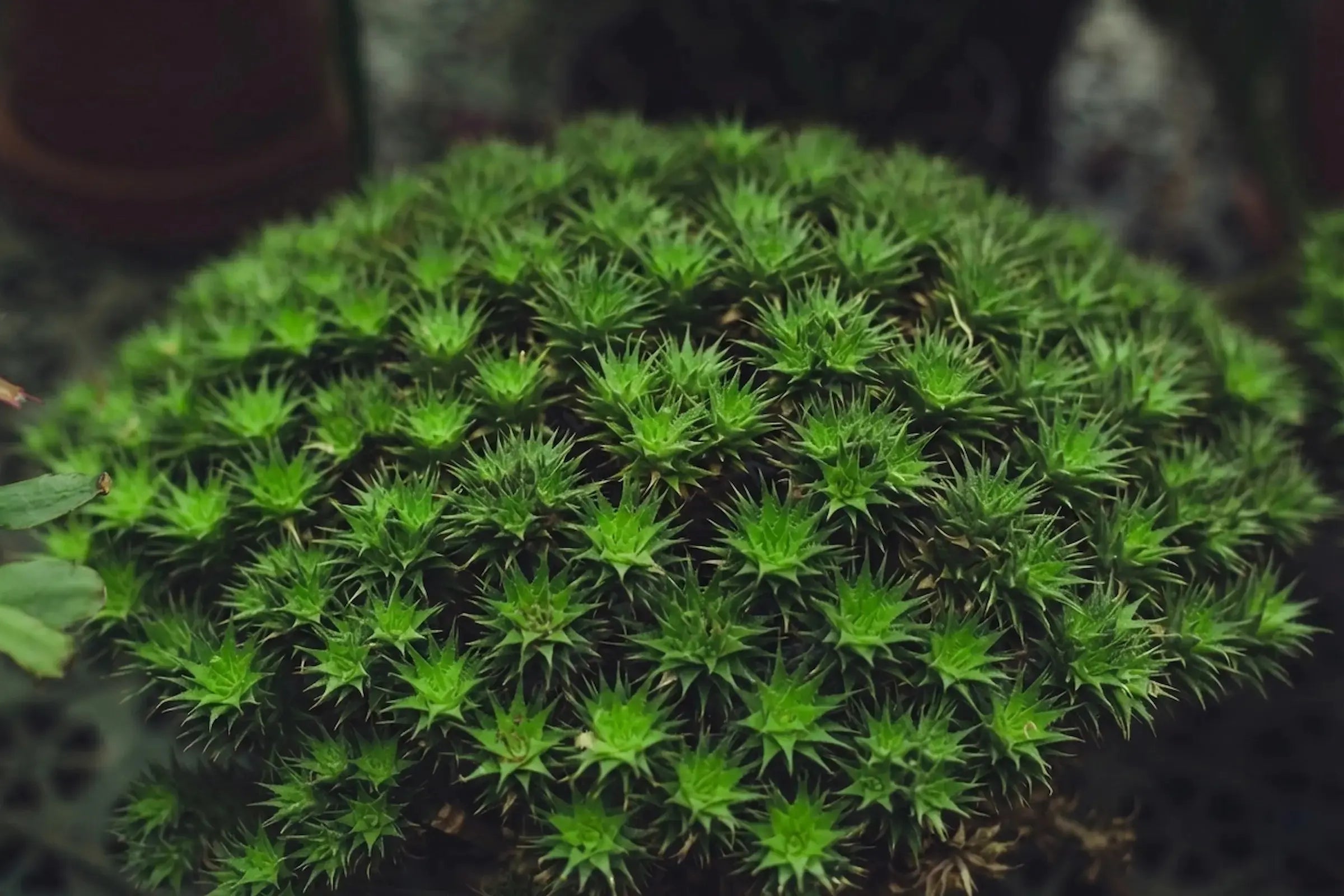
Care Guide DeuterocohniaBrevifolia The Chilean Rock Plant. A rugged high-altitude bromeliad that forms dense, geometric mounds of interlocking rosettes — one of the most structur...

Read more