How to Care for Your Deuterocohnia brevifolia (Chilean Rock Plant)
Care Guide
Deuterocohnia
Brevifolia
The Chilean Rock Plant. A rugged high-altitude bromeliad that forms dense, geometric mounds of interlocking rosettes — one of the most structurally unusual plants available for modern and desert-inspired settings.
The Plant
Living rock.
Slow geometry.
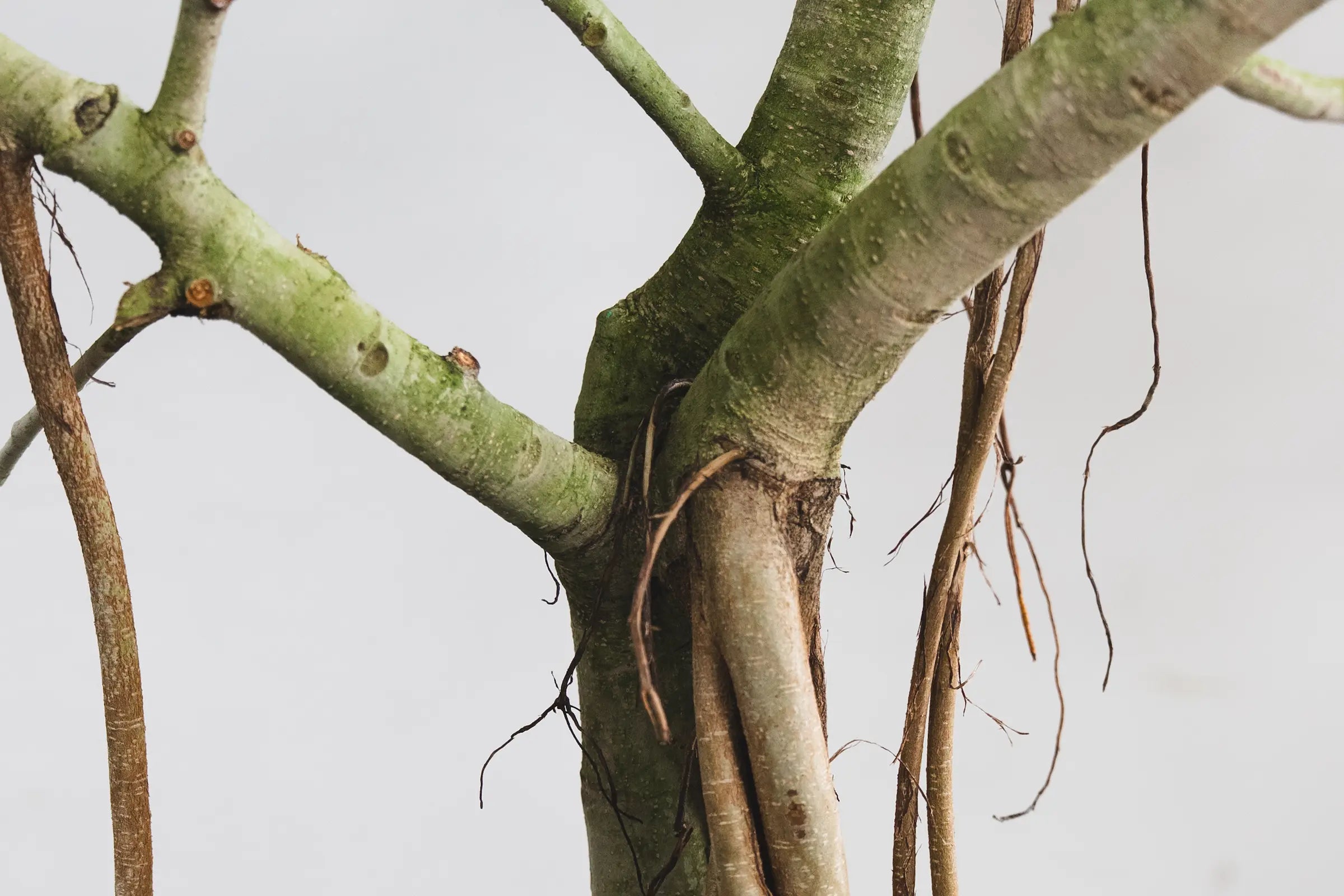
Native to the high-altitude rock faces and arid slopes of Bolivia, Argentina, and Chile, the Deuterocohnia brevifolia is a terrestrial bromeliad unlike anything you'd typically associate with the family. There are no soft, tropical leaves here — instead, tight rosettes of sharp, succulent-like foliage cluster into dense, sculptural mounds that expand outward millimeter by millimeter over years, eventually resembling a living rock formation.
It is one of the most patient plants in horticulture. In its native habitat it grows at elevations above 3,000 meters, enduring frost, scorching sun, and months of near-zero rainfall. Indoors or in a protected outdoor position, it asks for almost nothing — just bright light, a mineral substrate, and the discipline to water far less frequently than instinct suggests. Its reward is a specimen that looks more extraordinary with every passing year.
At a Glance
Light
The Deuterocohnia brevifolia comes from some of the most sun-exposed environments on earth — high-altitude Andean slopes at elevation, where the atmosphere is thin and UV intensity is extreme. Indoors, it needs the brightest position you can offer: a south-facing windowsill with direct sun, or a very bright east or west-facing window with several hours of direct light daily. Outdoors it thrives in full sun in most climates.
Strong light is what keeps the rosettes tight, compact, and geometrically precise. In lower light the rosettes stretch — their leaves elongate and splay outward, losing the dense, stone-like quality that makes this plant so visually compelling. Once a rosette has stretched, it won't revert. New growth in better conditions will be tighter, but the stretched rosettes remain. Place it in the strongest available light from the start.
Outdoors in Southern California: The Chilean Rock Plant is exceptionally well-suited to outdoor placement in our climate. Full outdoor sun — even the intensity of a south-facing terrace in summer — is handled easily. It is one of the few plants that actually benefits from a placement most others would find punishing.
Watering
Watering the Chilean Rock Plant requires restraint that most plant owners will find uncomfortable at first. This species evolved on near-barren rock faces where rainfall is scarce and drainage is instantaneous — its rosettes store moisture internally, and the colony as a whole can survive extended dry periods without any visible stress. Allow the substrate to dry almost completely between waterings, then water slowly and thoroughly until the medium is fully hydrated before the next long dry cycle begins.
In summer, a well-drained indoor planting may need water every two to three weeks. In winter, once a month or less is entirely appropriate — some growers in mild climates withhold water almost entirely during the winter months with no ill effect. When in doubt, wait another week. This plant will tolerate drought far more gracefully than it will tolerate wet roots.
Firm & plump
Adequate moisture. The colony is well-hydrated and does not need water. Continue the current interval.
Slightly wrinkled
Ready for water. This is the correct moment — water thoroughly and allow a complete dry cycle before the next session.
Soft or translucent
Overwatering — leaf cells are saturated. Stop watering immediately and allow extended drying. Check the substrate at the base for rot.
Soil & Substrate
Standard potting mix is entirely wrong for this plant. The Deuterocohnia brevifolia grows on rocky slopes where organic matter is minimal and water passes through the substrate within seconds of landing. It needs a mineral-based, extremely fast-draining mix that dries within a day or two of watering and never becomes dense or compacted over time.
Inorganic Grit
Pumice, perlite, coarse horticultural grit, or a mix of all three
Cactus / Succulent Mix
As the organic base — avoid standard potting soil entirely
The finished substrate should feel visibly gritty, almost sandy, and should drain immediately when watered with no pooling at the surface. Ensure your container has unobstructed drainage. The colony can also be grown in a pure mineral substrate — pumice alone, or a mix of pumice and coarse sand — if you prefer to lean even further toward the plant's natural growing conditions.
Temperature & Hardiness
One of the most remarkable things about this species is its cold tolerance. Native to high-altitude Andean environments where temperatures drop below freezing at night, the Deuterocohnia brevifolia can handle brief frosts without damage — a quality almost no other bromeliad can claim. It performs well in temperatures from well below 40°F up to 100°F, making it one of the most climatically versatile plants in this collection.
In Southern California's climate it can be grown outdoors year-round in most situations without winter protection. Extended wet winters combined with cold are the real risk — not the cold alone. Ensure good drainage and airflow during cooler, wetter months and the plant will come through without issue.
Fertilizing
Feed with extreme restraint. The Chilean Rock Plant is adapted to nutritionally poor rocky soils and has evolved to be highly efficient with minimal inputs. A very light feeding once a month in spring and summer — diluted to quarter strength or less using a balanced liquid fertilizer or a cactus/bromeliad-specific formula — is all it needs.
Over-fertilizing is one of the easiest ways to disrupt this plant's compact, geometric character. Rich feeding produces weak, rapid growth — looser rosettes, longer internodal spacing, and a general softening of the tight structure the plant is prized for. Stop feeding entirely in fall and winter when the colony is at its slowest. Less is genuinely more with this species.
Pruning & Grooming
Maintenance pruning on the Deuterocohnia brevifolia is minimal by design — the colony's form is self-organizing, and the less you intervene the more naturally coherent it becomes. Remove older rosettes as they die back, cutting cleanly at their base to keep the mound tidy. Trim any individual leaves that are damaged or compromised, being mindful of the sharp leaf tips.
Beyond that, leave the colony to develop on its own terms. The dense, interlocking geometry of mature specimens is the result of years of undisturbed growth — each rosette pressing against the next, the whole colony slowly mounding outward in all directions. Frequent intervention disrupts that process without improving the outcome.
Handle with care: The leaf tips of Deuterocohnia brevifolia are genuinely sharp. Use gloves when grooming and be especially careful when working between rosettes where visibility is limited. Inspect closely for pests at the same time — mealybugs and scale frequently hide deep within the colony where they're easy to miss.
Repotting
Repot every two to three years when young, or when the colony has clearly outgrown its container and is beginning to press against the edges. Mature, established colonies benefit from stability — once the mound has settled into a vessel it suits, leaving it undisturbed for longer periods preserves the coherent geometry the plant develops over time.
Repot in spring using a completely fresh mineral substrate. Handle the colony as a unit — the interlocking root system is dense and should not be aggressively separated. After repotting, wait one to two weeks before watering to allow any disturbed roots to callous before introducing moisture. The colony may pause its outward expansion briefly during transition — this is temporary and expected.
Common Issues
Stretching Rosettes
Leaves elongating and splaying rather than forming tight, compact fans. An unambiguous sign of insufficient light. Move to a brighter position immediately — stretched rosettes won't revert, but new growth in better light will be correctly formed.
Soft or Mushy Leaves
Overwatering. Allow the substrate to dry completely for an extended period. If softness is concentrated at the base of individual rosettes or the colony's core, inspect for rot and ensure drainage is fully functional.
Dull or Faded Color
Usually a combination of low light and overly rich soil. Move to brighter conditions and — at the next repotting — reduce the organic fraction of the substrate in favor of more grit.
Leaf Tip Browning
Normal with age and in very dry indoor air. Trim brown tips cleanly if aesthetics matter, but this is cosmetic rather than a sign of decline. Not a cause for concern unless browning is progressing rapidly down the leaf.
Mealybugs
White cottony clusters hidden between rosettes — the tight colony structure makes them difficult to spot and treat. Use a cotton swab dipped in isopropyl alcohol to reach deep between rosettes, then follow with a thorough neem oil application. Repeat weekly for three to four weeks.
Scale
Rounded bumps along leaf surfaces and branching points. Treat the same way as mealybugs — alcohol spot treatment followed by neem. The interlocking structure of the colony requires patient, thorough application to reach all affected areas.
Growth & Lifespan
The Deuterocohnia brevifolia grows slowly — and that is precisely the point. In nature, dense colonies of this species occupy the same rock face for decades, accumulating outward growth year by year into formations that can span several feet across. The slow pace is inseparable from the tight, stone-like quality of the mound. Fast growth would ruin it.
Indoors or in a sheltered outdoor position, you will see steady, incremental expansion of the colony each season — new rosettes forming at the edges, the overall mound gradually increasing in density and dimension. Over years it becomes something that reads less like a potted plant and more like a geological specimen. It is one of the few plants that is genuinely better the longer it is left alone in the right conditions.
The Plant Daddies Society
Let us handle
the care.
Weekly expert visits, full plant protection, and a living collection that grows with you. The Society takes the guesswork out of plant ownership entirely.