
How to Care for Your Aspidistra elatior (Cast Iron Plant)
Care Guide
Aspidistra
Elatior
The Cast Iron Plant. A shaded woodland native of East Asia with long, arching, leathery leaves and a near-mythic tolerance for neglect — the most dependable broad-leaf indoor plant that exists.
The Plant
Victorian survivor.
Modern anchor.
Native to the deep-shaded forest floors of Japan, China, and Taiwan, the Aspidistra elatior evolved beneath a canopy so dense that almost nothing else could survive beneath it. The result is a plant that treats low light, irregular watering, temperature swings, and dry air not as hardships but as normal operating conditions. It thrived in Victorian parlors when gas lamps were the only light source. It survived the smoke-filled bars of the early twentieth century. It has outlasted every trend in indoor plant keeping by simply refusing to die.
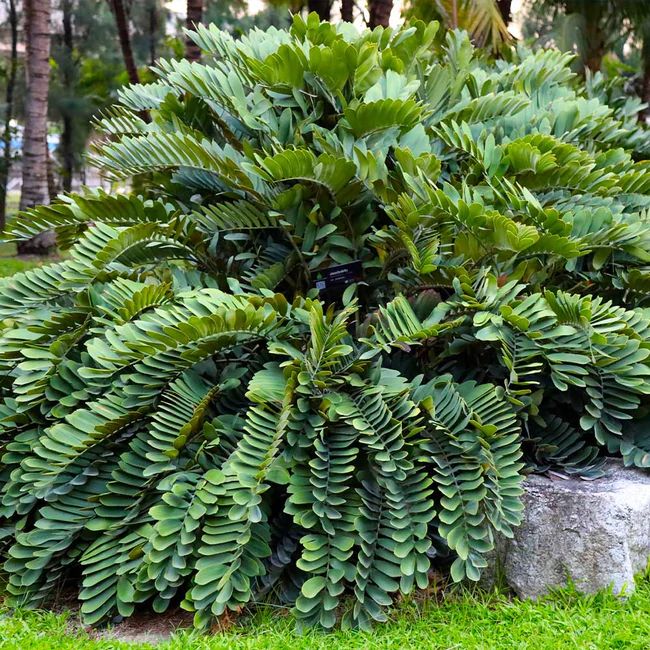
Its architectural character comes from restraint rather than spectacle. Long, lance-shaped leaves emerge individually from the soil on upright petioles and arch outward into a dense, layered canopy of deep, glossy green. There is no trunk, no branching, no obvious structure — just leaf after patient leaf, each one adding quietly to a form that becomes more substantial and more refined with every passing year.
At a Glance
Light
The Aspidistra elatior is one of the very few large indoor plants that is genuinely adapted to low light — not merely tolerant of it, but evolved for it. A north-facing room, a hallway with no direct window, an interior corner that would defeat almost any other statement plant: these are positions where this species is at home. It is the correct answer to every space where the question is "what can possibly grow here." For a practical framework on evaluating interior light, see our Interior Plant Placement Guide.
That said, brighter indirect light produces a noticeably better plant. In a well-lit position — a few feet from an east- or north-facing window — the Aspidistra pushes new leaves more consistently, holds a deeper, richer green, and develops a denser canopy over time. Low light keeps it alive and respectable. Good indirect light makes it genuinely beautiful. The spectrum from low to bright indirect is its entire comfortable range — what sits outside that range on either end is where problems begin.
The one firm rule: No direct sun. Ever. The Aspidistra's thick, leathery leaves evolved under closed-canopy shade and have almost no tolerance for unfiltered sunlight. Even a few hours of direct afternoon sun will scorch the leaves — producing bleached, papery patches that are permanent. If the only available position receives some direct morning light, a sheer curtain is sufficient protection.
Watering & Reading the Plant
Allow the soil to dry at least halfway down before watering again. The Aspidistra is genuinely drought tolerant — far more so than most shade-adapted plants — and will endure extended dry periods without dramatic consequence. What it will not endure is sitting in waterlogged soil. Root and rhizome rot is the primary cause of decline for this species indoors, and it sets in silently before any surface symptom becomes visible.
Check below the surface before every watering session. When the medium is dry from halfway down, water slowly and thoroughly until it flows from the drainage area, then leave it alone until the next check. In spring and summer, every ten to fourteen days is a typical rhythm. In fall and winter, growth slows to almost nothing — extend the interval to three to four weeks or more. For a full walkthrough on reading soil moisture correctly, see our guide on how to know when to water your plants.
The Aspidistra rarely signals its watering needs with dramatic gestures. It will not wilt conspicuously or drop leaves to communicate distress the way a Ficus would. The soil is your most reliable guide — not the plant's appearance.
Leaves firm, glossy, upright
Well-hydrated. No water needed — continue the current dry interval without interruption. Confirm with a soil check before the next session.
Very slight limpness or dull surface
Ready for water. Confirm dryness halfway down and water deeply. The Aspidistra signals thirst subtly — soil confirmation is essential before acting.
Yellowing at base, mushy petioles
Overwatering. Stop immediately. Allow a complete dry-out and inspect the rhizome at the soil line for softening or rot. This is the most serious condition for this species.
Understanding the Rhizome
The Aspidistra elatior has no trunk and no branching structure. Every leaf you see emerges independently from a creeping underground rhizome — a thick, horizontal root structure that slowly expands outward through the soil, sending up new leaf shoots as it goes. This is not a tree in the conventional sense. It is a colony of leaves, organized by a root system that you almost never see. Understanding this changes how you read the plant and how you care for it.
New leaves emerge from the soil as tightly rolled tubes, unfurling slowly over several weeks into the full lance-shaped form. Each one arrives on its own petiole, holds its position in the canopy for years, and is eventually replaced by the next generation emerging from the spreading rhizome beneath. The rate of new leaf production — typically a handful per growing season even in ideal conditions — is the clearest signal of how well the plant is performing. A plant producing new leaves consistently is healthy. One that has not produced a new leaf in more than a year may need more light, a larger container, or resumed feeding in the growing season.
The rhizome itself is the most vulnerable part of the plant. It is what makes overwatering catastrophic — rot that begins in the rhizome spreads to the root system and cannot be reversed once established. It is also what makes the plant so resilient to everything else: the underground structure continues living even when individual leaves are lost to drought, damage, or age. As long as the rhizome is healthy, the plant will recover.
On the flowers: The Aspidistra occasionally produces small, dark purple-maroon flowers directly at the soil line, nestled against the base of the rhizome. They appear in late winter or early spring and are easy to miss entirely beneath the canopy of leaves. They are not a sign of stress or an unusual event — simply a rare and quietly interesting trait of a plant that keeps most of its character hidden below ground.
Temperature & Humidity
The Aspidistra is one of the most temperature-tolerant indoor plants available. Its comfortable range — 60–75°F — covers most indoor environments without any special accommodation, and it tolerates brief dips as low as 45°F without serious harm. This cold tolerance is part of what made it indispensable in Victorian interiors, where central heating was unreliable and rooms frequently dropped to genuinely cool temperatures overnight. It is a plant for the real world, not a controlled greenhouse.
Humidity requires almost no attention with this species. Average household air — including the dry, heated air of winter interiors and air-conditioned summer spaces — is entirely adequate. The Aspidistra does not need a humidifier, a pebble tray, misting, or grouping with other plants for moisture. This is one meaningful difference from the Rhapis excelsa: where the Lady Palm appreciates supplemental humidity, the Cast Iron Plant is genuinely indifferent to it. Standard room conditions, consistent year-round, are all it asks for.
The one environmental sensitivity worth noting is airflow. Strong directional drafts from heating or cooling vents — particularly cold air blowing directly at the base of the plant — can cause tip browning and slow the emergence of new leaves. Keep it away from direct vent exposure and it will be content in almost any room.
Fertilizing
Feed once or twice through spring and summer with a balanced liquid fertilizer at half strength. The Aspidistra is a very slow grower from a nutrient-poor forest floor environment, and it requires far less feeding than most indoor plants. Over-fertilizing is a more common mistake than under-fertilizing with this species — excess salts accumulate in the medium, damage the root system, and produce tip browning that is then incorrectly attributed to other causes. For a complete overview of indoor plant feeding principles, our guide on fertilizing indoor plants properly covers the full approach.
If the plant is positioned in genuinely low light — a dim interior corner or a north-facing room with minimal daylight — feeding can be reduced to once per season or skipped entirely. A plant photosynthesizing slowly has no use for additional nutrients and cannot process them without harm. Match feeding intensity to light intensity, and err toward less in all cases.
Never fertilize into dry soil. Always water thoroughly first, then feed into a moist medium. Fertilizer applied to dry roots concentrates salts directly at the root tips — a slow injury that appears weeks later as browning and reduced vigor. Pause all feeding from late fall through winter without exception, resuming only when new leaf growth in spring confirms the plant has returned to active development.
Pruning & Shaping
The Aspidistra requires almost no pruning. Its growth habit is self-organizing — leaves emerge, mature, hold their position in the canopy for years, and eventually age out to be replaced. Your only active role is removing leaves that have fully browned and died, cutting cleanly at the base of the petiole with sharp shears. Our guide on how to prune indoor plants like a professional covers the technique and timing that apply across all indoor species.
Do not remove any leaf that retains green — even a leaf that is partially aged or has some tip browning is still contributing to the plant's photosynthetic capacity. Premature removal slows the already deliberate pace of new leaf production by forcing the plant to redirect energy. Patience is the correct tool here.
Never trim individual leaf tips. Unlike the Rhapis excelsa where tip trimming is cosmetic but harmless, cutting the tips of Aspidistra leaves leaves a blunt, artificial edge that browns along the cut line — drawing attention to the very issue you were trying to correct. If tip browning is significant enough to bother you, investigate the cause: dry air, salt accumulation from over-fertilizing, or a direct vent nearby. Removing the source is always more effective than trimming the symptom.
Repotting
Repot every four to five years — significantly less frequently than most indoor plants. The Aspidistra is a very slow grower, prefers to be slightly root-bound, and benefits from the stability of a container it has fully settled into. Repotting before it is necessary disturbs the rhizome system, slows new leaf production for months, and provides no meaningful benefit. The signal to repot is roots actively emerging from drainage holes or growth stalling entirely despite adequate light and consistent watering. Spring is the right window.
Use a rich, well-draining potting medium — a standard indoor mix amended with perlite for aeration. Size up by one container only. When repotting, handle the rhizome carefully; it is the structural core of the plant and should not be cut, compressed, or repositioned more than necessary. Position the rhizome at or just below the soil line — burying it too deeply traps moisture against the tissue and creates conditions for rot.
Propagation by division is the only reliable method for this species. During repotting, sections of rhizome with two or more attached leaves and a healthy cluster of roots can be separated with a clean knife and potted individually. Keep divisions warm and moderately watered — not wet — and expect a slow establishment period of several weeks before new growth confirms the division has taken.
Common Issues
Brown or Scorched Leaf Patches
Almost always caused by direct sunlight reaching the leaves. The bleached, papery patches are permanent — the affected area will not recover. Move the plant away from any direct light exposure immediately and assess whether a sheer curtain is needed.
Yellowing Leaves
Most commonly caused by overwatering or rhizome rot. Check soil moisture immediately and allow a full dry-out. Yellowing from the base of the petiole upward is a more serious sign than tip yellowing — inspect the rhizome for any softness at the soil line.
Brown Leaf Tips
Caused by dry airflow from a nearby vent, salt accumulation from over-fertilizing, or fluoride and chlorine in tap water. Flush the medium with plain water to clear salts, move away from direct airflow, and consider switching to filtered or rainwater if tip browning persists.
No New Leaves
Expected in winter — normal dormancy. In the growing season, the cause is typically insufficient light, a pot that has become too small for the rhizome, or missed feeding during the active months. Address light first, then assess pot size and feeding history.
White cottony clusters at the base of petioles and along the rhizome where it meets the soil. Treat with isopropyl alcohol on a cotton swab for direct contact, then follow with a thorough neem oil application. Repeat weekly until fully clear.
Small rounded bumps along petioles and the underside of leaf midribs. Scrape away manually, then treat all surfaces with neem oil. Inspect neighboring plants immediately — scale spreads readily and is most effectively dealt with at the earliest stage.
Fine webbing on the underside of leaves or a dusty, stippled appearance on the leaf surface. Less common on Aspidistra than on many other species, but possible in very dry indoor conditions. Treat with neem oil or insecticidal soap weekly for three to four weeks.
Dust on Leaves
The broad, leathery leaves accumulate dust efficiently — particularly in low-light positions where the leaf surface must work harder to capture available light. Wipe each leaf with a soft damp cloth regularly, top and underside. Do not use leaf shine products on this species.
Growth & Lifespan
The Aspidistra elatior is one of the slowest-growing indoor plants you can own — and one of the longest-lived. A single growing season may produce only a handful of new leaves. A decade of consistent care produces a dense, layered canopy that fills its space with a weight and permanence that no fast-growing tropical can replicate. The pace is not a limitation. It is the entire point. Each leaf that unfurls is months in the making and will remain part of the plant for years after it matures.
What accumulates over time is not just size but character. The rhizome thickens and spreads. The canopy deepens and fills. The leaves themselves — each one a glossy, architectural dark green — develop a quality of presence that reads as permanent rather than placed. There is a reason the Aspidistra has been kept as an heirloom plant across generations: it genuinely becomes more valuable the longer it is held.
Given an appropriate position — away from direct sun, with consistent indirect light and restrained watering — this plant will outlive nearly everything else in a collection. It is the anchor of an interior, not an accent. The plant that is still there, still growing, still exactly itself, long after trends have come and gone and every finicky statement plant has been replaced twice over. If you are looking for a plant to keep for the rest of your life, this is the one.
The Plant Daddies Society
Let us handle
the care.
Weekly expert visits, full plant protection, and a living collection that grows with you. The Society takes the guesswork out of plant ownership entirely.
%0A%0A%0A%0A%0A%0A%0A%20%20%0A%20%20%0A%20%20Care%20Guide%0A%20%20AspidistraElatior%0A%0A%20%20The%20Cast%20Iron%20Plant.%20A%20shaded%20woodland%20native%20of%20East%20Asia%20with%20long,%20arching,%20leathery...)